Imperial and Dutch Grandeur: The Tower of London and the Oude Kerk Spire
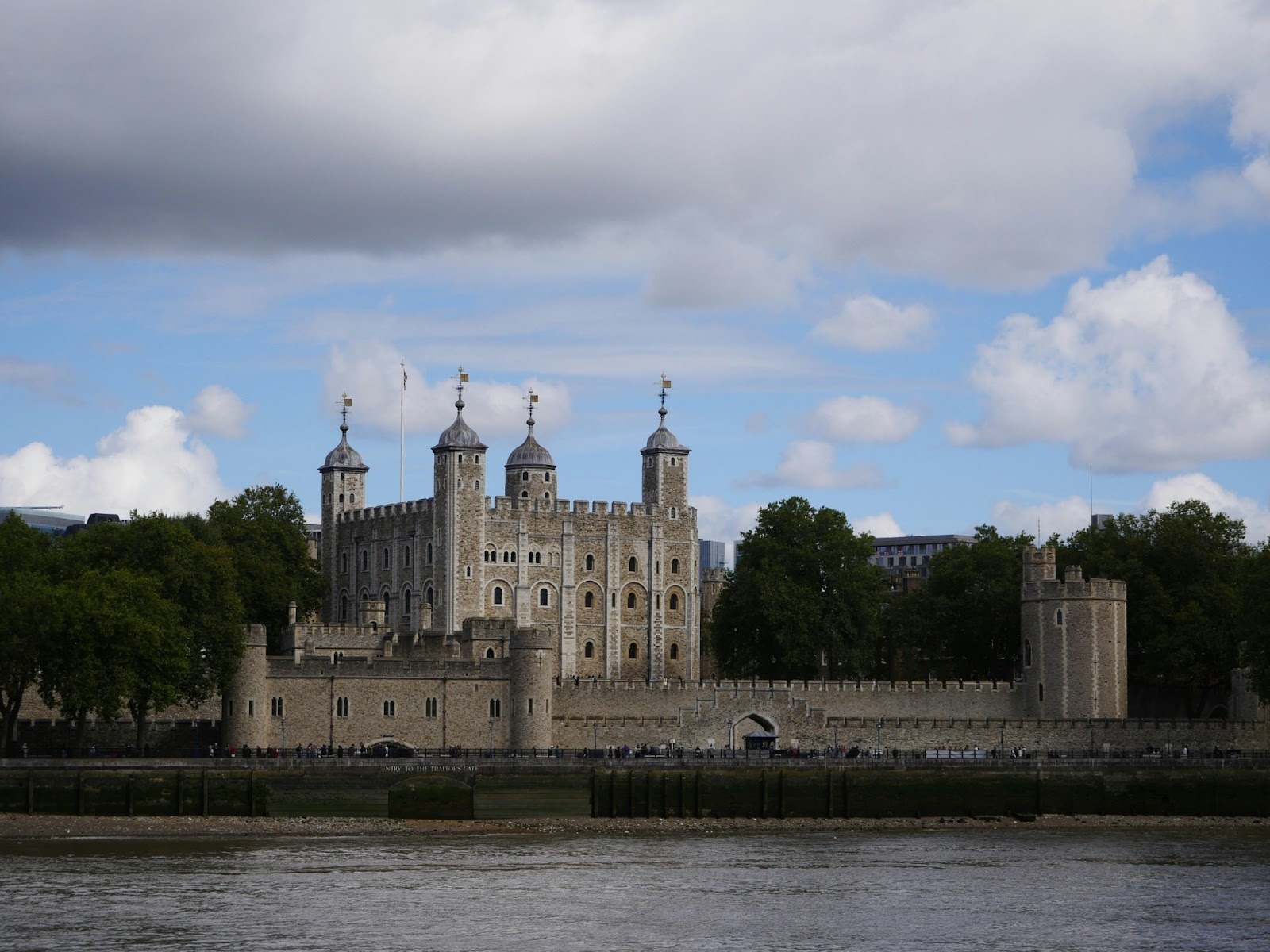
Some structures do not rise abruptly; they settle into the skyline and remain there. The Tower of London feels less like a single building and more like accumulation — stone layered upon stone, walls thickened over time rather than designed in a single gesture. The Thames passes beside it without altering course, carrying reflections in muted bands.
The air along the river feels open, though the walls themselves compress perspective. Footsteps echo faintly against inner courtyards. Turrets punctuate the skyline without reaching dramatically upward. The city moves around the Tower rather than away from it.
Nothing feels frozen. It simply persists.
Where Stone Holds Its Ground
Within the Tower’s perimeter, space narrows and widens in uneven intervals — archway, yard, stair, corner. Light slips through openings unpredictably. The stone absorbs shadow rather than reflecting it.
Movement across borders often unfolds along routes like the London to Amsterdam train, where river crossings and low plains pass in quiet succession. The shift from fortified wall to open Dutch horizon feels incremental rather than decisive.
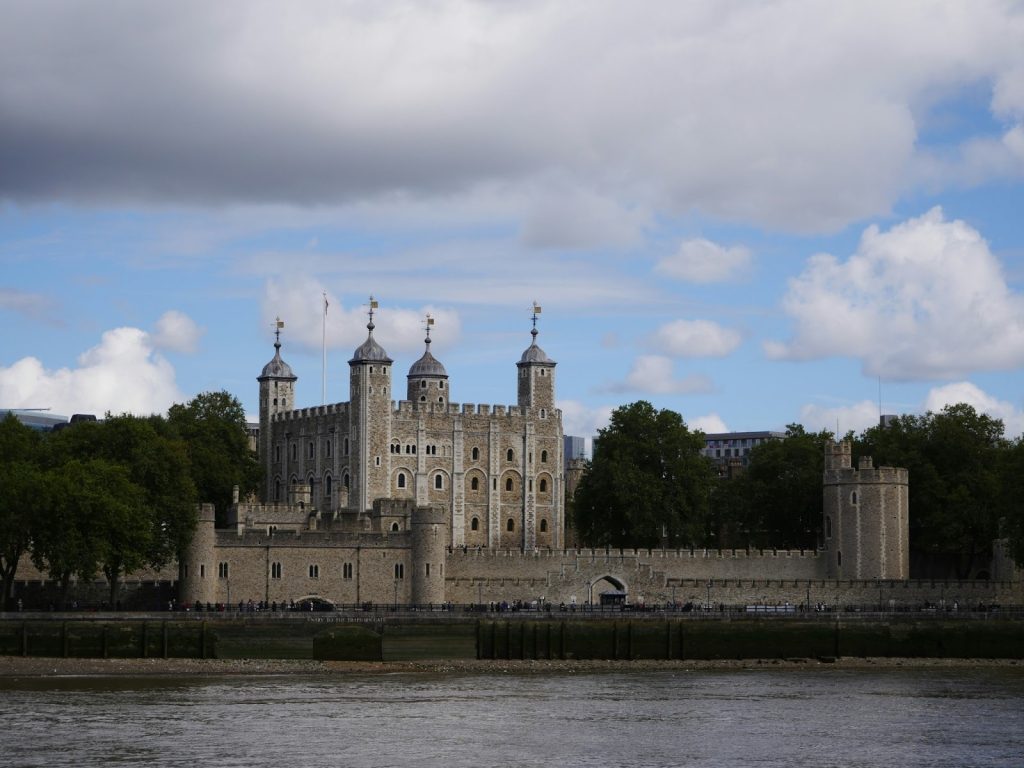
The Tower does not perform authority; it holds mass. The river continues beside it, indifferent to chronology.
Where Wood and Brick Rise Lightly
In Amsterdam, the Oude Kerk does not dominate the city. Its spire appears almost by accident between narrow houses, rising gently rather than forcefully. The brick surrounding it feels lighter, less compressed than London’s stone.
Journeys threading western Europe often trace lines like travel from Paris to London, where countryside flattens and urban density gathers gradually. Even then, the adjustment feels atmospheric rather than symbolic.
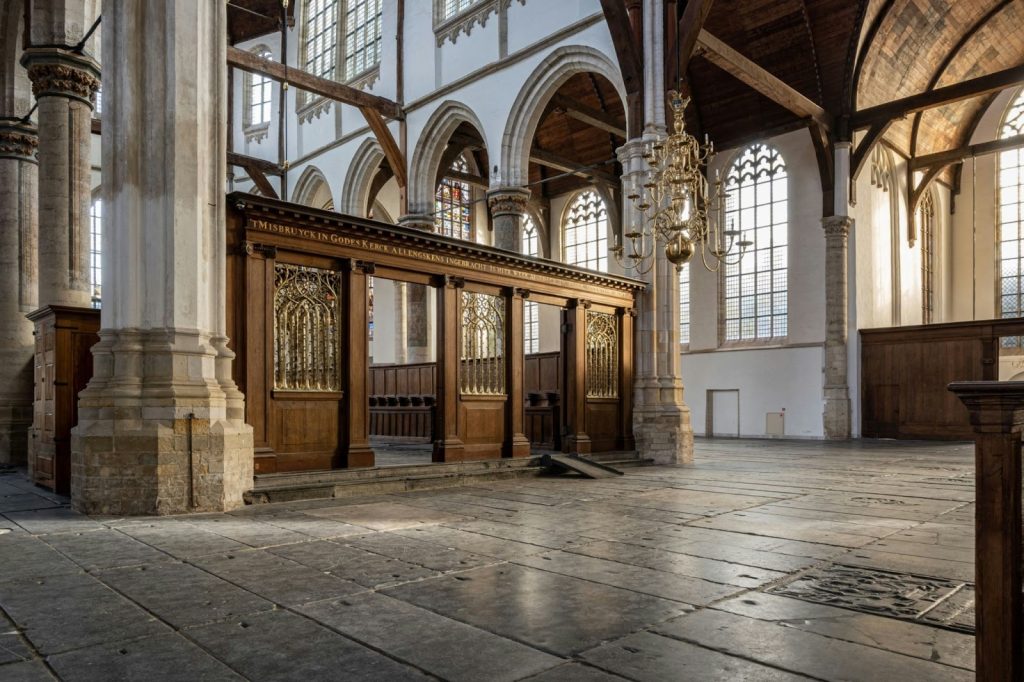
Inside the Oude Kerk, light filters unevenly across wooden beams and tiled floor. The ceiling feels high, though not distant. Sound lingers briefly, then fades.
Between Wall and Canal
The Tower gathers solidity into thick perimeter. The Oude Kerk disperses it into vertical line. One feels enclosed. The other feels open, though contained within surrounding streets.
Yet both rely on repetition — battlement after battlement, window after window. The cadence remains steady.
Neither demands spectacle. They hold space quietly.
The Line That Threads the Low Countries
Later, recollection softens distinction. The Tower’s heavy outline aligns faintly with the slender spire of the Oude Kerk. The rail journey between them fades into steady horizontal passage beneath clouded sky.
What remains is not opposition between imperial fortress and Dutch parish church, but continuity of structure against horizon. Stone absorbing rain. Brick reflecting canal light.
And somewhere between river wall and canal edge, the movement continues quietly — not framed by border or title — simply unfolding beneath the same northern sky.
Where Weather Writes Its Own Details
Rain settles differently on each surface. Along the Tower’s walls, it darkens stone into deeper greys, collecting briefly in mortar lines before slipping away. In Amsterdam, moisture gathers on brick and timber, softening edges and brightening canal reflections. The change feels temporary but persistent, as if weather is another layer added quietly over time.
Wind follows similar paths. It moves along the Thames without obstruction, then threads through narrow streets near the Oude Kerk, carrying sound just far enough to be noticed before releasing it. Neither place resists the elements; both register them.
The Stretch That Levels Distance
Between London and Amsterdam lies a corridor of water, field, and track that rarely insists on transition. Ports give way to plains. Stations appear and dissolve. The sky remains broad enough to flatten distinction into tone rather than landmark.
Over time, the memory of fortress wall and church spire begins to overlap — mass and lightness sharing the same muted palette. Stone and brick settle beneath cloud in similar ways. And somewhere along that steady span, the rhythm continues quietly, carried forward without emphasis, without conclusion, beneath the same northern air.