Gion’s Tea Houses and the Modern Grandeur of the Pacific Coastline
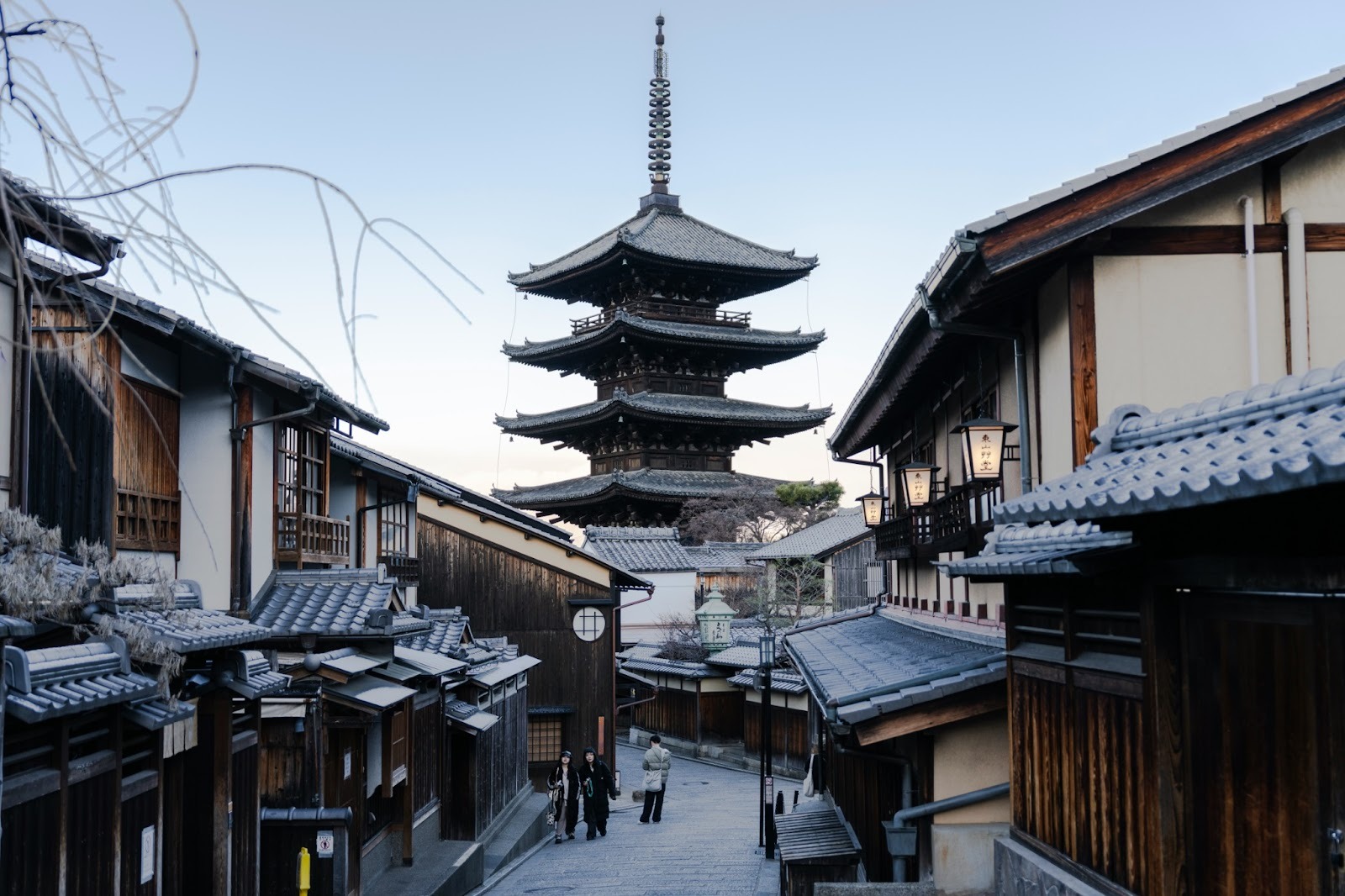
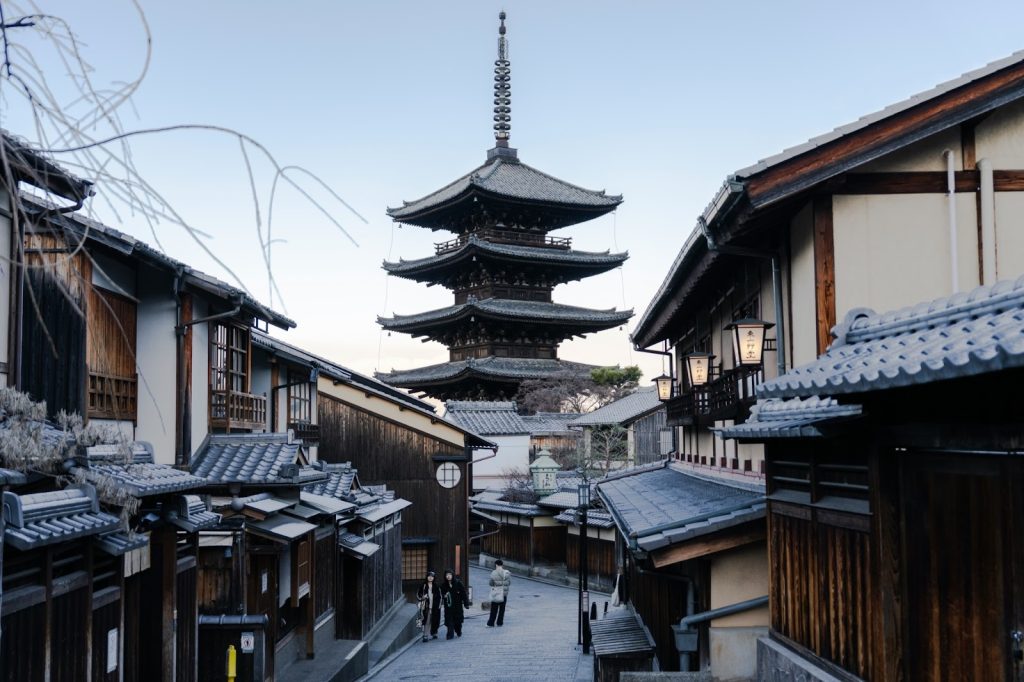
Kyoto does not announce Gion loudly. It narrows into it. Wooden façades press close to the street, their lattice screens filtering light into thin, deliberate bands. The air feels slower here, though traffic hums somewhere beyond the river. Stone underfoot holds a faint coolness even in late afternoon.
The district seems less arranged than remembered. Lanterns hang without insistence. Sliding doors open briefly and close again. The scale remains intimate, though the city itself stretches far beyond these narrow streets.
Nothing escalates. It settles.
Lantern Light Against Timber Grain
In Gion, movement feels measured. A door shifts open. A bicycle glides past quietly. The geometry resists symmetry — corners bending slightly, roofs tilting inward. Surfaces carry the weight of repetition rather than spectacle.
Beyond the district, the corridor east unfolds along lines such as the train from Osaka to Tokyo, where fields widen and industrial edges appear without overt transition. The shift from wooden eaves to broader horizon feels gradual, almost procedural.
Inside the carriage, reflections soften the outside world. Mountains flatten into pale outlines. The rhythm remains steady, unannounced.
Open Sky, Unbroken
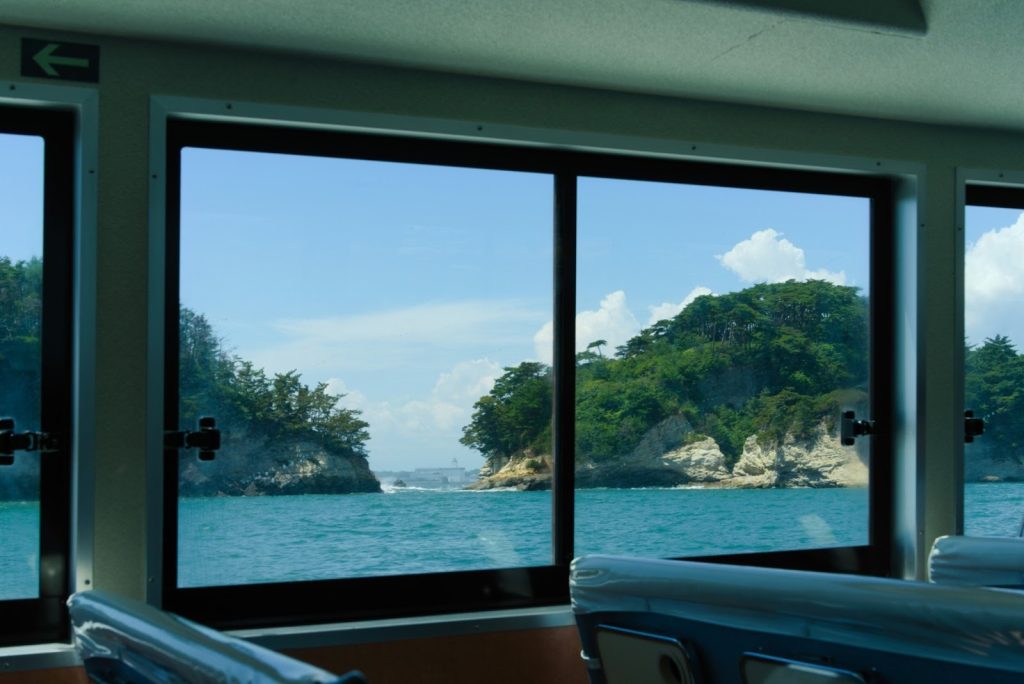
Further south and east, the Pacific coastline extends in a different register. Roads and rail lines trace the edge without fully claiming it. The water does not glitter dramatically; it holds a muted, metallic tone beneath shifting cloud.
Shorter routes, like the Kyoto to Osaka, compress distance without intensifying atmosphere. Urban density gathers and loosens in measured intervals. Even modern structures seem layered rather than abrupt.
Along the coast, scale widens. Concrete promenades meet open water. The horizon feels uninterrupted, though not empty.
Timber, Steel, Salt
Gion leans inward, preserving proportion through narrow passage and wooden surface. The coastline releases perspective outward, allowing sky to dominate.
Yet both depend on repetition. Beam after beam. Wave after wave. Neither space declares itself superior or resolved. They persist in parallel.
Light behaves differently in each — filtered in one, dispersed in the other — though both remain subdued.
The Span Between Intimacy and Horizon
Later, recollection blurs timber façade with seawall edge. A lantern’s glow aligns faintly with distant ship lights. The rail journeys between Kyoto, Osaka, and Tokyo dissolve into steady horizontal passage.
What remains is not contrast between tradition and modernity, nor city and coast, but continuity of surface meeting air. Wood darkening at dusk. Water shifting tone beneath cloud.
And somewhere between tea house doorway and open shoreline, the movement continues quietly — neither heightened nor concluded — simply carried forward along a country that narrows and widens in equal measure.
Edges That Refuse to Announce Themselves
Along the coast, boundaries feel provisional. Concrete gives way to sand in uneven seams. Steel railings trace the edge briefly, then disappear behind shrub or stone. In Gion, thresholds behave similarly — a curtain lifts slightly, a wooden gate stands half open, the interior suggested but not revealed. The shift from inside to outside never feels abrupt in either place.
The sensation is less about entry than adjustment. Space narrows, then releases. Wind replaces the quiet of timbered lanes. Salt air settles where incense once lingered. The change happens without emphasis.
After the Horizon Lowers
Later, memory refuses to separate lantern light from distant shoreline. The narrowness of Kyoto’s streets aligns faintly with the linear stretch of track and road beside the Pacific. The hum of a train floor overlaps with the steady pull of tide.
What remains is not a division between enclosed quarter and open coast, but a shared steadiness — wood weathering slowly, waves repeating without variation. And somewhere along that shifting margin, the rhythm continues quietly, neither fully urban nor entirely maritime, simply carried forward beneath a sky that widens and closes in turns.