Old Town Square Spires and Wilanów Palace Gates: Slavic and Germanic Legacies
Central Europe does not separate its past neatly. Rooflines overlap in steep angles. Church towers rise without clearing the skyline entirely. Courtyards open unexpectedly behind heavy doors. The architecture feels accumulated rather than composed in one gesture.
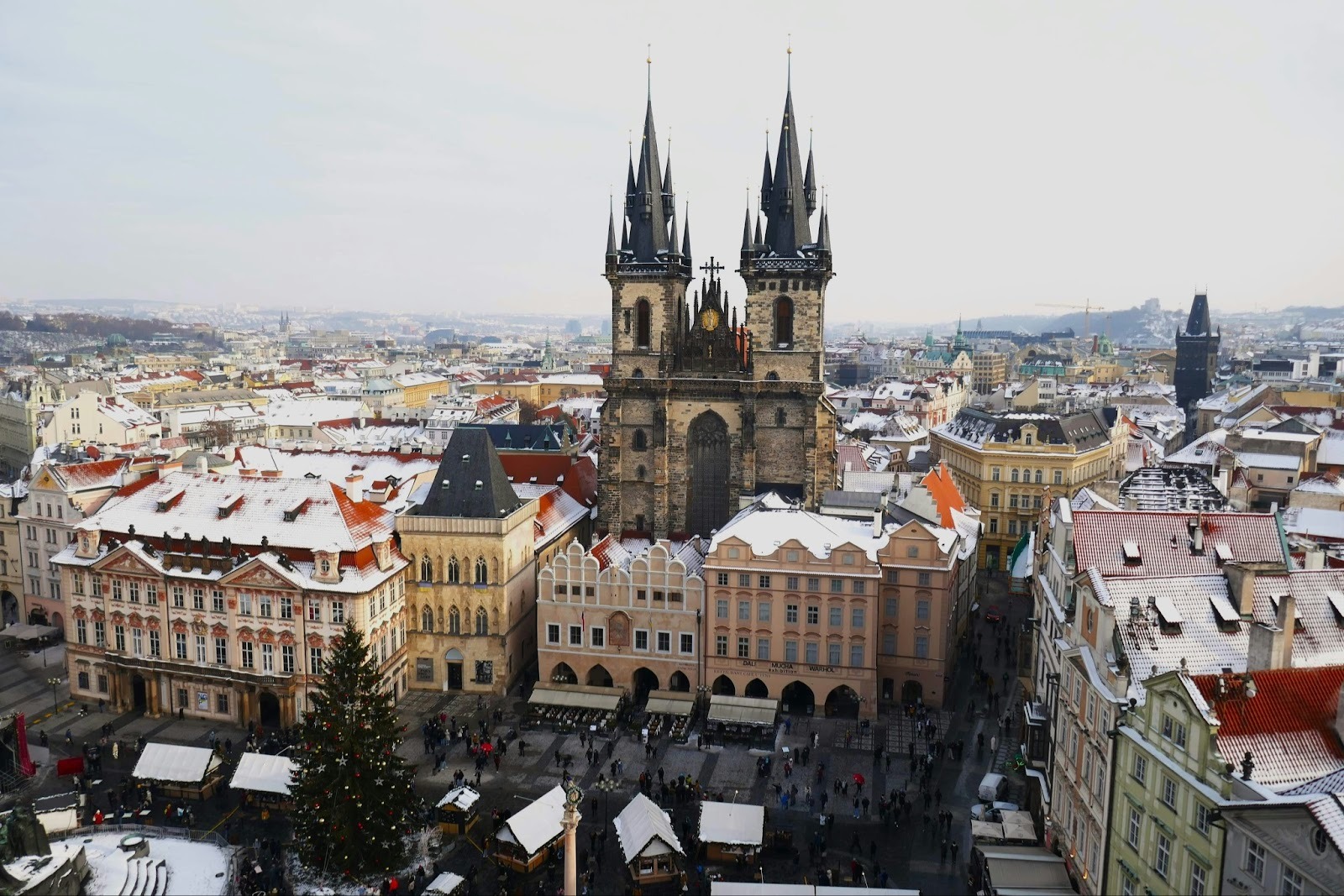
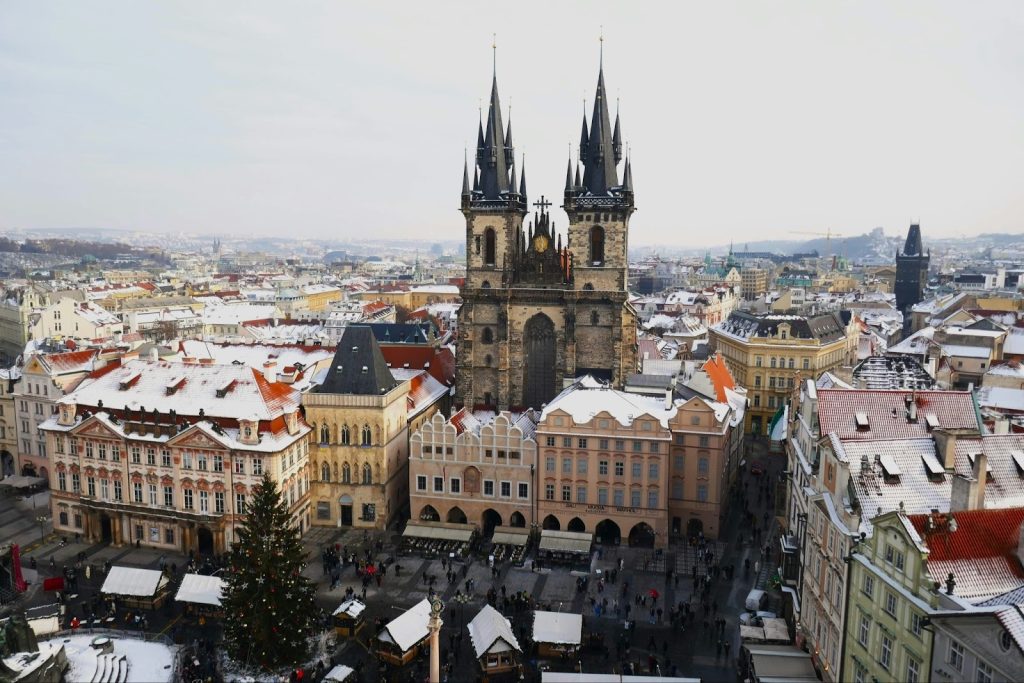
In Prague’s Old Town Square, spires gather upward in uneven succession. They appear clustered rather than singular. The sky narrows between them. Sound settles differently across cobblestones — absorbed, then carried outward again.
Nothing presents itself as definitive. It simply persists.
Where Vertical Lines Multiply
The spires in Old Town do not dominate individually; they accumulate. Dark stone tapers into pale sky, edges softened by distance. Clock faces and sculpted details remain partially obscured from below.
Elsewhere in the region, movement unfolds along routes such as the train from Vienna to Prague, where plains stretch outward before tightening again near city edges. The shift feels procedural rather than symbolic. One horizon gives way to another without declaration.
In the square, repetition defines the space — arch after arch, façade after façade. The vertical pull lingers even when you turn away.
Where Gates Hold the Threshold
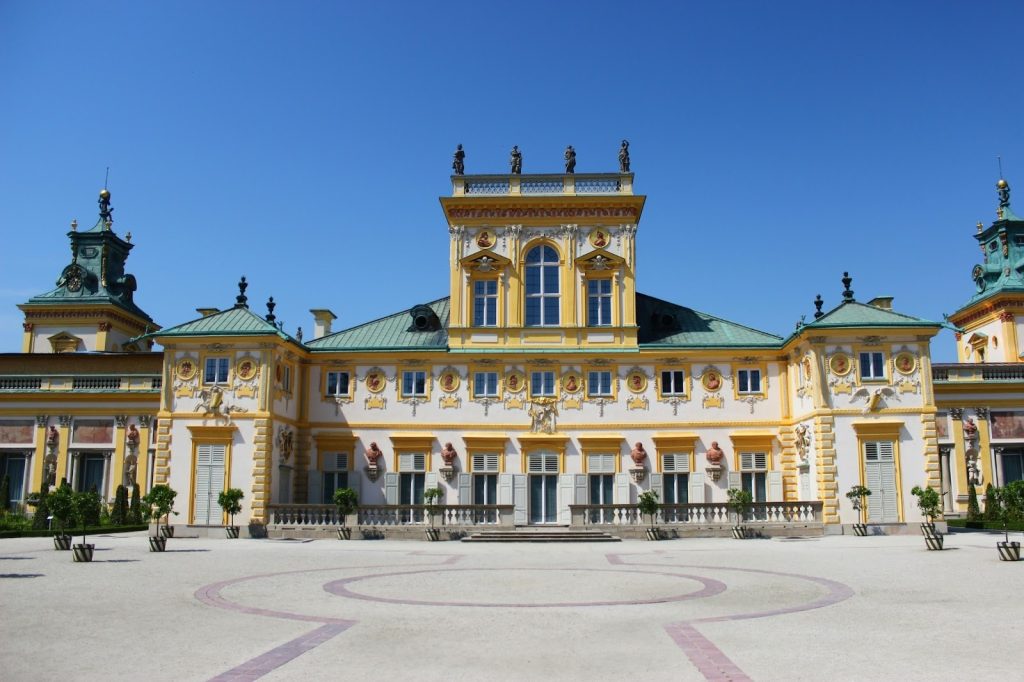
In Warsaw, Wilanów Palace sits behind measured symmetry. Its gates frame approach rather than conceal it. The façade feels lighter than Prague’s darker stone, though no less deliberate. Gardens extend outward in steady geometry.
Journeys threading Poland often trace lines like the Warsaw to Krakow by train, where fields flatten and river valleys gather in subdued curves. Even there, the transition feels incremental.
At Wilanów, the threshold matters as much as the building. Ironwork and arch align before you step through. The sense of entry remains quiet, not ceremonial.
Between Spire and Gate
Old Town gathers attention upward. Wilanów distributes it horizontally across façade and garden. One compresses perspective into height. The other releases it into approach.
Yet both rely on repetition — pinnacle after pinnacle, column after column. The cadence persists without escalation.
Neither insists on spectacle. They hold their presence steadily.
The Line That Threads Through Region
Later, recollection softens the distinction. A Prague spire aligns faintly with a palace arch. The rail journeys between cities blur into steady horizontal passage beneath clouded sky.
What remains is not division between Slavic and Germanic inheritance, but continuity of form meeting air. Stone narrowing into sky. Iron opening toward garden.
And somewhere between tower and gate, the movement continues quietly — not resolved into category — simply unfolding across a region where layers remain visible without separating cleanly.
Where Weather Alters the Outline
Cloud cover changes the silhouette more than architecture does. In Prague, spires darken against a low sky, their edges dissolving into grey before sharpening again when light returns. In Warsaw, the pale façade of Wilanów shifts tone subtly — cream cooling toward white, then warming again beneath brief sun. The alteration feels temporary but steady, as though the buildings are adjusting rather than remaining fixed.
Rain deepens stone and softens gravel paths. Wind moves across open gardens and between narrow square façades with equal indifference. Neither place resists the elements; both register them quietly.
The Stretch That Levels Distance
Between Prague and Warsaw runs a corridor of plain, forest, and small town that rarely insists on difference. Platforms surface briefly. Fields gather in subdued repetition. The horizon remains broad enough to absorb contrast into tone.
Over time, memory merges spire and gate into a single impression of vertical and horizontal lines meeting open air. Carved stone and ironwork lose their distinction, settling into shared outline beneath unsettled cloud. And somewhere along that steady span, the rhythm continues quietly, carried forward without emphasis, without conclusion.