
Prime Rib Roast Recipe
I still remember the first time I pulled this magnificent Prime Rib Roast Recipe out of the oven, the savory aroma filling the entire kitchen and signaling that the holiday feast was truly ready to begin.
There is something incredibly special about slicing into a perfectly cooked piece of beef that is tender, juicy, and seasoned just right to bring out its natural richness.
It felt like a daunting task at first, but once I realized how simple the preparation actually was, this dish quickly became my absolute favorite tradition for gathering family and friends.
I am so excited to walk you through this foolproof method that guarantees restaurant-quality results right in the comfort of your own home kitchen.
Ingredients
- 12 pound standing rib roast (bone-in), rinsed and patted dry
- 4 medium onions, sliced thick to act as a roasting rack
- 12 teaspoons kosher salt, or coarse sea salt
- 6 teaspoons black pepper, freshly ground
- 12 teaspoons garlic, fresh and minced finely
- 12 teaspoons fresh rosemary, chopped small
- 12 teaspoons fresh thyme, leaves stripped from stems
- 6 teaspoons olive oil, extra virgin quality
Note: This recipe serves approximately 10 to 12 people based on a 12-pound roast, estimating about one pound per person.
Variations
While the classic herb crust is a showstopper, you can easily tweak the flavors to suit your specific dietary needs or taste preferences.
- Dairy-Free Butter Rub: Instead of olive oil, use a high-quality plant-based butter mixed with the herbs for a richer, more decadent crust that remains completely dairy-free.
- Garlic Lover’s Twist: If you adore garlic, double the amount of minced garlic and add garlic powder to the salt mix for an intense savory punch that permeates the crust.
- Spicy Kick: Add a teaspoon of crushed red pepper flakes or a dash of cayenne pepper to your dry rub if you enjoy a bit of heat to contrast the richness of the beef.
- Mustard Crusted: Slather the roast with Dijon mustard before applying the herb rub; this adds a tangy depth of flavor and helps the seasonings adhere better to the meat.
- Sugar-Free Dry Rub: This recipe is naturally sugar-free, but ensure your salt blends or store-bought seasonings don’t contain hidden sugars if you are strictly keto or low-carb.
Cooking Time
- Prep Time: 12 hours (includes marinating time)
- Cooking Time: 3 hours
- Total Time: 15 hours
Equipment you need
- Large roasting pan to hold the meat and catch dripping juices
- Roasting rack (optional) to elevate the meat for even airflow
- Meat thermometer to ensure perfect doneness without guessing
- Sharp carving knife to slice through the roast cleanly
- Cutting board with a juice groove to keep your counters clean
- Small saucepan to warm up the pan drippings for serving
- Fat separator to make the clearest, most flavorful au jus
How to Make Prime Rib Roast?
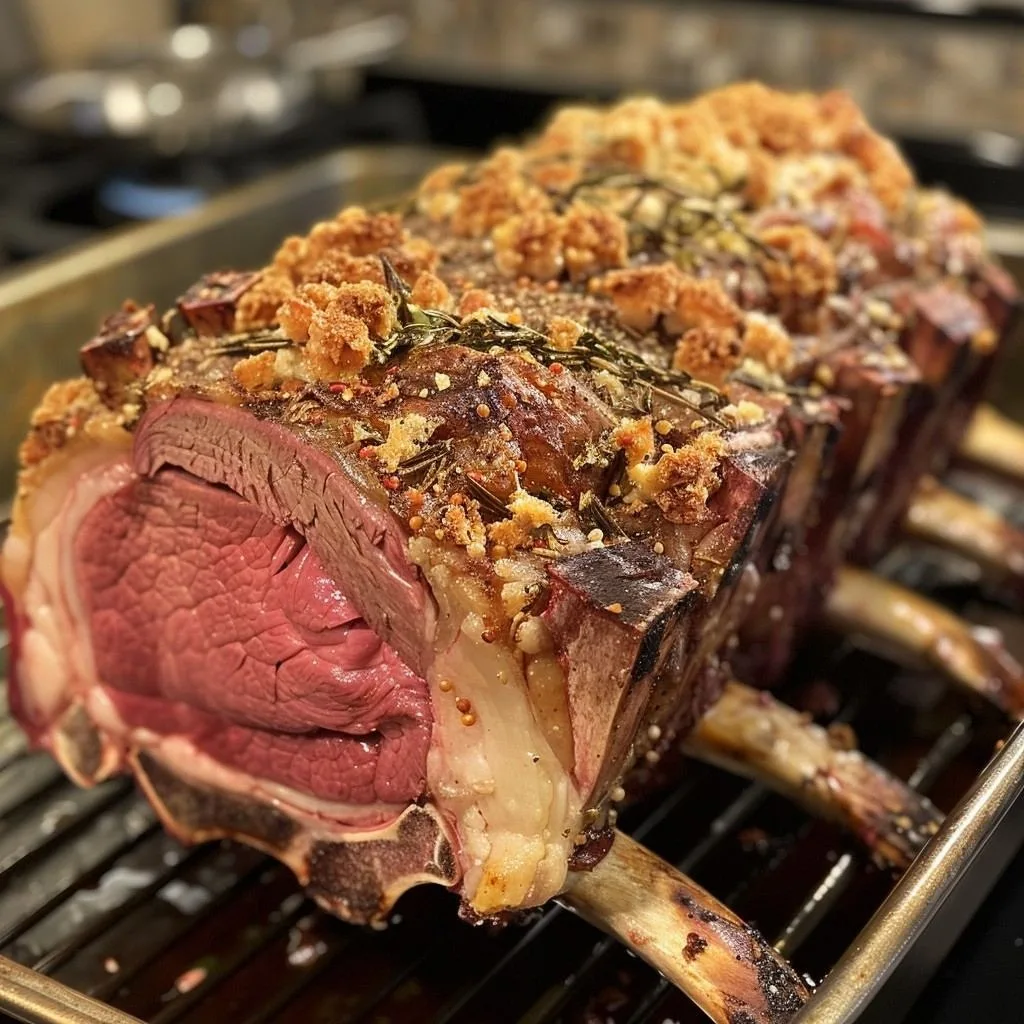
Preparing the Meat and Marinade
Start by taking your beautiful roast and giving it a gentle rinse under cold water, then immediately dry it thoroughly with paper towels to ensure the rub sticks perfectly to the surface.
Grab a small mixing bowl and combine your salt, freshly ground black pepper, minced garlic, chopped rosemary, thyme, and olive oil until it forms a thick, aromatic paste.
Using your hands, massage this herb paste generously all over the beef, paying special attention to the top fatty layer where the flavors will melt down into the meat as it cooks.
Setting Up the Roasting Bed
Take your thick onion slices and arrange them in a layer at the bottom of your roasting pan, creating a natural and flavorful rack for your beef to rest upon during the long cook.
Place the seasoned beef directly on top of these onions, ensuring it is stable, then cover the entire pan loosely but securely with plastic wrap to prepare it for the fridge.
Let the beef rest in the refrigerator for at least eight hours, or preferably overnight, which allows the salt and herbs to penetrate the outer layer for maximum flavor development.
The Initial High-Heat Roast
Remove the roast from the refrigerator about two hours before you plan to cook it, letting it come closer to room temperature to ensure it cooks evenly throughout the center.
Preheat your oven to a high heat of 450 degrees Fahrenheit and position your oven rack in the lower third to prevent the top of the roast from browning too quickly.
Place the roast in the hot oven and cook it for about 30 minutes, then carefully pour half a cup of water into the bottom of the pan to stop the onions from burning.
The Low and Slow Finish
After the first 30 minutes, rotate the pan 180 degrees to ensure even browning, then roast for another 30 minutes until the exterior has a beautiful, golden-brown crust.
Turn the oven temperature down to 350 degrees Fahrenheit and continue roasting for another 90 to 120 minutes, basting the meat occasionally with the pan juices for moisture.
Check the internal temperature with your meat thermometer; you are looking for 120-125 degrees Fahrenheit for a perfect medium-rare center, remembering it will rise as it rests.
Resting and Making the Jus
Once the target temperature is reached, transfer the roast to a carving board and tent it loosely with aluminum foil, letting it rest for at least 20 minutes to redistribute the juices.
While the meat rests, strain the liquid from the roasting pan through a fine-mesh sieve into a fat separator to isolate the rich beef juices from the rendered fat layer.
Pour the de-fatted juices into a small saucepan and warm them gently over low heat, adding a splash of water if the liquid is too salty or concentrated for your taste.
Additional Tips for Making this Recipe Better
- I always recommend using a digital instant-read thermometer because it eliminates all the guesswork and prevents the heartbreak of overcooking such an expensive cut of high-quality beef.
- I have found that letting the roast sit uncovered in the fridge for the last hour of marinating dries out the surface even more, resulting in an incredibly crispy and flavorful crust.
- I suggest checking the water level in the roasting pan every 45 minutes or so because if the pan goes dry, the drippings will burn and ruin your delicious homemade au jus.
- I like to ask the butcher to “chine” the bone or cut the meat away from the ribs and tie it back on, which makes carving essentially effortless when serving.
- I personally love using the roasted onions from the bottom of the pan as a side dish because they become incredibly sweet, caramelized, and soaked in savory beef flavor.
How to Serve Prime Rib Roast?
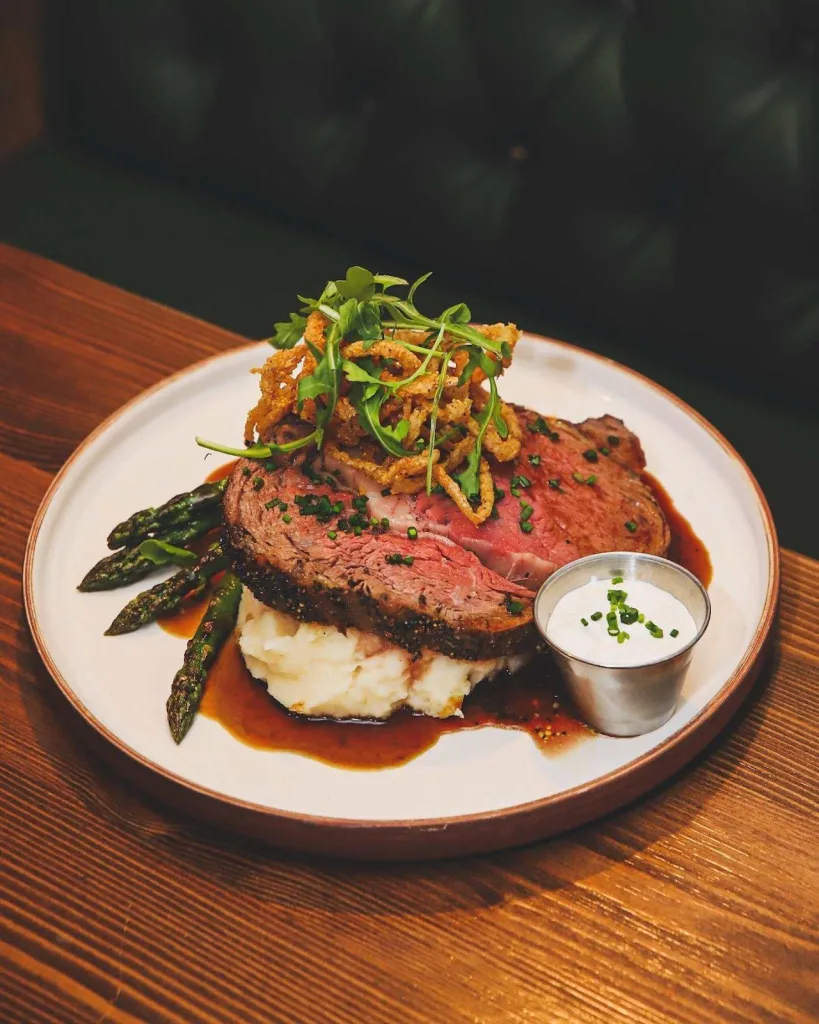
When you are ready to plate this masterpiece, slice the meat against the grain into thick, generous slabs. Place a slice on a warmed dinner plate to keep the fat rendered and the meat juicy.
A sprig of fresh rosemary or thyme on top adds a pop of color and freshness to the presentation. Serve the warm au jus in a small pitcher or ladle it directly over the meat just before bringing it to the table.
For a classic steakhouse feel, offer a side of creamy horseradish sauce or pure horseradish for those who enjoy a sinus-clearing kick to cut through the richness of the beef. The contrast between the pink interior and the dark, herbed crust is visually stunning, so let the meat be the star of the show.
Nutritional Information
- Calories: 709 kcal per serving
- Protein: 32 grams per serving
- Carbohydrates: 7 grams per serving
- Fat: 62 grams per serving
Make Ahead and Storage
Refrigerator Storage
If you have leftovers, they can be stored in the refrigerator for up to three or four days if kept in an airtight container or wrapped tightly in foil.
I usually wrap the meat tightly in plastic wrap first and then a layer of foil to prevent air from drying out the cut surface and to keep the fridge smells away.
Keep the leftover au jus in a separate small jar or airtight container so you can reheat it later to pour over the warmed slices.
Freezing Instructions
You can freeze cooked prime rib, though it is best enjoyed fresh; wrap individual slices or the whole chunk tightly in plastic wrap, then foil, and place in a freezer bag.
Label the bag clearly with the date, and try to consume the frozen beef within three months for the best texture and flavor quality upon thawing.
Thaw the frozen meat in the refrigerator overnight rather than using the microwave, as a slow thaw helps preserve the moisture and texture of the beef.
Reheating Tips
To reheat without overcooking, place slices in a baking dish with a splash of beef broth or leftover jus, cover with foil, and warm in a low oven at 250°F.
Check the meat frequently and remove it as soon as it is warm; avoid high heat or microwaves, which will turn your lovely medium-rare steak into a tough, gray piece of rubber.
The goal is simply to bring the fats to a melting point again without continuing the cooking process, preserving that tender pink center you worked so hard to achieve.
Why You’ll Love This Recipe?
- Incredible Flavor Payoff: The overnight marinating process ensures that every single bite is infused with savory herbs and garlic, creating a depth of flavor that simple roasting cannot match.
- surprisingly Simple Method: Despite looking impressive and complex, the hands-on time is minimal, letting the oven do the heavy lifting while you enjoy time with your guests.
- Perfect for Crowds: A large standing rib roast naturally feeds a lot of people, making it the ultimate stress-free centerpiece for large holiday gatherings or special family reunions.
- Customizable Doneness: The shape of the roast means the end cuts are well-done for those who prefer it, while the center remains perfectly pink, keeping everyone at the table happy.
- Versatile Leftovers: The leftover meat is just as valuable as the main meal, making for the most luxurious roast beef sandwiches, hash, or soup additions for days afterward.

