
Chicken Katsu Curry Recipe
I finally understand the obsession with Chicken Katsu Curry Recipe after making it myself. The combination of that rich, uniquely spiced sauce with perfectly crispy chicken is simply unbeatable.
I was inspired by the famous Wagamama dish but wanted to create a version that was just as delicious, a bit healthier, and easy to make at home.
This baked katsu recipe is my go-to for a “fakeaway” night, and it always hits the spot. Honestly, it might even be better than the original.
Ingredients
Here are the ingredients you’ll need to create this fantastic dish. Using fresh, quality ingredients makes a noticeable difference in the final flavor.
For the Katsu Curry Sauce
- 2 onions, diced – These form the sweet, aromatic base of the sauce, so don’t be shy with them.
- 1 carrot, thinly sliced – Adds a touch of natural sweetness and color to the curry.
- 3 cloves of garlic, minced – Freshly minced garlic provides a much better flavor than pre-minced jarred versions.
- 1 tbsp ginger, peeled & grated – This adds a crucial zingy and warm flavor that is signature to katsu curry.
- 1 tbsp coconut oil – A great, stable oil for gently frying the aromatics to build flavor.
- 1.5 tbsp curry powder – The heart of the curry flavor; use your favorite medium-heat blend.
- ½ tsp turmeric – Enhances the golden color and adds a subtle earthy note.
- 1.5 tbsp soy sauce – Provides a savory, umami depth that balances the other flavors.
- 1 tbsp honey – Adds a touch of sweetness to round out the sauce. You can also use brown sugar.
- 2 tbsp all-purpose flour – This is the key to thickening the sauce to a perfect, velvety consistency.
- 600ml chicken stock – Use a good quality stock as it makes up the body of your sauce.
For the Crispy Chicken
- 650g chicken breasts (about 3) – Slicing them thinly helps them cook quickly and creates more surface area for the crispy coating.
- 70g to 140g panko breadcrumbs – These Japanese breadcrumbs are larger and flakier, guaranteeing a super crispy finish. Use more if you double-dip.
- 2 eggs, beaten – The binder that helps the panko breadcrumbs stick to the chicken.
- 2 tbsp rapeseed oil – A neutral oil perfect for baking the chicken to a golden crisp.
For Serving
- 300g white or brown rice – Basmati or jasmine rice works wonderfully here.
- Spring onions, sliced – A fresh, crunchy garnish that adds a mild onion flavor.
- Chilli flakes – For those who like an extra kick of heat.
Note: This recipe makes approximately 6 servings.
Variations
One of the best things about this recipe is how easily you can adapt it.
- Vegetarian/Vegan: Swap the chicken breast for planks of firm tofu or thick slices of aubergine (eggplant). For the sauce, use vegetable stock instead of chicken stock and replace the honey with maple syrup or brown sugar to make it fully vegan.
- Low-Carb: Skip the rice and serve the chicken katsu and sauce over a bed of steamed greens like pak choi, tenderstem broccoli, or a fresh side salad.
- Gluten-Free: Use a gluten-free all-purpose flour blend to thicken the sauce and switch to gluten-free panko breadcrumbs for coating the chicken.
- Extra Crispy Chicken: For an even crunchier coating, double-dip the chicken. After coating it in panko, dip it back into the beaten egg and then into the panko breadcrumbs a second time.
Cooking Time
- Prep Time: 5 minutes
- Cooking Time: 30 minutes
- Total Time: 35 minutes
Equipment You Need
- Deep Frying Pan: For sautéing the vegetables and simmering the curry sauce.
- Baking Tray: To bake the breaded chicken until it’s golden and crispy.
- Immersion or Stand Blender: To blend the sauce until it is smooth and creamy.
- Three Shallow Dishes: For setting up your breading station (flour, egg, panko).
- Saucepan: To cook the rice according to package directions.
How to Make Chicken Katsu Curry
This recipe is surprisingly straightforward and comes together in just over half an hour. By baking the chicken, you get all the crispiness without the hassle of deep-frying. The sauce simmers while the chicken bakes, making it an efficient meal to prepare.
Step 1: Start the Sauce
Begin by heating the coconut oil in a deep frying pan over a medium-low heat. Add the diced onion and sliced carrot, season with a pinch of salt, and gently fry for about 5 minutes until they start to soften. This slow start builds a sweet, flavorful foundation for the curry.
Step 2: Simmer the Curry
Add the minced garlic, grated ginger, curry powder, turmeric, honey, and soy sauce to the pan. Stir in the flour and cook for one minute, then pour in a small splash of the chicken stock to create a paste. Slowly whisk in the rest of the chicken stock, bring the mixture to a simmer, then reduce the heat and let it gently bubble away for 20 minutes.
Step 3: Prepare the Chicken
While the sauce is simmering, prepare your chicken. Slice the chicken breasts horizontally to create six thinner cutlets. Set up a breading station with three shallow dishes: one for flour, one for the beaten eggs, and one for the panko breadcrumbs. Coat each chicken piece first in flour, then dip it in the egg, and finally press it firmly into the panko breadcrumbs until it’s fully coated.
Step 4: Bake the Chicken and Cook the Rice
Preheat your oven to 200°C (400°F). Drizzle half of the rapeseed oil onto a large baking tray, arrange the breaded chicken on top in a single layer, and then drizzle the remaining oil over the chicken. Bake for 12 minutes, then flip the chicken pieces and bake for another 12 minutes until they are golden brown and cooked through. While the chicken bakes, cook your rice according to the package instructions.
Step 5: Blend the Sauce and Serve
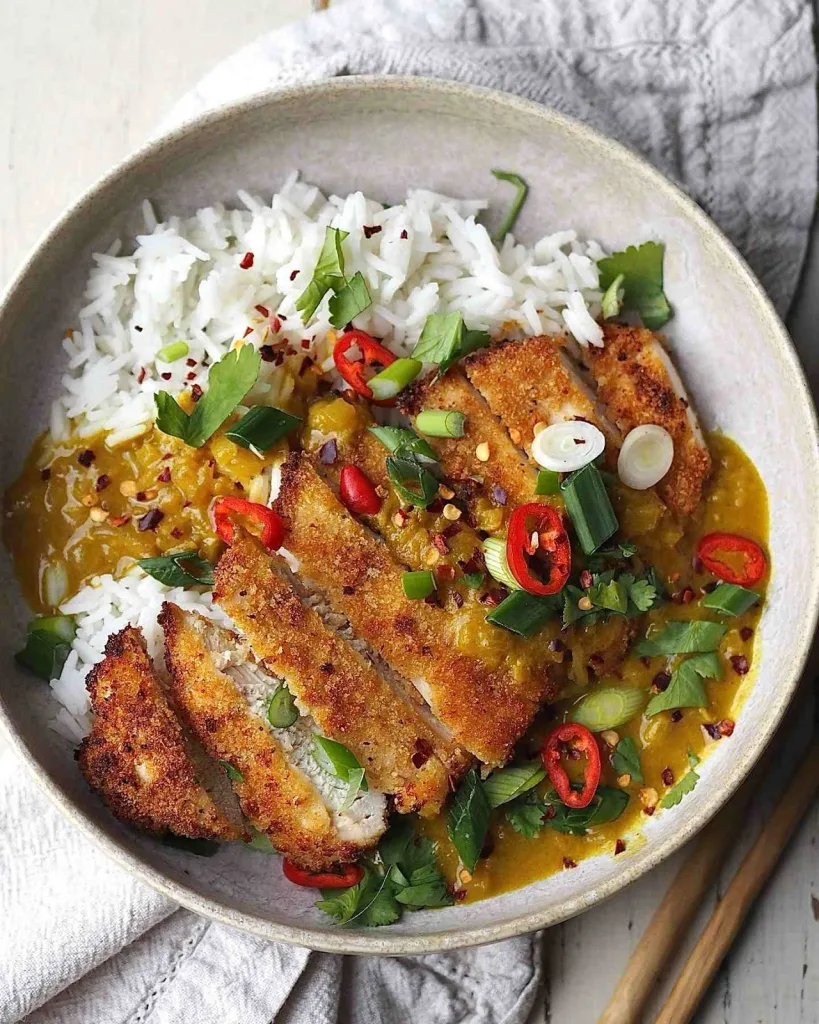
After 20 minutes, your sauce should have thickened. Use an immersion blender to blend it directly in the pan until it’s completely smooth and creamy. Once the chicken is ready, slice it diagonally. Serve by placing a portion of rice in a bowl, ladling the katsu sauce alongside it, and topping with the sliced crispy chicken.
Additional Tips for Making this Recipe Better
Over time, I’ve picked up a few tricks that take this dish from great to absolutely perfect.
- Toast the Spices: Before adding any liquid to the sauce, I like to let the curry powder and turmeric fry with the aromatics for about 30 seconds. This simple step blooms the spices, making their flavor much more intense and fragrant.
- Don’t Crowd the Pan: When baking the chicken, make sure to leave some space between each piece on the baking tray. This allows hot air to circulate properly, ensuring every piece gets evenly crispy instead of steaming.
- Air Fryer Method: If you have an air fryer, I highly recommend using it for the chicken. A light spritz of oil and about 15-18 minutes at 190°C (375°F) gives you the most incredibly crispy chicken katsu I’ve ever had.
- Make the Sauce Ahead: The katsu sauce tastes even better the next day. I often make a double batch and store it in the fridge or freezer. This turns a 35-minute meal into a 20-minute one on a busy weeknight.
How to Serve Chicken Katsu Curry?
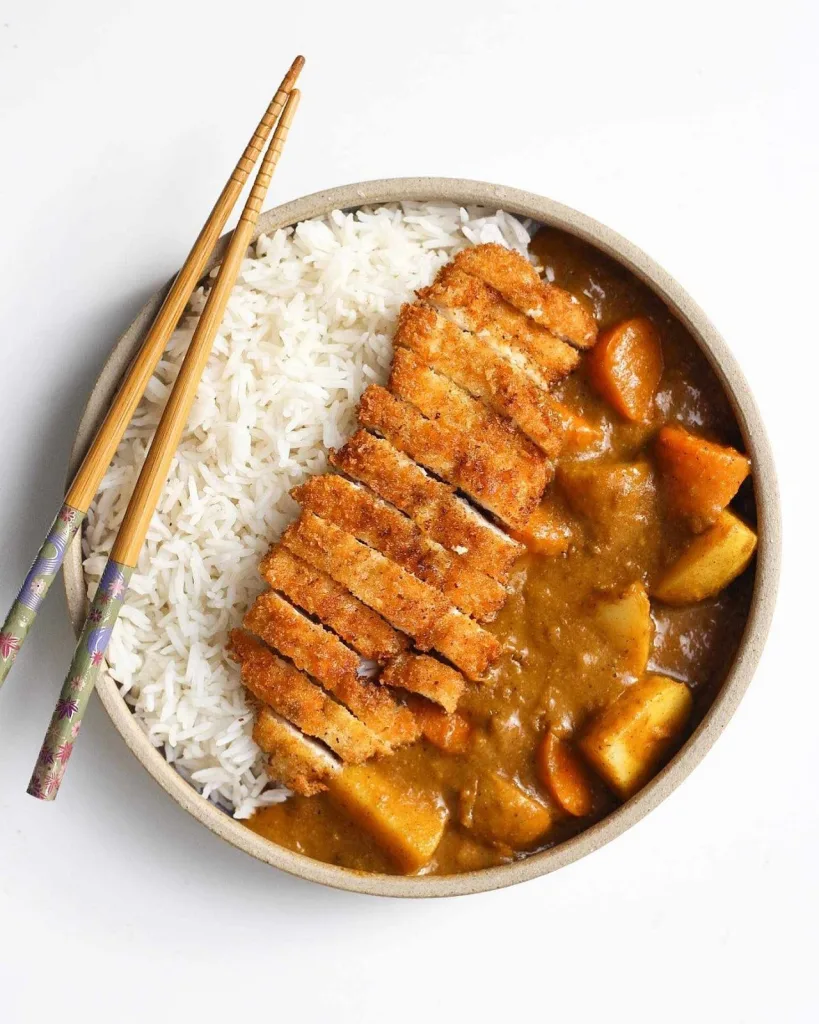
Presentation can make this simple dish feel like a restaurant-quality meal. Traditionally, the chicken is sliced into strips and laid over or next to the rice. Pour the sauce over half of the chicken and rice, leaving some of the chicken exposed to keep it crispy.
For garnishes, sprinkle generously with freshly sliced spring onions and a pinch of chilli flakes for color and a bit of heat. To add more texture and freshness, serve with a side of quick-pickled cucumber or some steamed greens like pak choi or broccoli.
Nutritional Information
Here is an approximate nutritional breakdown for one serving of this chicken katsu curry:
- Calories: 522 kcal
- Protein: 37g
- Carbohydrates: 65g
- Fat: 12g
Make Ahead and Storage
This recipe is great for meal prepping. While the chicken is best served fresh, the sauce can be made in advance to save time.
Storing: You can store the cooked katsu sauce in an airtight container in the refrigerator for up to 4 days. Store leftover cooked chicken and rice separately.
Freezing: The sauce freezes beautifully. Let it cool completely, then pour it into freezer-safe bags or containers and freeze for up to 3 months. The breaded chicken can be frozen before cooking; just freeze it on a tray before transferring to a bag.
Reheating: Reheat the sauce gently in a saucepan on the stove. To revive leftover chicken and make it crispy again, reheat it in an oven or air fryer for a few minutes until hot and crunchy. Avoid the microwave, as it will make the breading soggy.
Why You’ll Love This Recipe?
Here are a few reasons why this recipe is sure to become a new favorite in your household.
- Restaurant Quality at Home: It delivers all the rich, comforting flavors of the beloved restaurant dish but for a fraction of the cost. Plus, you get to control the ingredients and portion sizes.
- Healthier Than Takeout: By baking the chicken instead of deep-frying it, you significantly reduce the amount of oil and calories without sacrificing that essential crispy texture. It’s a “fakeaway” you can feel good about.
- Incredibly Versatile: The recipe is easy to adapt for different dietary needs, whether you need a vegetarian, low-carb, or gluten-free version. The sauce is also delicious on its own with vegetables and rice.
- Perfect for Meal Prep: The sauce can be made well in advance and frozen, making this a quick and convenient option for a busy weeknight dinner. Just cook the chicken and rice, and you’re ready to eat.