Round vs Rectangular Trampolines: Which Should You Buy?
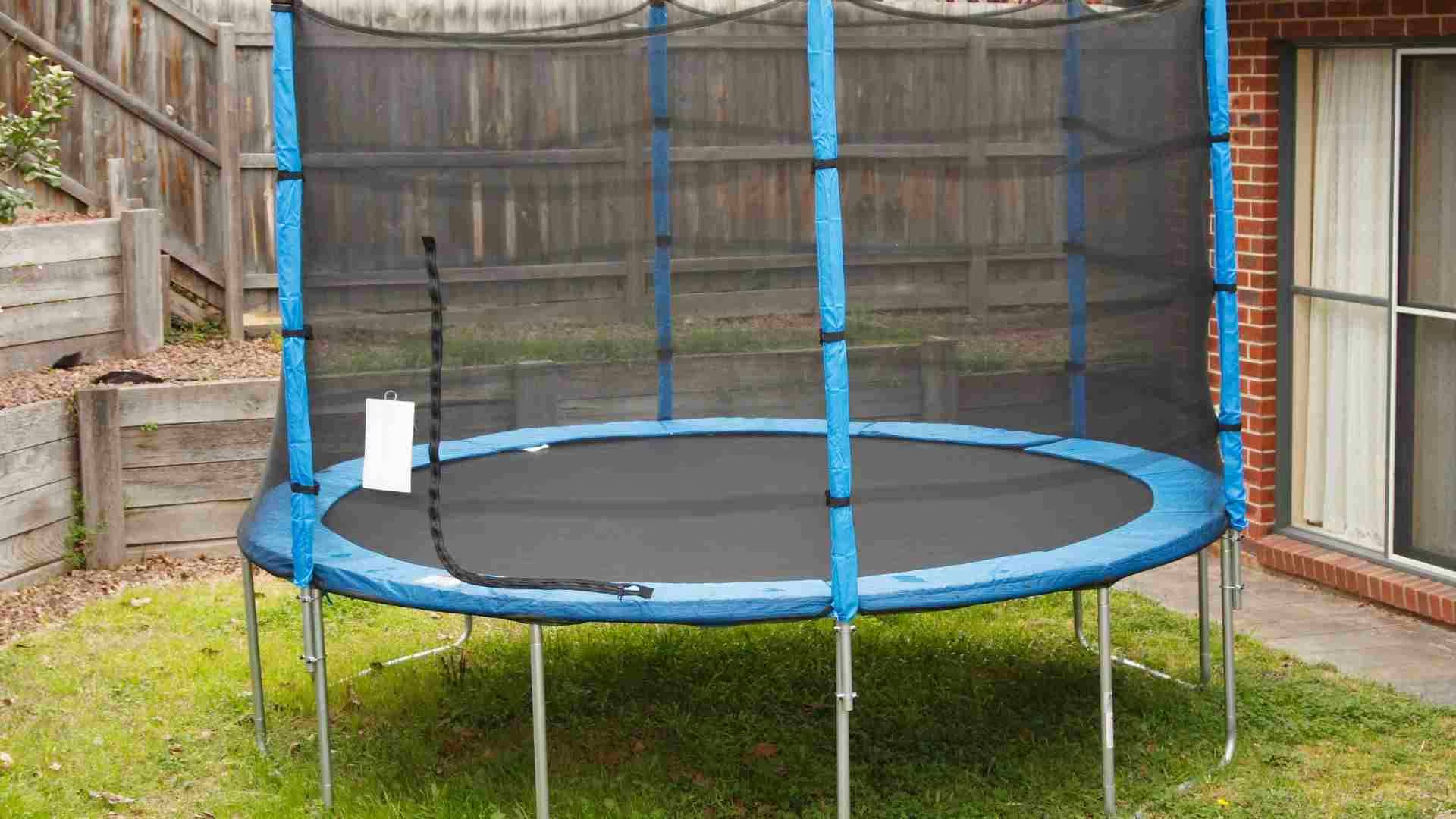
If you’re in the market for a trampoline, one of the biggest decisions you’ll face is whether to buy a round or rectangular trampoline.
Both styles have unique benefits, and the right choice depends on your space, safety concerns, budget, and how the trampoline will be used. In this guide, we’ll compare round vs. rectangular trampolines to help you make the best decision when you buy a trampoline for your family or fitness goals.
Shape and Bounce Pattern
Round Trampolines: Round trampolines are the most popular for backyard use. Their circular design naturally directs jumpers toward the center, making them safer for kids and beginners. The springs on a round trampoline work together uniformly, resulting in a controlled bounce that’s ideal for casual jumping and recreation.
Rectangular Trampolines: Rectangular trampolines, on the other hand, offer a higher and more even bounce across the surface. This is why they’re the top choice for gymnasts and athletes. Because the springs activate at different rates depending on where you land, the bounce is more powerful and less centralized, giving users more control and space for tricks and routines.
Space and Placement
Round Trampolines: These are often easier to fit into irregularly shaped yards. Since round trampolines are symmetrical, they offer 360-degree access, making placement more flexible. However, you’ll need extra clearance around the entire perimeter for safety.
Rectangular Trampolines: Rectangular models are more space-efficient if you have a long, narrow yard. They can fit snugly into corners or along fences. However, they require a larger area overall due to their longer length and more intense bounce, which can lead to higher jumping heights.
Safety Considerations
Round Trampolines: Generally considered safer for younger children. The natural movement toward the center helps reduce the risk of falling off or colliding with the frame. Most round trampolines also come with enclosure nets and padded edges to enhance safety.
Rectangular Trampolines: While not unsafe, they do require more supervision, especially with young or inexperienced jumpers. The higher bounce can lead to more dangerous falls or flips if not properly supervised. That said, many modern rectangular trampolines include advanced safety features such as shock-absorbing mats and safety nets.
Usage: Recreational vs Performance
Choose Round if:
- You’re buying for young children or family fun.
- You prefer gentle, controlled bouncing.
- Your primary goal is recreational play and exercise.
- You’re on a tighter budget.
Choose Rectangular if:
- You or your kids are gymnasts, cheerleaders, or athletes.
- You want a higher, more consistent bounce across the surface.
- You’re planning to practice routines, flips, or advanced tricks.
- You have the space and budget for a premium experience.
Price Comparison
Round trampolines are typically more affordable. Their uniform design and widespread availability make them the go-to for budget-conscious families. Rectangular trampolines are usually more expensive due to their larger size, enhanced bounce quality, and specialized use. However, the investment may be worth it for athletic training or serious jumpers.
Durability and Longevity
Both trampoline shapes can be durable with the right materials and maintenance. That said, rectangular trampolines often feature heavier-duty frames and components, as they’re built for higher-impact use. Be sure to look for galvanized steel frames, UV-resistant mats, and weather-resistant padding when shopping.
Final Thoughts
When choosing between a round vs rectangular trampoline, think about your space, budget, safety needs, and how you intend to use it. For most families, a round trampoline is an excellent choice for safe, fun backyard entertainment. But if you’re looking for performance and the ability to train like a pro, a rectangular trampoline is well worth the investment.