
Bibimbap Recipe
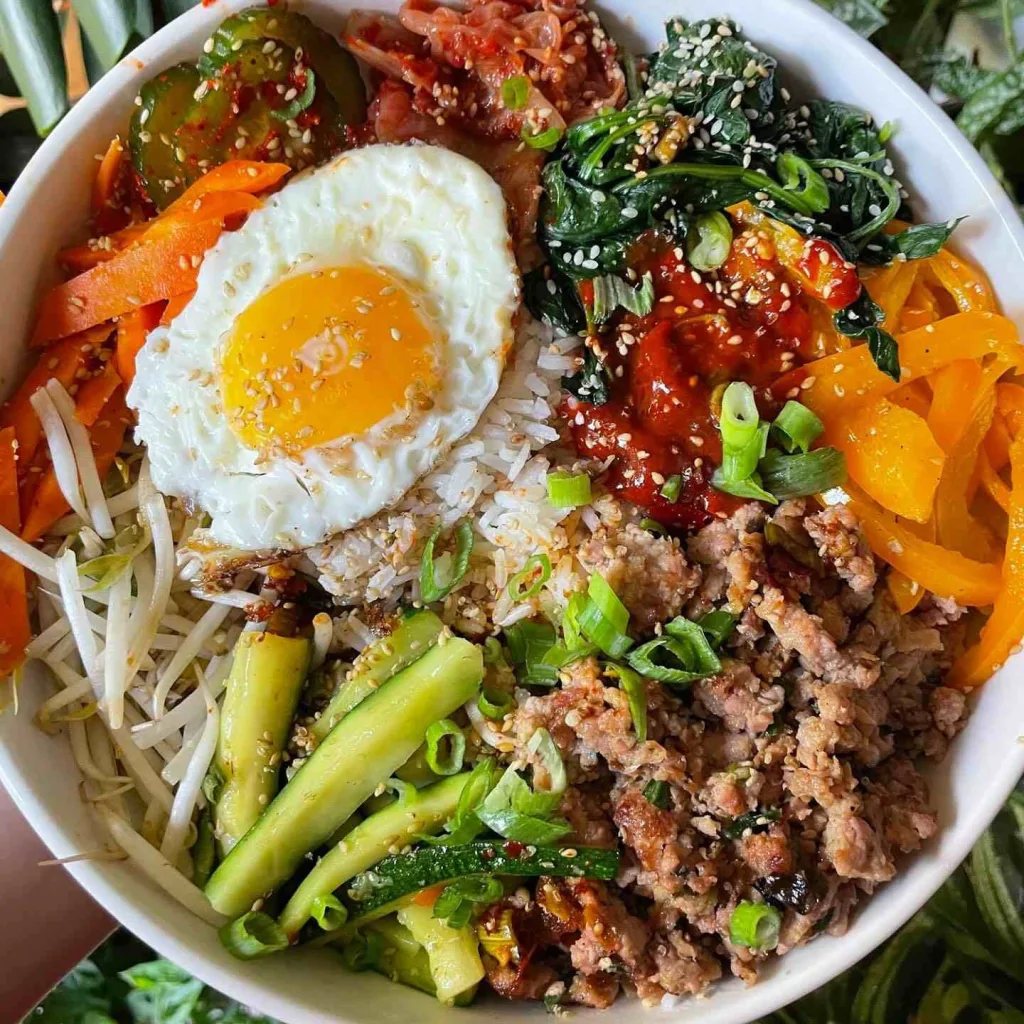
I have to admit, standing in my kitchen with a bowl of colorful veggies, savory beef, and that perfect sunny-side-up egg makes me feel like a professional chef.
Making this bibimbap was such a rewarding experience because the simple act of mixing everything together turns humble ingredients into a flavor explosion.
I love how the spicy sauce ties the fresh crunch of the vegetables and the tender meat together in every single bite.
It is honestly one of those meals where the effort you put into chopping and sautéing pays off ten-fold in taste.
Trust me, once you break that yolk and stir it all up, you will never look at a rice bowl the same way again.
Ingredients
Here is everything you need to create this masterpiece. The key to a great bibimbap is preparing each component with care so they shine individually before being mixed.
Note: This recipe makes 4 generous servings.
- 4 cups Cooked Short Grain Rice: Short grain or sushi rice is best because its sticky texture makes it easier to eat with chopsticks and holds the sauce well.
- 4 Large Eggs: You will fry these sunny-side-up to place on top; the runny yolk acts as a second sauce, adding richness to the whole bowl.
- 2 teaspoons Sesame Seeds: Toasted sesame seeds add a lovely nutty finish and visual appeal when sprinkled over the final dish.
- 250g (8oz) Beef Tenderloin: Thinly sliced beef is traditional; I recommend freezing it for 30 minutes before slicing to get those paper-thin, professional cuts.
- 1/4 Green Apple (Grated): This is a pro secret for the marinade; the acidity and enzymes in the apple tenderize the meat while adding natural sweetness.
- 3 Garlic Cloves (Minced): Fresh garlic is essential here for that punchy, aromatic base in the meat marinade; avoid the jarred stuff if possible.
- 1 tablespoon Soy Sauce: Use regular or light soy sauce for the salt element in the beef; it provides that classic savory umami depth.
- 1 tablespoon Honey: This balances the salty soy sauce and helps caramelize the edges of the beef when you sear it in the pan.
- 2 teaspoons Toasted Sesame Oil: This goes into the beef marinade to impart a deep, roasted flavor that vegetable oil simply cannot provide.
- 2 Large Carrots: You need to cut these into thin matchsticks (julienne); fresh carrots provide a necessary sweet crunch against the savory rice.
- 2 Large Zucchinis: Also cut into matchsticks; make sure they are firm and fresh so they don’t turn into mush when you sauté them.
- 1 Bunch Spinach: Use fresh spinach rather than frozen; frozen spinach tends to be too watery and lacks the vibrant texture needed here.
- 8 Dried Shiitake Mushrooms: Rehydrate these for a meaty, intense mushroom flavor that fresh mushrooms struggle to match; slice them thinly after soaking.
- 4 cups Bean Sprouts: These add a refreshing, watery crunch; you will blanch them quickly so they retain their snap without being raw.
- 4 tablespoons Gochujang Paste: This spicy fermented chili paste is the heart of the sauce; you can find it in the Asian aisle of most supermarkets.
- 2 tablespoons Mirin: A sweet Japanese rice wine that thins the paste and adds a glaze-like sheen to your sauce.
- 2 tablespoons Rice Vinegar: This adds a sharp tang to the sauce, cutting through the richness of the egg yolk and sesame oil.
- 1 tablespoon Sugar: Just a touch is needed in the sauce to balance the heat of the chili paste and the acidity of the vinegar.
Variations
You can easily customize this bowl to suit your dietary needs or just to use up whatever is in your fridge.
- Vegetarian/Vegan: Skip the beef and egg. Instead, use firm tofu cubes pan-fried until crispy, or simply load up on extra hearty mushrooms like King Oysters.
- Low-Carb Option: Swap the white rice for cauliflower rice or a base of mixed greens. The toppings are so flavorful you won’t miss the starch.
- Spicy Kick: If you love heat, add fresh sliced chili peppers to the toppings or mix a teaspoon of cayenne powder into the Gochujang sauce.
- Seafood Twist: Replace the beef with sautéed shrimp, squid rings, or even flaked salmon for a lighter, pescatarian-friendly version.
Cooking Time
- Prep Time: 40 minutes
- Cooking Time: 30 minutes
- Total Time: 1 hour 10 minutes
Equipment You Need
- Sharp Chef’s Knife: Essential for julienning the carrots and zucchini into uniform matchsticks.
- Box Grater: Used to grate the apple for the marinade and garlic for the sauce.
- Large Skillet: You will need a wide pan to sauté the vegetables and sear the beef in batches.
- Small Mixing Bowls: Helpful for keeping your prepped vegetables separate before cooking.
- Saucepan: Needed to blanch the bean sprouts and spinach quickly.
How to Make Bibimbap?
This recipe is all about preparation, so once you have your ingredients chopped and ready, the cooking process is fast and fun.
Prepare the Bibimbap Sauce
Start by combining the Gochujang paste, mirin, rice vinegar, soy sauce, sugar, minced garlic, and sesame oil in a small bowl. Whisk these ingredients vigorously until the sugar has completely dissolved and the sauce is smooth and glossy. Set this aside to let the flavors meld together while you prepare the rest of the meal.
Marinate the Beef
In a separate mixing bowl, combine the grated apple, minced garlic, soy sauce, honey, and toasted sesame oil to create the marinade. Add your thinly sliced beef to the bowl and toss it well to ensure every piece is coated thoroughly. Let the beef sit for at least 30 minutes, or overnight if you have time, to tenderize and absorb the flavors.
Prepare and Cook the Vegetables
Rehydrate your dried shiitake mushrooms in boiling water for about 30 minutes, then drain, squeeze dry, and slice them thinly. Blanch the spinach and bean sprouts separately in boiling water, then squeeze out excess moisture and season lightly with sesame oil and salt. Sauté the carrots, zucchini, and mushrooms individually in a hot skillet with a little oil until they are tender but still retain a bite.
Cook the Beef and Eggs
Heat your skillet over high heat and add the marinated beef, ensuring you don’t overcrowd the pan so it sears rather than steams. Cook the beef for about 3 to 4 minutes until it is browned and cooked through, then remove it from the heat. In the same pan (or a clean one), fry your eggs sunny-side-up until the whites are set but the yolks are still runny.
Assemble the Bowl
Scoop a generous serving of warm rice into the bottom of each bowl to serve as your foundation. Arrange small mounds of each cooked vegetable and the beef on top of the rice, alternating colors for a beautiful presentation. Place the fried egg in the center, sprinkle with sesame seeds, and serve immediately with the sauce on the side or drizzled on top.
Additional Tips for Making this Recipe Better
- I learned the hard way that squeezing the water out of the spinach and bean sprouts is crucial; if you skip this, your rice bowl will turn into a soggy soup at the bottom.
- When I make this, I always double the sauce recipe because it is honestly addictive, and having extra for dipping or drizzling over leftovers the next day is a total lifesaver.
- I recommend cooking the vegetables from lightest to darkest color (onions/sprouts first, mushrooms last) if you are using the same pan, so you don’t have to wash it between every single ingredient.
- Don’t be afraid to let the rice sit in the hot stone bowl (if you have one) or fry it slightly in a skillet before serving to get that crispy, golden crust on the bottom known as “nurungji.”
How to Serve Bibimbap?
Presentation is a huge part of the bibimbap experience, so take a moment to arrange your bowl thoughtfully.
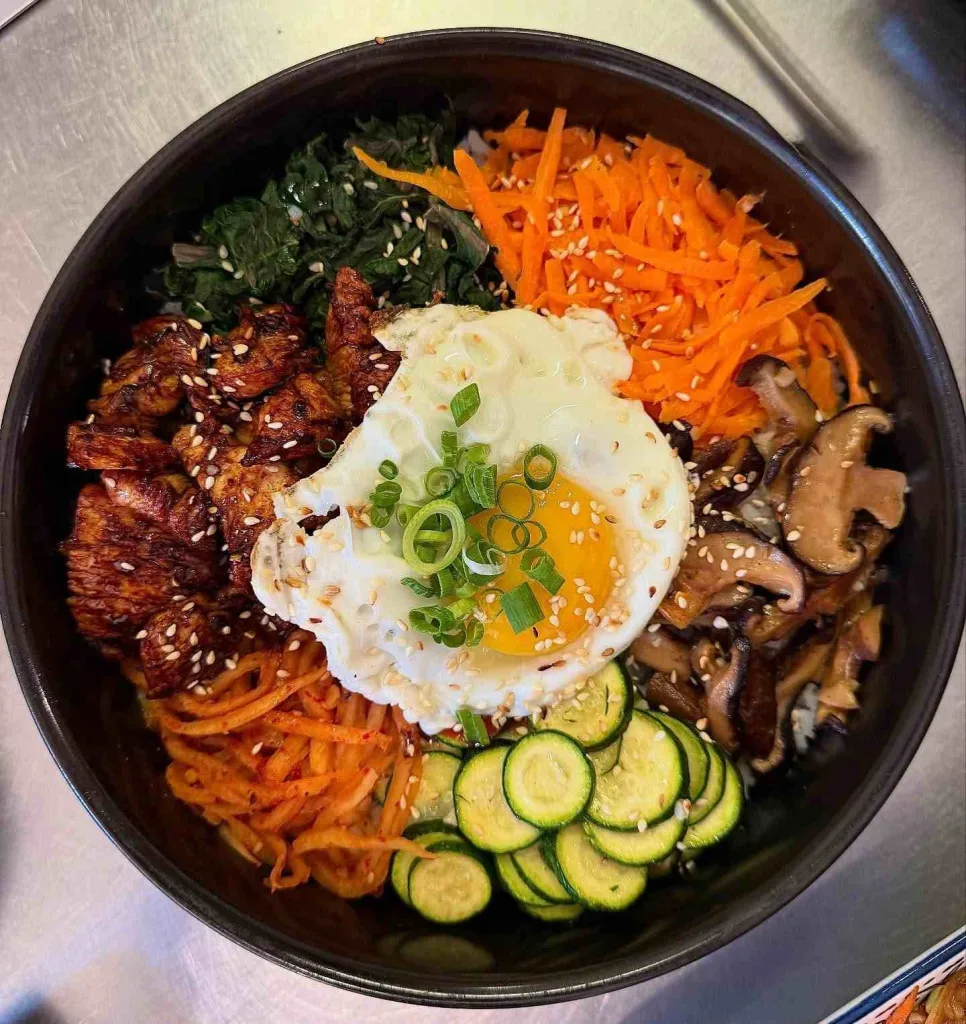
- Color Wheel: Place contrasting colors next to each other—green spinach next to orange carrots, dark beef next to white bean sprouts—to make the dish pop visually.
- The Crown: The egg must go in the absolute center; it is the visual focal point and the “lava” that will coat the other ingredients once broken.
- Tableside Mixing: Serve the sauce in a small dish on the side or a squeeze bottle, allowing each person to control their own spice level before they mix it all up.
Nutritional Information
Here is a quick look at the nutritional profile for one serving, assuming you use the ingredients listed above.
- Calories: Approximately 689 kcal
- Protein: 27g
- Carbohydrates: 73g
- Fat: 32g
Make Ahead and Storage
This dish is actually fantastic for meal prep because the components hold up well in the fridge.
Storing Leftovers
You can store the cooked beef and vegetables in separate airtight containers in the refrigerator for up to 4 to 5 days. Keep the sauce in a small jar; it will last for weeks, while the rice should be stored separately to prevent it from drying out too much.
Freezing Instructions
The marinated (uncooked) beef freezes beautifully; just place it in a freezer bag right after mixing it with the sauce. You can also freeze the cooked rice, but I would avoid freezing the cooked vegetables as their texture tends to get rubbery and unpleasant upon thawing.
Reheating
To reheat, simply microwave the rice until it is piping hot, and warm the beef and vegetables slightly separately. Assemble the bowl while the components are warm, and always fry a fresh egg right before serving for the best taste and texture.
Why You’ll Love This Recipe?
Here are a few reasons why this recipe has earned a permanent spot in my dinner rotation.
- It is incredibly versatile: You can basically use any vegetable you have wilting in your crisper drawer, making it the perfect “clean out the fridge” meal that still feels gourmet.
- You control the flavor: Because the spicy sauce is added at the end, it is completely customizable for families where some people love heat and others prefer a milder, savory taste.
- It is a balanced meal: With protein, healthy fats, carbs, and a rainbow of vegetables all in one bowl, you get a complete nutritional package without needing side dishes.
- Great for meal prep: Since Bibimbap is meant to be served at room temperature or warm (not piping hot), it makes for an excellent packed lunch that doesn’t need aggressive reheating.