
Basil Chicken in Coconut Curry Sauce Recipe
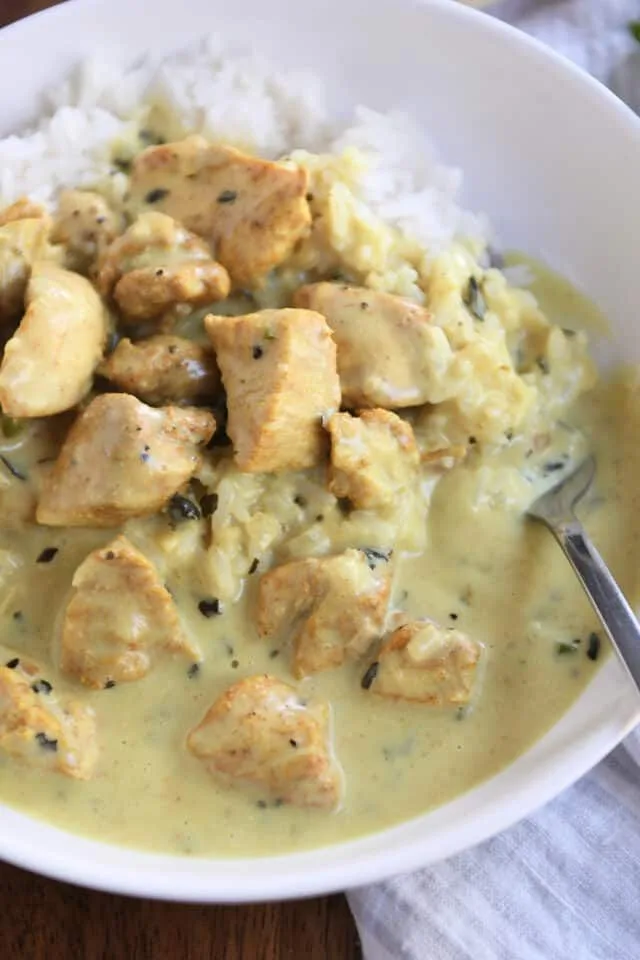
There is something deeply comforting about a bowl of Basil Chicken in Coconut Curry Sauce that strikes the perfect balance between creamy, spicy, and aromatic, and this recipe has become my absolute go-to for busy weeknights.
I love how the richness of the coconut milk clings to the tender chicken, while the fresh basil adds this incredible burst of brightness right at the end that wakes up the whole dish.
It’s one of those meals that smells so good while it’s cooking that my family usually wanders into the kitchen asking when dinner will be ready before I’ve even finished chopping the herbs.
Every time I make this, I’m reminded that you don’t need a long ingredient list to create something that tastes like it came from a restaurant.

Ingredients
Here are the essential components you need to build this flavorful, aromatic curry from scratch.
- 1 pound Boneless, Skinless Chicken Thighs: I always choose thighs over breasts for curry because they stay incredibly juicy and tender during the simmer without drying out.
- 1 large Onion (sliced): Slicing them from root to tip helps them hold their shape better during cooking, adding a nice texture to the sauce.
- 1 can (14 oz) Coconut Milk: Go for full-fat coconut milk here; the low-fat versions are too watery and won’t give you that luxurious, velvety sauce we want.
- 1-2 Jalapeño Peppers (seeded and minced): These provide a fresh, grassy heat; remove the seeds if you want the flavor without burning your tongue.
- 5 cloves Garlic (minced): Don’t be shy with the garlic, as it forms the aromatic base that cuts through the richness of the coconut.
- 1 tablespoon Fresh Ginger (finely chopped): Fresh ginger adds a zesty, warm spice that powdered ginger just can’t replicate, so take the time to peel and chop the real thing.
- 2 tablespoons Canola or Vegetable Oil: You need a neutral oil with a high smoke point to properly sear the vegetables and bloom the spices without burning.
- 1 tablespoon Lime Juice: This acid is crucial for balancing the heavy coconut cream; add it at the very end to keep the flavor bright.
- 12-20 Fresh Basil Leaves: Tear these by hand right before adding them to prevent bruising; they add a sweet, peppery finish that defines the dish.
- 1/2 teaspoon Turmeric: This gives the curry its signature golden-yellow hue and adds an earthy, slightly bitter undertone.
- 1/2 teaspoon Ground Coriander: Adds a citrusy, floral note that pairs beautifully with the ginger and lime.
- 1/2 teaspoon Cumin: Provides a warm, nutty depth that anchors the lighter spices.
- 1/4 teaspoon Cinnamon: A tiny amount goes a long way to add warmth and complexity without making it taste like a dessert.
- 1/4 to 1/2 teaspoon Cayenne Pepper: Adjust this based on your heat tolerance; it provides the background warmth that lingers after each bite.
- 1 teaspoon Salt: Essential for bringing out the flavors of the chicken and the sauce.
Note: This recipe yields approximately 4 servings.
Variations
Feel free to tweak this recipe to suit your dietary preferences or what you have in your pantry.
- Vegetarian Twist: Swap the chicken for firm tofu cubes or chickpeas and use vegetable broth to thin the sauce if needed.
- Extra Veggies: I often toss in red bell peppers, snap peas, or baby spinach during the last few minutes of cooking for added color and nutrition.
- Thai-Inspired: Substitute the dry spice mix with a few tablespoons of green or red curry paste for a different flavor profile that’s equally delicious.
- Nutty Crunch: Garnish with roasted cashews or peanuts right before serving to add a satisfying crunch against the soft chicken.
Cooking Time
- Prep Time: 15 minutes
- Cooking Time: 25 minutes
- Total Time: 40 minutes
Equipment You Need
- Wok or Large Skillet: Essential for searing the chicken and vegetables quickly and holding all that delicious sauce.
- Chef’s Knife: Needed for slicing the onions, mincing the garlic/ginger, and cubing the chicken safely.
- Cutting Board: Use a separate plastic board for the raw chicken to avoid cross-contamination with your veggies.
- Wooden Spoon: Perfect for stirring the curry and scraping up the flavorful browned bits from the bottom of the pan.
- Measuring Spoons: Critical for getting the spice blend balanced correctly so one flavor doesn’t overpower the others.
- Rice Cooker or Pot: To prepare the fluffy bed of rice that will soak up every drop of the curry sauce.
How to Make Basil Chicken in Coconut Curry Sauce?
Follow these simple steps to create a rich, restaurant-quality curry right in your own kitchen.
Creating the Spice Blend
Start by grabbing a small bowl and mixing all your dry spices together—the coriander, cumin, turmeric, cayenne, cinnamon, and salt. I like to do this first because once you start cooking, things move fast, and you don’t want to be fumbling with spice jars while your onions are burning. having this “flavor bomb” ready to go ensures the spices are evenly distributed when you add them to the pan later.
Searing the Aromatics
Heat your oil in a large wok or skillet over medium-high heat until it shimmers. Toss in your sliced onions and minced jalapeños, searing them for about 3 to 4 minutes. You aren’t looking to caramelize them slowly; you want a quick sear so they retain some crunch and texture. Once the onions are slightly softened but still vibrant, stir in the ginger, garlic, and your pre-mixed spice blend, cooking for just a minute until the spices become incredibly fragrant.
Simmering the Chicken
Pour in the can of coconut milk and stir well, scraping the bottom of the pan to release any tasty bits stuck there. Add your cubed chicken thighs, ensuring they are submerged in the liquid. Bring the mixture to a gentle boil, then lower the heat to a simmer, cover the pan, and let it cook for about 20 minutes. This gentle poaching method keeps the chicken tender while allowing it to absorb the flavors of the coconut and spices.
Finishing Touches
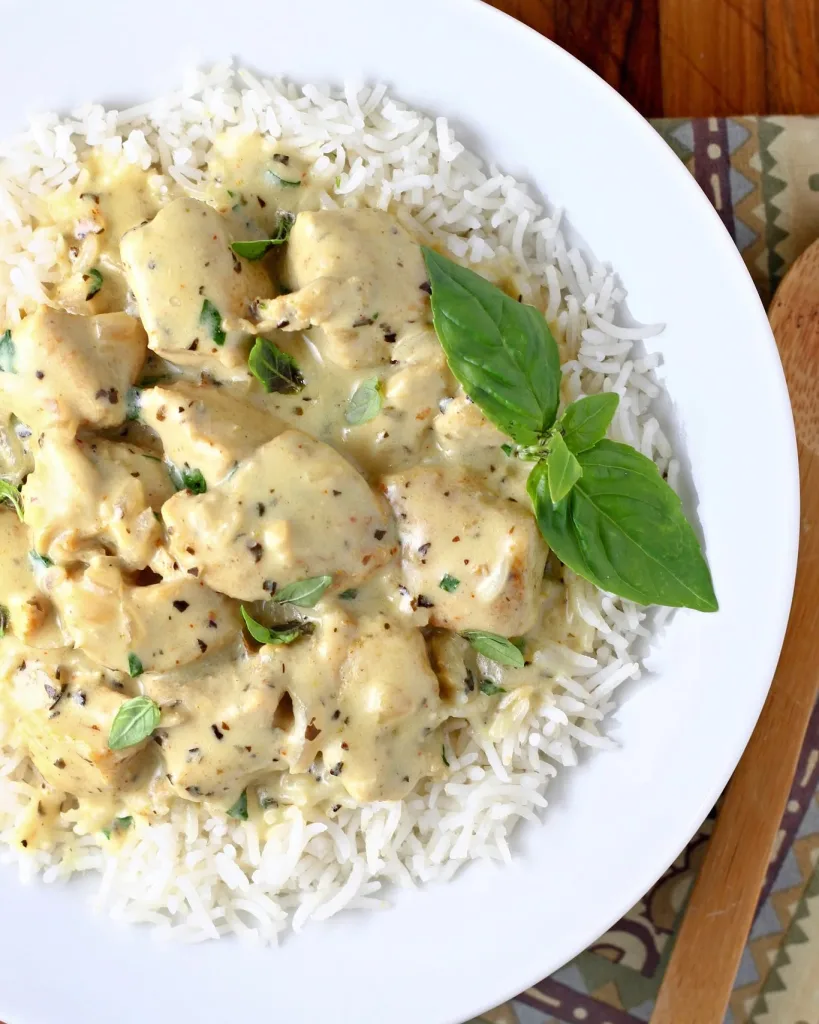
Once the chicken is cooked through and tender, turn off the heat completely. This is the moment to stir in the fresh lime juice and the torn basil leaves. The residual heat will wilt the basil and release its oils without cooking out its flavor, and the lime juice will cut through the richness of the coconut milk. Taste the sauce and add a pinch more salt or a squeeze more lime if you think it needs a little extra punch.
Additional Tips for Making this Recipe Better
Here are a few personal tricks I’ve learned to elevate this dish from good to great.
- Bloom the spices: I always make sure to cook the spices in the oil with the aromatics for at least 60 seconds before adding the coconut milk; this releases their essential oils and deepens the flavor.
- Don’t overcook the basil: I learned early on that adding basil while the heat is still on kills its fresh, peppery flavor, so always wait until the stove is off.
- Full-fat is best: I’ve tried this with “lite” coconut milk to save calories, but the sauce ends up thin and lacks that luxurious mouthfeel, so stick to the regular stuff.
- Toast your rice: For an extra layer of flavor, I like to toast my raw rice grains in a little butter or oil before adding water to steam it.
How to Serve Basil Chicken in Coconut Curry Sauce?
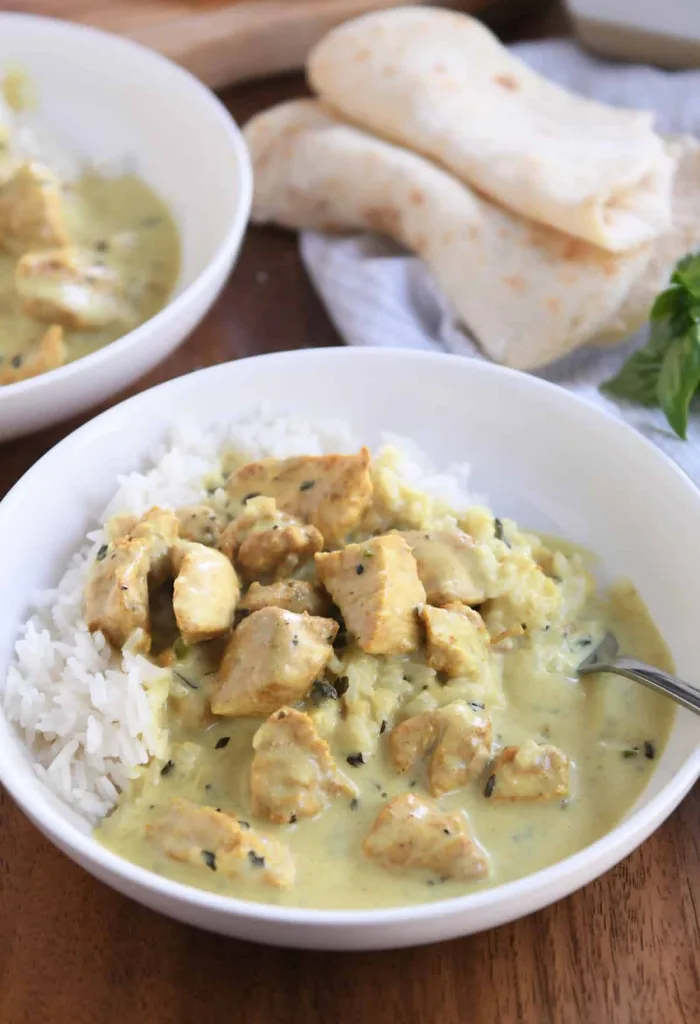
This dish screams for a bed of fluffy white jasmine or basmati rice to soak up the golden, creamy sauce. For a pop of color and freshness, garnish the bowl with extra fresh basil leaves and a wedge of lime on the side. If you want a complete meal, serve it alongside some warm naan bread for dipping or a crisp cucumber salad to provide a cool contrast to the warm, spiced curry.
Nutritional Information
Here is a quick breakdown of the nutritional profile per serving.
- Calories: ~446 kcal
- Protein: 31g
- Carbohydrates: 11g
- Fat: 34g
Make Ahead and Storage
This curry stores beautifully and often tastes even better the next day as the flavors have time to meld.
Refrigerating and Reheating
Store any leftovers in an airtight container in the refrigerator for up to 3 days. To reheat, gently warm it in a saucepan over low heat, adding a splash of water or chicken broth if the sauce has thickened too much in the fridge.
Freezing Instructions
You can freeze this curry for up to 2 months in a freezer-safe container or bag. Just be aware that the coconut milk texture might separate slightly upon thawing; whisking it gently while reheating will help bring the emulsion back together.
Why You’ll Love This Recipe?
Here are the reasons why this curry deserves a permanent spot in your dinner rotation.
- One-Pan Wonder: It all comes together in a single skillet or wok, meaning cleanup is minimal and quick.
- Flavor Complexity: You get a sophisticated mix of sweet, spicy, savory, and sour flavors that usually takes hours to develop, ready in just 40 minutes.
- Forgiving Chicken: Using chicken thighs ensures the meat stays juicy and tender, even if you accidentally simmer it a few minutes too long.
- Customizable Heat: It’s easy to adjust the spice level to be family-friendly for kids or fiery hot for spice lovers just by tweaking the cayenne and jalapeño.
- Pantry Friendly: Aside from the fresh herbs and meat, most of the ingredients are spices and staples you likely already have in your kitchen cabinets.
Check Out Some Similar Posts About Recipes;
- Creamy Roast Garlic and Lemon Pasta Sauce Recipe
- Cachapas (Venezuelan Corn Pancakes) Recipe
- Southern Banana Cobbler Recipe
- Pineapple Cucumber Salad Recipe
- Pistachio Overnight Oats Recipe
- Ground Turkey Rice Bowls with Bang Bang Sauce Recipe
- Korean Marinated Eggs (Mayak Gyeran) Recipe
- Lavender Banana Bread Recipe