Mango Sticky Rice Rice
I’ve always believed that the best desserts are the ones that surprise you, and this Mango Sticky Rice Rice did exactly that when I first whipped it up in my kitchen.
The combination of warm, chewy glutinous rice soaked in sweet coconut milk and paired with cool, ripe mangoes is nothing short of magical.
It felt like I was transporting a piece of tropical sunshine right onto my dining table, and the aroma of coconut filled the entire house.
Trust me, once you taste how the salty-sweet sauce brings everything together, you will understand why this is Thailand’s most beloved sweet treat.
It is surprisingly simple to pull together, yet it tastes like something you would order at a high-end restaurant.
Ingredients
Here is everything you need to recreate this iconic Thai dessert at home. I have broken down the components to make it easy to shop for.
- 1 cup Thai White Glutinous Rice: This is the heart of the dish. Look specifically for “sweet rice” or “sticky rice” that is long-grain and from Thailand. Do not substitute with jasmine rice or sushi rice; the texture simply won’t be chewy enough.
- 2/3 cup Coconut Milk (for rice): Full-fat coconut milk is essential for that rich, creamy texture. I recommend using high-quality carton coconut milk rather than canned versions if you can find it, as it tastes fresher.
- 1/2 cup Granulated Sugar: White sugar keeps the rice looking pristine and bright. While palm sugar is great for other Thai sweets, white sugar ensures the classic look and clean sweetness we want here.
- 1/2 tsp Table Salt (for rice): Salt is the secret weapon in Thai desserts. It cuts through the rich sugar and coconut cream, balancing the flavors so the dish isn’t cloyingly sweet.
- 1/2 cup Coconut Milk (for sauce): You will need a second portion of milk for the topping sauce. This extra layer of creaminess is drizzled on top right before serving for moisture and flavor.
- 1/4 tsp Table Salt (for sauce): This sauce is intentionally slightly salty. It provides a savory contrast to the sweet mango and rice, which is the hallmark of this dish.
- 1 tsp Rice Flour: This acts as a thickener for your salted coconut sauce. If you don’t have rice flour, cornstarch works perfectly fine as a substitute to get that gravy-like consistency.
- 1 Tbsp Water: Used to mix with the rice flour to create a slurry. This prevents clumps from forming when you add the thickener to the hot coconut milk.
- 2 Tbsp Split Mung Beans: These little yellow beans add a delightful crunch. You want the shelled, split variety (they look yellow, not green) often found in Asian markets.
- 3 Ripe Mangoes: The star of the show! Look for Manila, Ataulfo, or Champagne mangoes. They should have wrinkly skin, indicating they are super sweet and soft, perfect for scooping.
Note: This recipe yields approximately 6 servings based on the quantities listed above.
Variations
If you want to tweak the recipe to fit your diet or pantry, here are a few ways to switch things up:
- Dairy-Free: Good news—this recipe is naturally dairy-free! It relies entirely on coconut milk for creaminess, making it perfect for vegans or those with lactose intolerance.
- Natural Food Coloring: You can make “rainbow” sticky rice by soaking the rice in natural dyes. Use turmeric for yellow, butterfly pea flowers for blue, or pandan extract for a vibrant green hue.
- Black Sticky Rice: Swap about a quarter of the white rice for black glutinous rice. It adds a nuttier flavor and a deep purple color, though it requires a hot water soak first.
- Flavor Infusions: For an aromatic twist, tie a knot in a fresh pandan leaf and toss it into the coconut milk while it heats up to infuse a vanilla-like floral scent.
- Sugar Alternatives: While white sugar is traditional, you can use monk fruit sweetener or stevia for a lower-sugar version, though the texture of the syrup may vary slightly.
Cooking Time
- Prep Time: 15 minutes (plus soaking time)
- Cooking Time: 1 hour
- Total Time: 1 hour 15 minutes (active time)
Equipment You Need
- Steamer Pot: Essential for cooking the glutinous rice properly so the grains stay intact and chewy rather than turning into mush.
- Cheesecloth or Muslin: Used to line the steamer rack, preventing the rice from falling through the holes while allowing steam to penetrate evenly.
- Mixing Bowls: You will need a heat-proof bowl for mixing the hot rice with the hot syrup immediately after steaming.
- Small Saucepan: Required for heating the coconut syrup and making the salted coconut sauce topping.
- Whisk or Spatula: Useful for stirring the coconut milk mixtures and folding the syrup into the cooked rice gently.
- Frying Pan: Needed if you plan to make the crispy mung bean topping to toast them until golden brown.
How to Make Mango Sticky Rice Recipe?
Soak the Rice
Start by washing your glutinous rice vigorously in cold water until the water runs mostly clear to remove excess starch. Cover the washed rice with plenty of room temperature water and let it soak for at least four hours or overnight. This hydration step is non-negotiable for achieving that perfect chewy texture later on.
Steam the Rice
Drain the soaked rice completely and place it on a steamer rack lined with damp cheesecloth or muslin cloth. Steam over rapidly boiling water for about 20 to 25 minutes, ensuring the rice is fully translucent and cooked through. Do not let the rice sit in water; it must be suspended over the steam to cook correctly.
Prepare the Sweet Coconut Syrup
While the rice is steaming, combine the first portion of coconut milk, sugar, and salt in a small pot over medium heat. Stir gently until the sugar dissolves and bring it just to a simmer, then turn off the heat immediately. You want this syrup to be hot and ready the moment your rice finishes steaming.
Macerate the Rice
As soon as the rice is done, transfer it to a bowl and pour the hot coconut syrup over it immediately. Stir gently to break up any lumps, cover the bowl tightly, and let it sit for 20 minutes to absorb the liquid. The heat from both the rice and syrup helps the grains drink up the moisture effectively.
Redistribute the Moisture
After the first 20 minutes, uncover the bowl and fold the rice from bottom to top to ensure even flavor distribution. Cover it again and let it rest for another 20 minutes at room temperature before serving. This second rest allows the rice to become plump, shiny, and perfectly seasoned throughout.
Make the Salted Coconut Sauce
Mix the rice flour with water to make a smooth slurry, then combine it with coconut milk and salt in a small pot. Cook this mixture over medium-high heat, stirring constantly, until it comes to a boil and thickens slightly. This sauce acts as a savory garnish that cuts through the sweetness of the dessert.
Prepare the Crispy Mung Beans
Rinse the split mung beans, boil them briefly for about 10 minutes, and then drain and dry them thoroughly. Toast them in a dry or lightly greased pan over medium heat until they are golden, dry, and crunchy. These little nuggets provide a vital textural contrast to the soft rice and smooth mango.
Slice the Mangoes
Peel your ripe mangoes using a sharp knife or vegetable peeler, removing as much of the skin as possible. Slice the flesh away from the large central pit in two large “cheeks” or halves. Slice these cheeks crosswise or into cubes, keeping the pieces uniform for a beautiful presentation on the plate.
Additional Tips for Making this Recipe Better
- Soaking is key: I cannot stress enough that you must soak the rice for at least four hours; cutting corners here will result in unevenly cooked, hard grains.
- Reheat the syrup: I always bring my coconut syrup back to a simmer right before the rice finishes steaming because hot liquid absorbs much better into hot starch.
- Choose the right mango: I wait until my mangoes are slightly wrinkled and smell fragrant before using them, as firm mangoes will be too sour for this dessert.
- Don’t boil the coconut milk: When making the syrup, I watch the pot like a hawk and turn off the heat the second I see bubbles to prevent the coconut milk from separating or curdling.
- Serve fresh: I find that the texture of the rice is absolute perfection within the first few hours of making it, so try to time your cooking close to serving.
How to Serve Mango Sticky Rice?
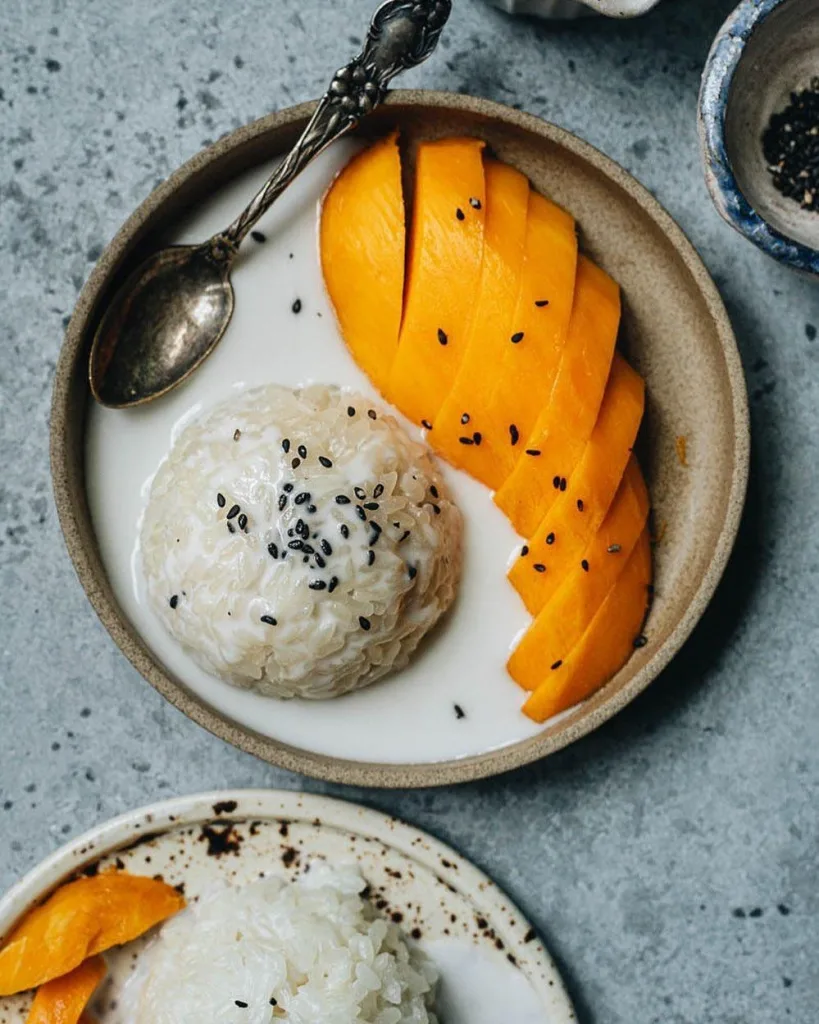
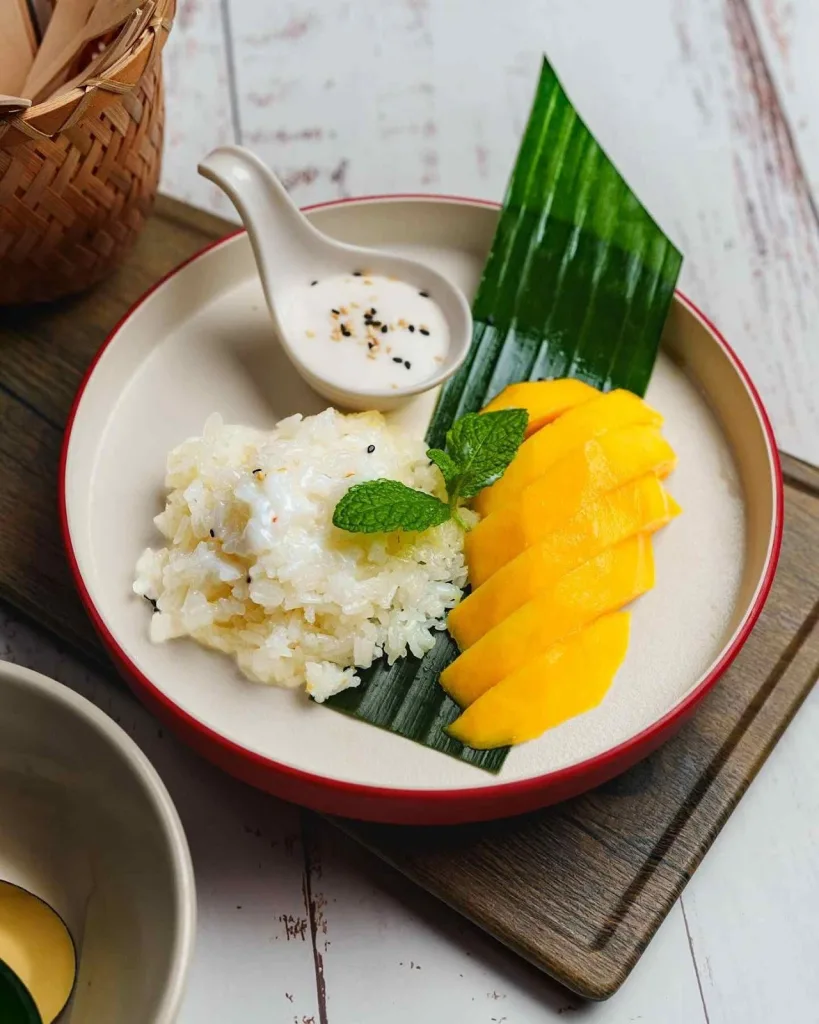
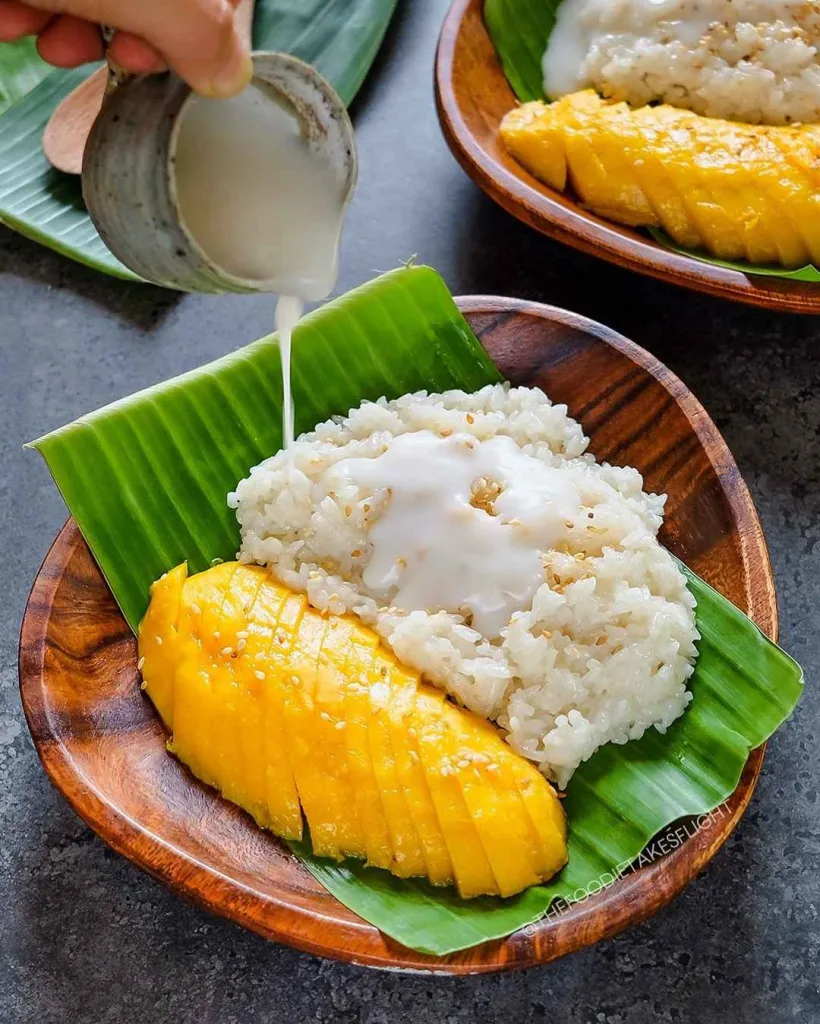
Serving this dish is all about showcasing the vibrant colors. Scoop a mound of the shiny, white sticky rice onto a dessert plate or into a small bowl. Arrange the fresh mango slices fan-style right next to the rice, creating a beautiful contrast between the pale rice and bright yellow fruit.
Drizzle the salted coconut sauce generously over the rice, letting it drip down the sides. Finally, sprinkle the golden crispy mung beans on top for that professional finish. If you want to get fancy, you can add a sprig of fresh mint or a sprinkle of black sesame seeds for extra visual appeal.
Nutritional Information
This dessert is rich and indulgent, so here are the approximate macros per serving:
- Calories: ~500 kcal
- Protein: 6g
- Carbohydrates: 85g
- Fat: 18g
Make Ahead and Storage
Storing Leftovers:
Leftover sticky rice can be stored in an airtight container in the refrigerator for up to 3 days. However, the rice will harden significantly when cold because of the starch retrogradation. The salted sauce should be stored in a separate jar and will keep well for about a week.
Freezing Instructions:
You can freeze the sticky rice portions wrapped tightly in plastic wrap and placed in a freezer bag for up to one month. This is actually a great way to preserve the texture if you can’t eat it all within a day. To eat, you must reheat it thoroughly until piping hot to restore the soft texture.
Reheating Tips:
To restore the rice to its glory, cover it with a damp paper towel and microwave until it is very hot. Alternatively, you can re-steam it until soft. Never eat the rice cold from the fridge; it will be hard and unpalatable. The sauce can be quickly warmed in the microwave or on the stovetop.
Why You’ll Love This Recipe?
Here are a few reasons why this Thai classic will become a staple in your home:
- Perfect Flavor Balance: It masterfully balances sweet, salty, and creamy flavors in every single bite, offering a complex taste experience.
- Naturally Gluten-Free: Since it uses glutinous rice (which is misleadingly named but contains no gluten) and coconut milk, it is safe for gluten-sensitive guests.
- Simple Ingredients: You don’t need a pantry full of obscure items; just a few quality staples create something truly exotic and delicious.
- Crowd-Pleaser: The combination of fruit and sweet rice is universally loved and makes for an impressive finale to any dinner party.
- Texture Heaven: If you love playing with textures, the mix of chewy rice, soft fruit, creamy sauce, and crunchy beans is incredibly satisfying.