
Japchae Recipe
I recently tried my hand at making this vibrant Korean classic Japchae Recipe at home, and honestly, the results blew me away with how fresh and savory it tasted.
There is something so satisfying about tossing those slippery, chewy sweet potato noodles with colorful veggies and tender beef right in your own kitchen.
I found that balancing the sweet and savory soy-sesame sauce is the secret to getting that restaurant-quality flavor without leaving the house.
Trust me, once you see how all these textures come together in one big bowl, you’ll want to make this dish a regular part of your dinner rotation.
Ingredients
Here is everything you need to create this colorful, texture-rich noodle dish.
For the Beef and Marinade
- 600g beef short ribs (bone-in) or 300g boneless short ribs: These cuts offer superior marbling and tenderness for quick cooking.
- 2 tsp soy sauce: Use regular or light soy sauce to add salty depth without overpowering the color.
- 2 tsp white sugar: This balances the saltiness of the soy sauce and aids in caramelization.
- 2 tsp garlic, finely minced: Fresh garlic is essential here for that sharp, aromatic punch.
- 1/2 tsp black pepper: Adds a subtle heat that cuts through the richness of the beef.
For the Noodle Sauce
- 1/4 cup soy sauce: This forms the savory base of the entire dish, so choose a good quality brand.
- 2 tsp white sugar: Adds the signature sweetness that characterizes authentic Japchae.
- 1/2 tsp garlic, finely minced: Helps tie the sauce flavor back to the beef marinade.
- 1 1/2 tbsp sesame oil: Essential for that nutty aroma and glossy finish on the noodles.
- 1/2 tsp kosher salt: Enhances all the other flavors in the dressing.
- 1/2 tsp black pepper: Provides a gentle background spice to the sweet and savory sauce.
For the Noodles and Vegetables
- 250g dried sweet potato starch noodles (dangmyeon): These are the star of the show, known for their distinctively chewy and slippery texture.
- 4 tbsp vegetable oil: You will need a neutral oil with a high smoke point for stir-frying the separate components.
- 1 tsp kosher salt: Divided use to season the vegetables as they cook individually.
- 1 onion: Slice this into wedges to provide sweetness and crunch to the mix.
- 3 green onion stems: Cut these into lengths, separating the white and green parts for different cooking times.
- 200g fresh shiitake mushrooms: These add an intense, meaty umami flavor that regular button mushrooms just can’t match.
- 2 carrots: Cut these into thin batons or matchsticks for a pop of color and sweetness.
- 1 red bell pepper: Thinly sliced strips add vibrancy and a fresh, crisp texture.
- 4 1/2 cups baby spinach: Fresh spinach wilts down perfectly; avoid frozen spinach as it releases too much water.
- 2 tbsp white sesame seeds: Toasted seeds add the final crunch and nutty garnish.
Note: This recipe yields approximately 5 generous servings.
Variations
You can easily customize this versatile noodle dish to suit different dietary needs or flavor preferences without losing its essence.
- Vegetarian or Vegan: Simply omit the beef entirely and replace it with fried tofu strips or just extra mushrooms. For a vegan version, ensure your sugar is vegan-friendly and stick to plant-based proteins.
- Gluten-Free Option: While sweet potato noodles are naturally gluten-free, you must swap standard soy sauce for Tamari or a certified gluten-free soy sauce substitute to make the entire dish safe for celiacs.
- Seafood Twist: Instead of beef, try using thinly sliced squid, shrimp, or a seafood mix. Cook these quickly on high heat to avoid rubbery textures, adding them at the end just like the beef.
- Spicy Kick: If you prefer some heat, add a tablespoon of Gochujang (Korean red chili paste) to the sauce mixture or sprinkle red pepper flakes over the finished dish.
- Extra Veggies: Feel free to clean out your fridge by adding zucchini strips, wood ear mushrooms, or even thinly sliced cabbage. Just ensure you cook them until tender-crisp.
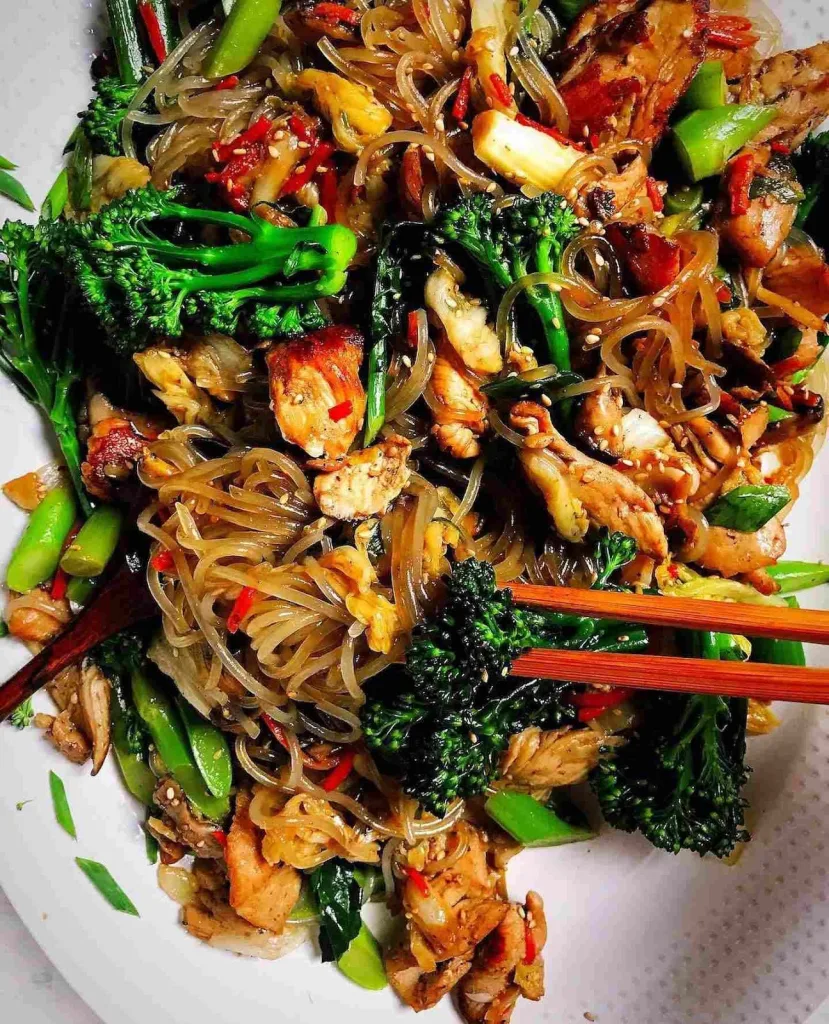
Cooking Time
- Prep Time: 20 minutes
- Cooking Time: 15 minutes
- Total Time: 35 minutes
Equipment you need
- Large Pot: Used for boiling the sweet potato noodles until they are perfectly chewy and translucent.
- Colander: Essential for draining the noodles and rinsing them under cold water to stop the cooking process.
- Large Mixing Bowl: You need the biggest bowl you own to toss the noodles, sauce, and cooked ingredients together comfortably.
- Large Non-Stick Skillet or Wok: Used for stir-frying the vegetables and beef in separate batches to maintain their distinct textures.
- Sharp Knife: Crucial for slicing the beef and vegetables into uniform, thin strips for even cooking.
- Kitchen Shears: Helpful for cutting the long noodles into shorter, more manageable lengths after they are cooked.
How to Make Japchae Recipe?
This process involves preparing components separately to preserve their individual flavors and textures before combining them.
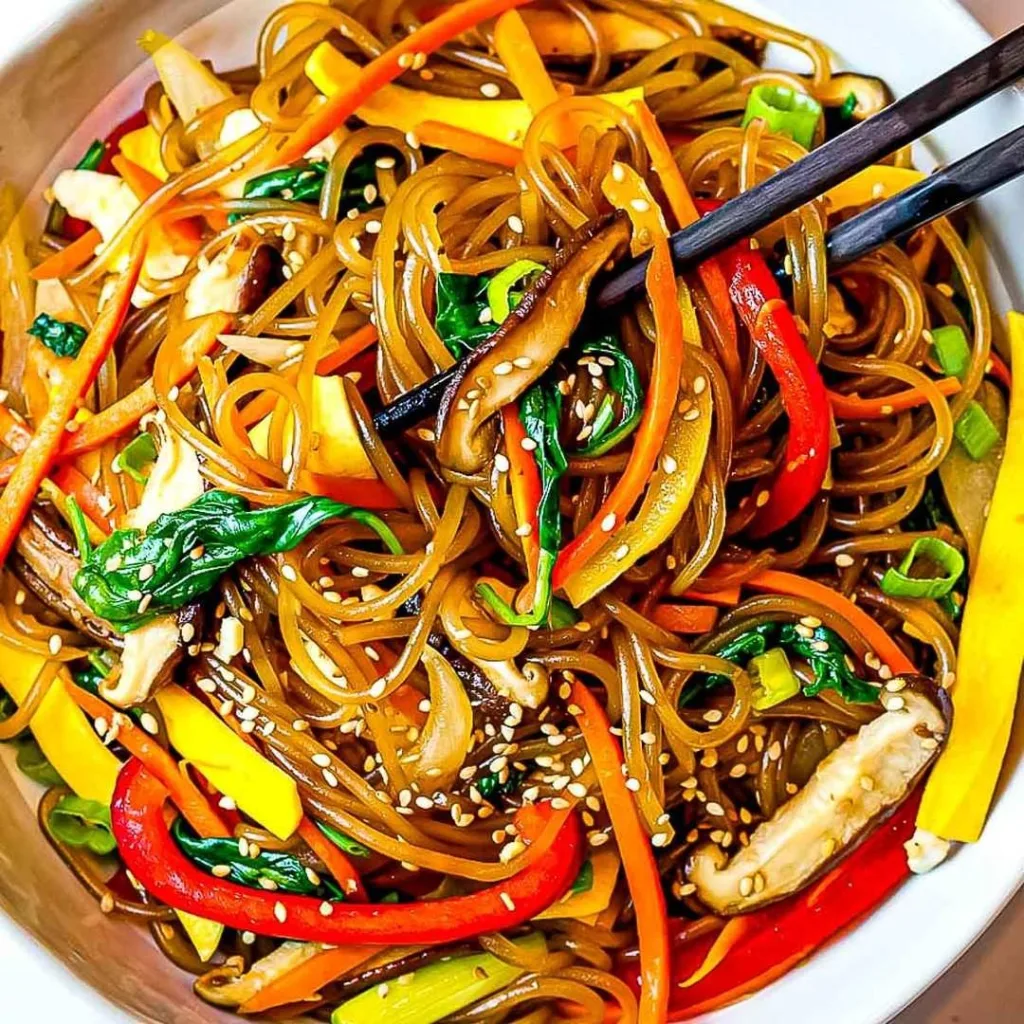
Prepare the Beef
Start by slicing your beef into thin strips, removing any excess fat if you are using short ribs. Combine the meat in a bowl with the soy sauce, sugar, minced garlic, and pepper. Let this sit to marinate while you prep the other ingredients, which allows the flavors to penetrate the meat thoroughly.
Prepare the Sauce and Noodles
Whisk together all the sauce ingredients in your large mixing bowl until the sugar has completely dissolved. Meanwhile, boil the sweet potato noodles according to the package instructions, usually for about 8 minutes. Drain them, rinse briefly, and immediately toss them into the bowl with the sauce to absorb the flavor.
Cook the First Batch of Vegetables
Heat two tablespoons of oil in your skillet over high heat and add the onions, white parts of the green onions, and mushrooms. Stir-fry these vigorously for about 3 minutes until the mushrooms soften but the onions still have a bit of bite. Transfer this mixture directly onto the noodles in the large bowl without mixing yet.
Cook the Second Batch of Vegetables
Add another tablespoon of oil to the same hot pan and toss in the carrots and red bell pepper strips. Stir-fry these for about 90 seconds before adding the spinach and green onion tops. Cook just until the spinach wilts, then transfer everything to the noodle bowl, layering it on top of the previous batch.
Cook the Beef and Combine
In the same pan, heat the final tablespoon of oil and sear the marinated beef strips quickly over high heat. Cook for about 90 seconds until browned and cooked through, then add the beef to the main bowl. Finally, add the sesame seeds and use your hands (carefully!) or tongs to toss everything together until well combined.
Additional Tips for Making this Recipe Better
I have learned a few tricks along the way that take this dish from good to absolutely unforgettable.
- Don’t Overcook the Veggies: I always make sure to leave the vegetables “tender-crisp” rather than cooking them until they are soft. This adds a crucial crunch that contrasts beautifully with the soft, chewy noodles.
- Rinse the Noodles: I found that rinsing the cooked noodles in cold water is non-negotiable; it removes excess starch and prevents them from becoming a gummy, sticky mess.
- Use Your Hands to Mix: I honestly believe the best way to mix Japchae is by hand (wearing a plastic glove helps if it’s hot). It ensures the sauce coats every single strand of noodle evenly, which tongs sometimes miss.
- Trim the Beef Fat: When I use short ribs, I am careful to trim the thick layers of fat. While fat adds flavor, too much of it can make the dish feel greasy rather than rich and savory.
- Cut Noodles for Easier Eating: After boiling, I use kitchen shears to snip the noodles a couple of times. Long noodles are fun, but slightly shorter ones are much easier to mix and eat without making a mess.
How to Serve Japchae Recipe?
Japchae is incredibly versatile and can be served as a main course or a substantial side dish.
Presentation Tips
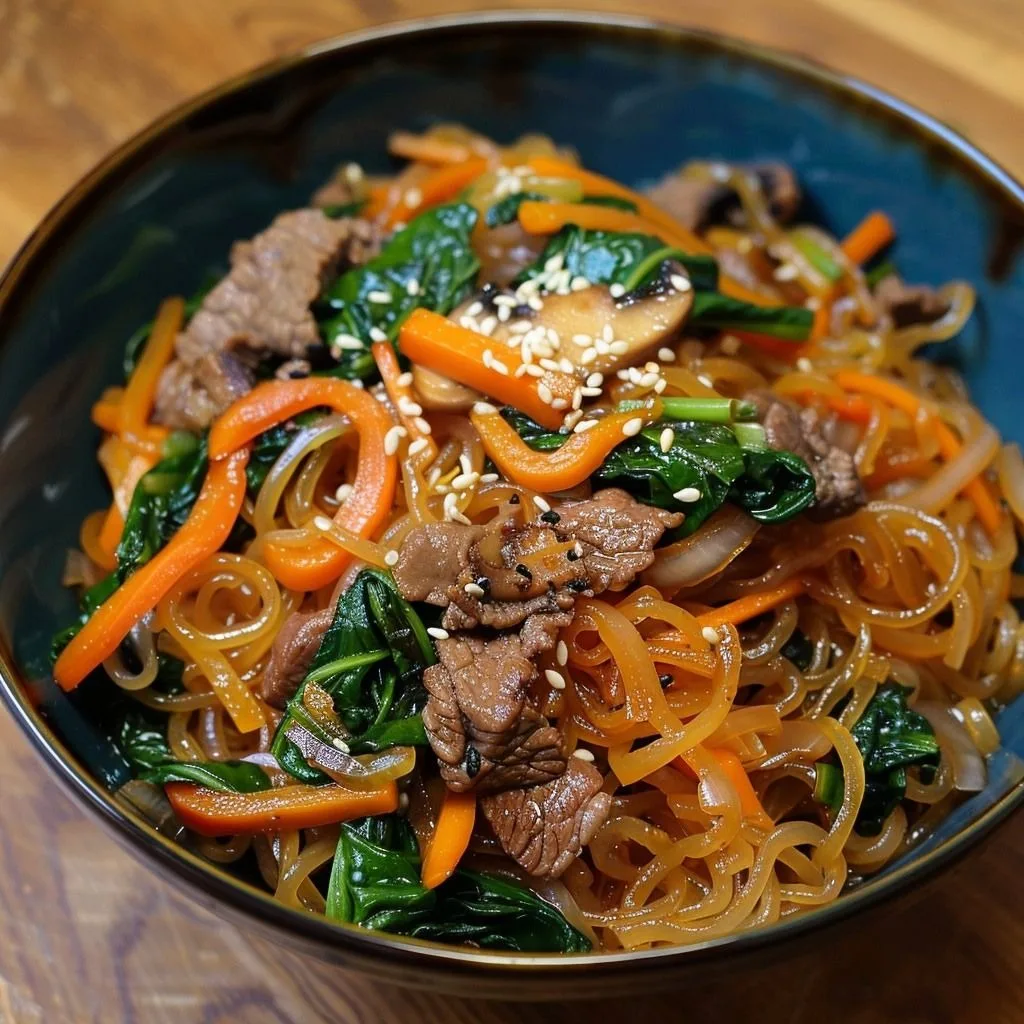
Transfer the tossed mixture into a wide, shallow serving bowl or a large platter to show off the colorful vegetables. The vibrant reds of the peppers, bright orange carrots, and deep green spinach should be visible throughout. A final generous sprinkle of toasted sesame seeds on top adds a professional finish.
Garnishes and Accompaniments
You can garnish with extra chopped green onions or thin strips of egg omelet (jidan) for a traditional touch. It pairs beautifully with other Korean dishes like Galbi (BBQ ribs), Bulgogi, or a spicy Kimchi stew. Serve it alongside a small bowl of rice and some pickled radish to cut through the sesame oil richness.
Nutritional Information
This dish offers a good balance of carbohydrates, protein, and healthy fats from the sesame oil.
- Calories: ~500 kcal
- Protein: 18g
- Carbohydrates: 58g
- Fat: 24g
Make Ahead and Storage
This dish keeps surprisingly well, making it excellent for meal prep or leftovers.
Storing in the Fridge
You can store leftover Japchae in an airtight container in the refrigerator for up to 3 to 4 days. The noodles may firm up significantly when cold due to the starch content, but they will soften again once heated.
Freezing Guidelines
I generally do not recommend freezing this dish because the texture of the vegetables and noodles changes negatively. The vegetables tend to get mushy, and the sweet potato starch noodles can become brittle or unpleasantly soft upon thawing.
Reheating Instructions
To restore the texture, reheat the noodles in a microwave or toss them quickly in a hot skillet with a splash of water or soy sauce. This brings back the signature chewiness and glossiness that makes the fresh dish so appealing.
Why You’ll Love This Recipe?
Here are just a few reasons why this noodle stir-fry deserves a spot in your culinary repertoire.
- Incredible Texture: The unique “bounciness” of sweet potato noodles combined with crunchy vegetables and tender meat creates a mouthfeel that is distinct from any pasta or rice noodle dish.
- Visual Appeal: This is truly a feast for the eyes, with a rainbow of colors from the carrots, spinach, peppers, and mushrooms making it a show-stopping dish for potlucks or dinner parties.
- Balanced Flavor Profile: It hits every note on the palate—salty from soy, sweet from sugar, nutty from sesame, and savory from the beef and mushrooms—without being overly heavy.
- Versatility: You can serve it hot, warm, or at room temperature, making it perfect for lunchboxes, picnics, or buffet spreads where keeping food piping hot is difficult.
- Gluten-Free Friendly: Since the primary starch is made from sweet potatoes rather than wheat, it is naturally a great option for those avoiding gluten (provided you use gluten-free tamari).