
11 Japan Temple Tattoo: Meaning, Designs & Cultural Symbolism
Have you ever seen a japan temple tattoo and felt instantly drawn to it? There’s something about the intricate lines, the sacred details, and the calm yet powerful vibe that makes these designs stand out.
For me, the first time I saw one was during a trip to Kyoto—I remember staring at a backpiece that had a towering pagoda surrounded by swirling clouds and cherry blossoms. It wasn’t just ink on skin; it was a living piece of art.
If you’re here, chances are you’re curious about what these tattoos mean, how they’re designed, and whether one might be the right choice for you.
Let’s break it all down together—like two friends chatting over coffee about the beauty of Japanese tattoo culture.

1. The Spiritual Symbolism
A Japan temple tattoo is more than just an aesthetic design—it symbolizes spirituality, peace, and mindfulness.
Temples represent sacred spaces where people go to find balance and enlightenment. When inked on skin, they remind the wearer to stay calm in life’s chaos.
For many, it becomes a daily anchor, guiding them back to inner stillness whenever stress takes over. Choosing this tattoo is like carrying a spiritual sanctuary with you at all times.
2. Pagoda-Inspired Designs
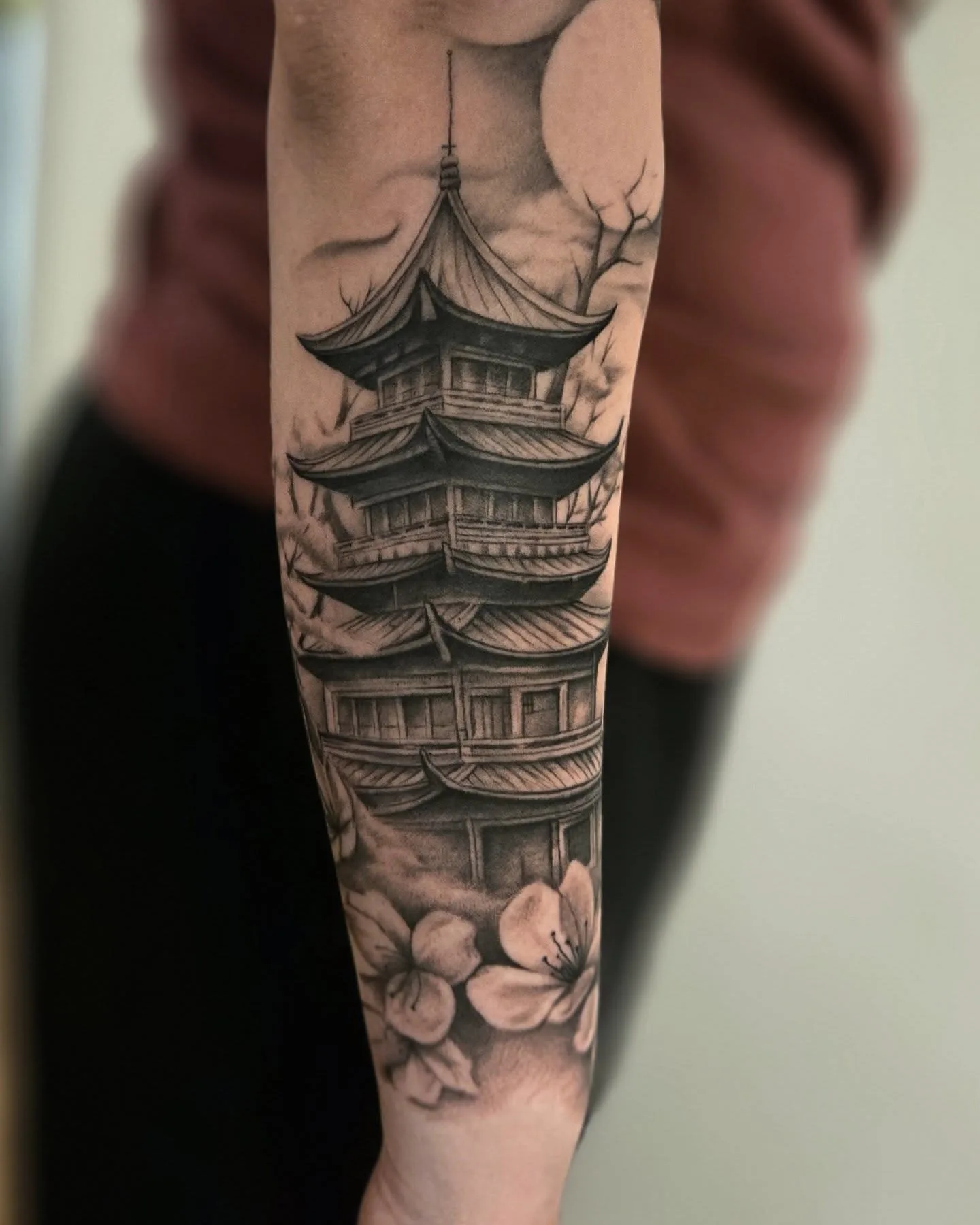
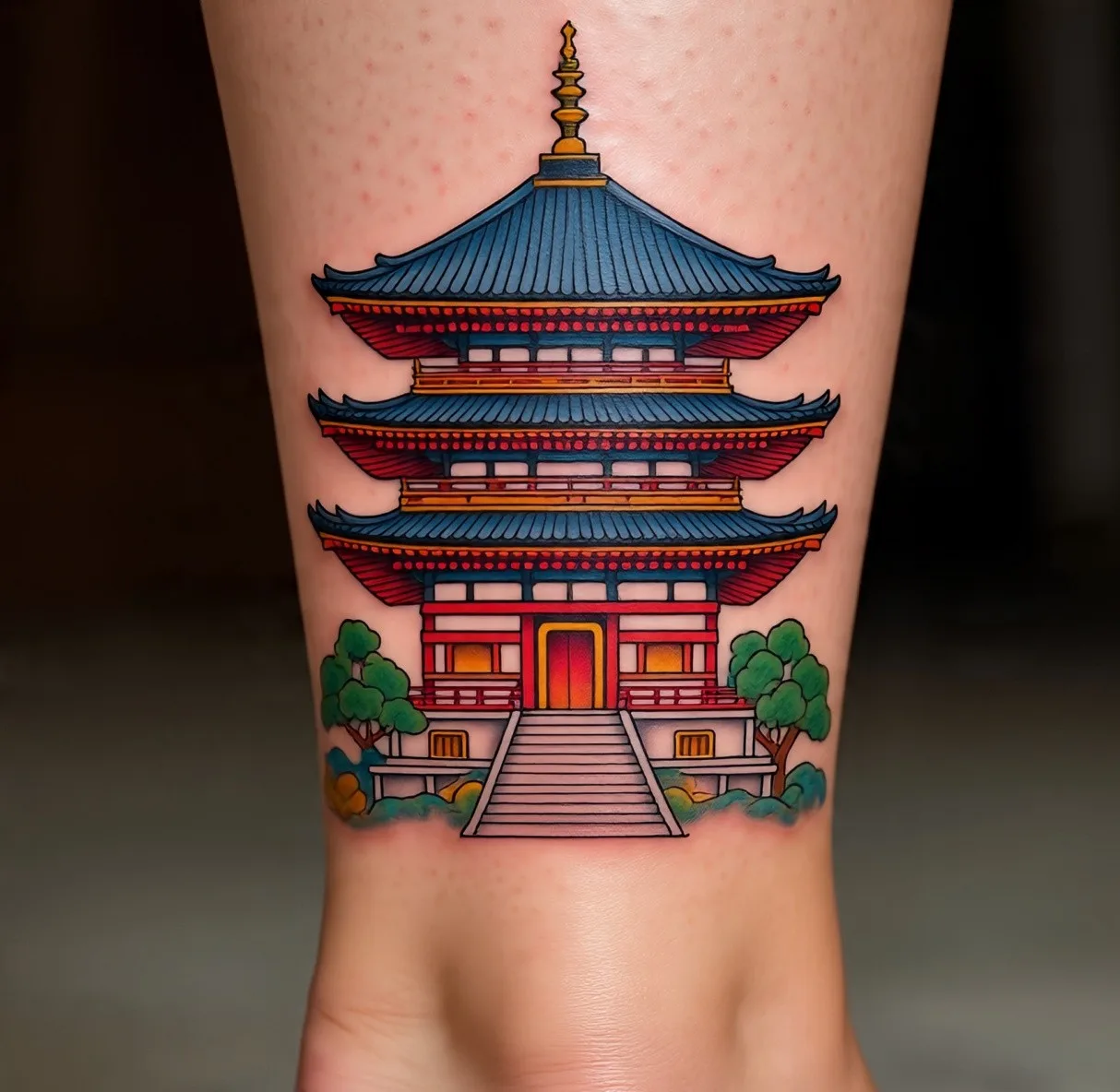
One of the most striking choices is a pagoda-style temple tattoo. Pagodas, with their tiered roofs, symbolize spiritual ascension and growth.
Each layer represents a step closer to enlightenment, making it a powerful metaphor for personal development.
Artists often highlight intricate rooftops and fine details to bring the structure to life.
Placing this design on the back or thigh allows enough space for the pagoda’s full beauty to unfold while capturing the essence of Japanese temple architecture.
3. Torii Gate Tattoos
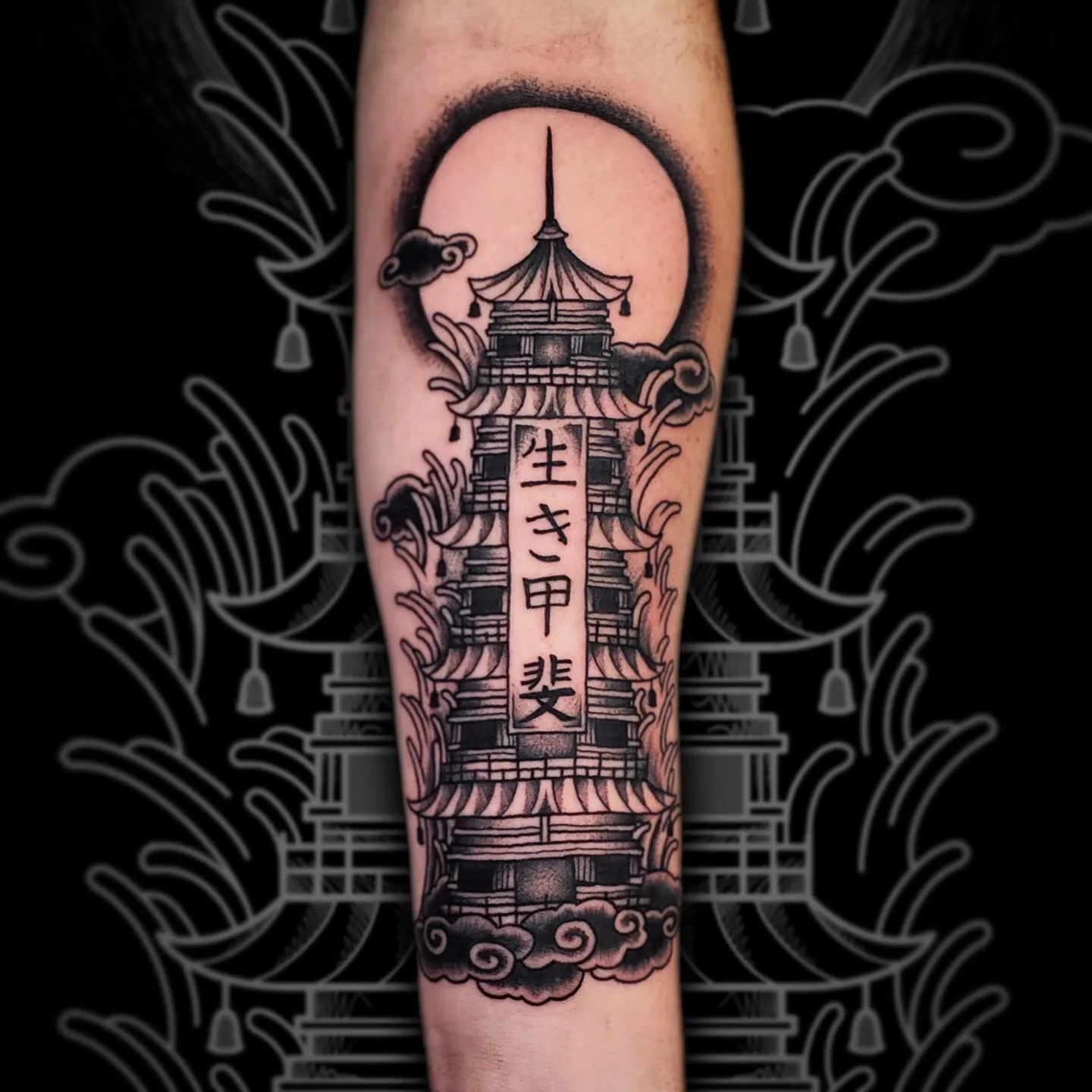
The torii gate is another iconic element in Japanese temple tattoos. Traditionally, it marks the entrance to a sacred space.
Symbolizing the transition from the mundane world to the spiritual one. As a tattoo, it reflects new beginnings, spiritual awareness, and respect for tradition.
A torii gate tattoo can be kept minimalist or paired with cherry blossoms, lanterns, or mountains for a dramatic effect.
It’s a meaningful design for anyone seeking a connection to transformation and growth.
4. Black and Grey Realism
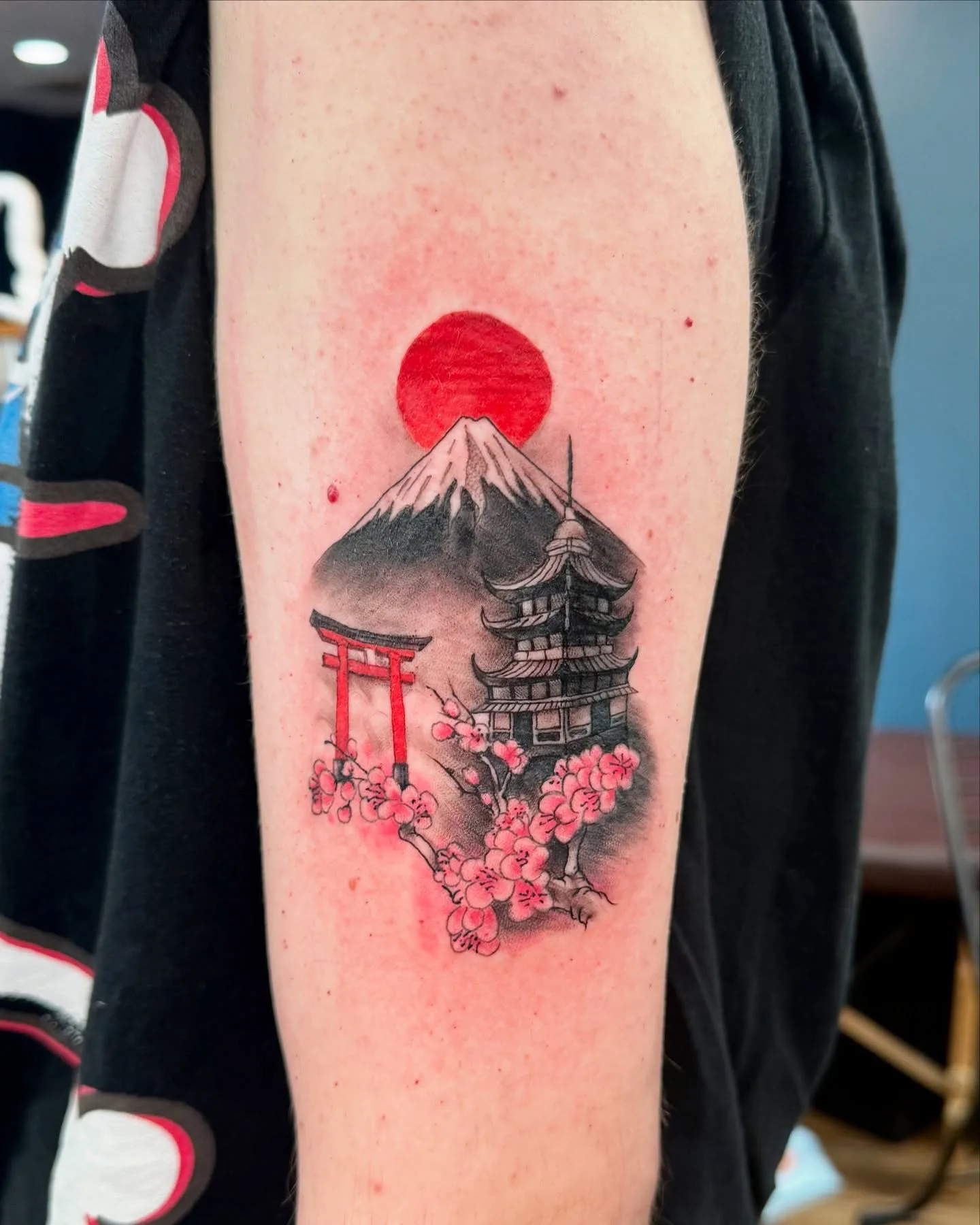
If you prefer subtle elegance, a black-and-grey temple tattoo may be the perfect style. Using only shading and fine linework, these tattoos capture depth, mystery, and timelessness.
Without the distraction of color, the design emphasizes the architectural details of the temple, giving it a dramatic, almost photographic quality.
This approach works beautifully for forearms, shoulders, or calves. It’s a style that never goes out of fashion while maintaining a strong sense of tradition and artistry.

5. Traditional Irezumi Style
For those who love bold and colorful tattoos, a traditional Irezumi temple tattoo is a fantastic option.
This style often blends temples with dragons, koi fish, samurai, or cherry blossoms, creating a vibrant narrative across the skin.
Rooted in Japanese tattoo heritage, Irezumi designs are detailed, powerful, and deeply symbolic.
The combination of temples with mythical or natural elements makes the tattoo a storytelling masterpiece.
Typically done as large backpieces or sleeves, this style is both eye-catching and culturally rich.
6. Minimalist Temple Tattoos
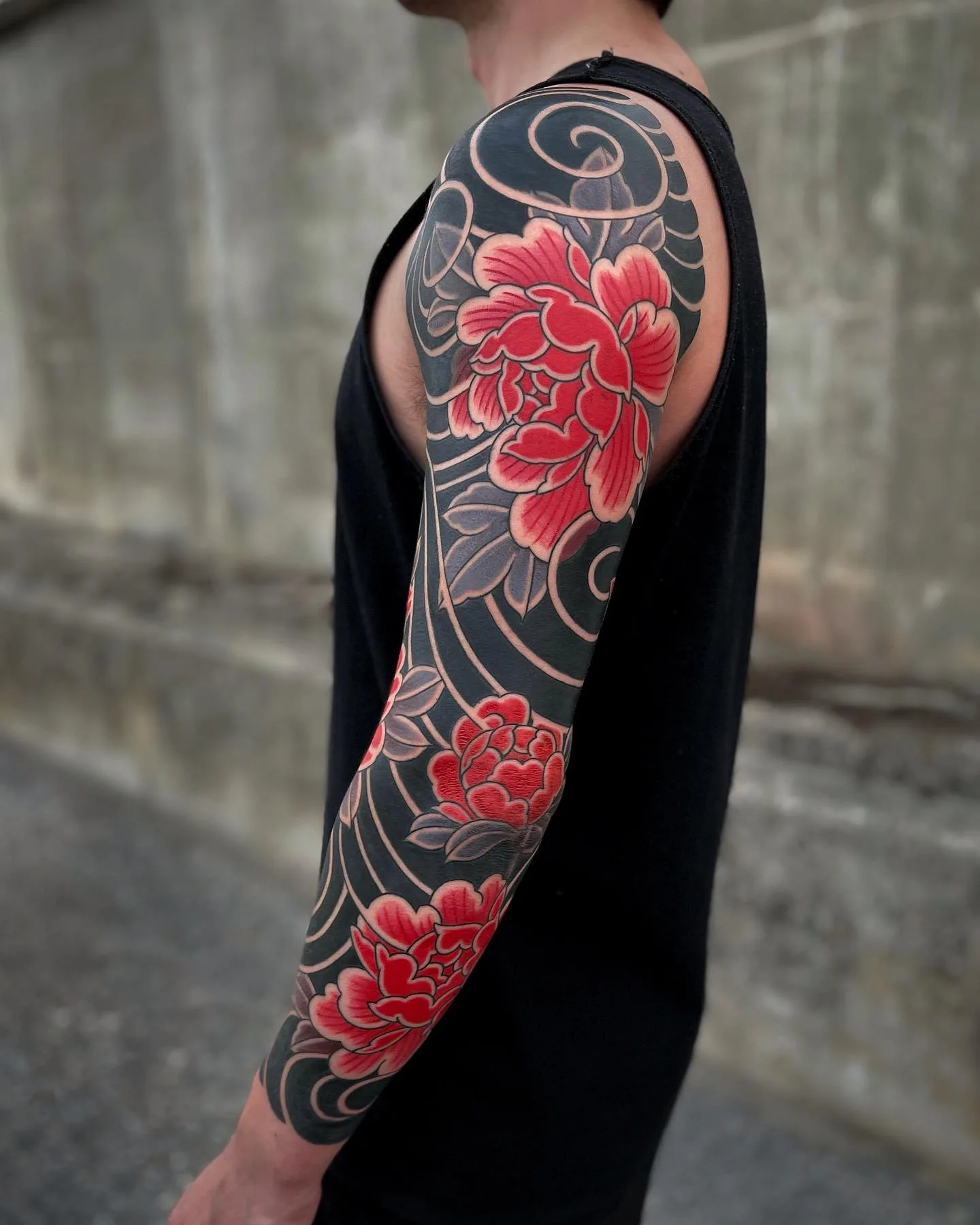
Not all temple tattoos need to be grand. A minimalist temple tattoo focuses on clean lines and simplicity. It may be just an outline of a pagoda or a small torii gate with subtle shading.
This style is perfect for people who want something meaningful but understated. Small temple tattoos can fit easily on the wrist, ankle, or behind the ear.
Despite their size, they still carry powerful symbolism, reminding the wearer of peace, tradition, and balance in life.

7. Natural Elements in Design
A Japanese temple tattoo often feels incomplete without nature. Artists commonly include cherry blossoms, waves, clouds, or mountains to set the temple in a serene environment.
These elements don’t just add beauty; they bring deeper meaning. Blossoms represent impermanence, mountains stand for strength, and waves symbolize life’s constant motion.
Together, they transform the tattoo into a harmonious scene rather than just a single structure. It’s a perfect choice for anyone who values both artistry and deeper symbolism.

8. Placement Options
Placement can change how a temple tattoo feels. Large, detailed temples look stunning on the back, offering artists a wide canvas.
Arms and sleeves allow for pagodas that climb upward, symbolizing growth. Thighs and calves work well for vertical structures, while minimalist designs shine on smaller areas like wrists or shoulders.
Each placement tells a slightly different story—whether it’s bold and powerful or subtle and personal. Choosing the right spot ensures the tattoo complements both the design and the wearer.

9. Cultural Respect and Meaning
Getting a Japan temple tattoo also means embracing cultural respect. Temples in Japan hold deep religious and historical significance, and tattoos themselves have complex associations with tradition.
While modern attitudes are shifting, it’s important to understand the symbolism before committing.
Wearing this tattoo thoughtfully shows appreciation rather than appropriation. For enthusiasts, it’s not just about decoration but honoring a culture’s sacred heritage.
With the right mindset, it becomes a respectful tribute to Japan’s spiritual and artistic history.
10. Combining Temples with Mythical Figures
One way to elevate a temple tattoo is by pairing it with mythical or legendary figures. Dragons, for instance, represent wisdom and protection, while samurai symbolize loyalty and honor.
Placing these elements alongside temples creates a powerful visual narrative. It’s like blending spirituality with strength and discipline, making the tattoo feel alive with meaning.
These designs usually require larger placements like the back or chest, where the artist can weave together the full story of tradition, power, and serenity.

11. A Tattoo That Grows With You
Perhaps the most beautiful aspect of a japan temple tattoo is how its meaning can evolve over time. At first, it may symbolize travel memories, cultural appreciation, or love for Japanese art.
Over the years, it can grow into a reminder of resilience, personal balance, or spiritual growth.
Unlike trends that fade, temple tattoos carry timeless value. They remain relevant no matter your stage of life, making them one of the most enduring and versatile tattoo choices available.

Japan Temple Tattoo as a Lifestyle Choice
At the end of the day, getting a temple tattoo isn’t just about art—it’s about embracing a certain mindset. Temples represent patience, mindfulness, and balance. Having one inked on your skin is like carrying a reminder of those values with you every day.
Think about it: wouldn’t it feel amazing to glance in the mirror and see a design that grounds you, inspires you, and connects you to a culture that has valued beauty and spirituality for centuries?
Conclusion
So, there you have it—a deep dive into the world of japan temple tattoos. From their symbolism to design styles, placement, pain, cost, and cultural respect, we’ve covered it all.
If you’ve been considering one, I’d say go for it—just make sure to pick the right artist, think about the design carefully, and wear it with the pride and respect it deserves.
And hey, if you do end up getting a temple tattoo, send me a pic—I’d love to see how you brought this timeless symbol to life. After all, tattoos aren’t just ink; they’re stories written on skin. Yours could be the next one worth telling.