
How to Stop Your Kitchen Sink From Piling Up?
How to Stop Your Kitchen Sink From Piling Up? Have you ever walked into your kitchen and found your sink filled with dirty plates, coffee mugs, cooking pans, and spoons? You may plan to wash everything after breakfast, but then lunch arrives, and the pile becomes even bigger. By the end of the day, your kitchen feels messy, and the thought of washing all those dishes becomes exhausting.
You are not alone! Keeping the kitchen sink clean is a common challenge, especially when you have a busy schedule, a family to feed, or several meals to prepare every day.
The good news is that you do not need to spend hours washing dishes or cleaning your entire kitchen to solve this problem. A few simple changes to your daily routine can make dishwashing easier and help you enjoy a cleaner, more organized space.
So, how can you stop your kitchen sink from piling up without making cleaning another stressful part of your day? Let’s explore some practical ideas that can help you keep your sink under control, save time, and make your kitchen feel fresh every day.

Why Does Your Kitchen Sink Always Seem to Fill Up?
A kitchen sink rarely becomes full all at once. It usually starts with a few breakfast plates, a coffee mug, and some cooking utensils. When you keep putting off the washing, these small items quickly turn into a big pile.
Here are some common reasons your kitchen sink gets crowded:
- Busy daily routines: You may not have enough time to wash dishes after every meal.
- Cooking mess: Preparing food often requires several pots, pans, bowls, and utensils.
- Putting off cleaning: Leaving dishes for later allows the pile to grow throughout the day.
- No regular routine: Without a simple cleaning schedule, dishes can quickly get out of control.
The good news is that you do not need to spend hours cleaning your kitchen. A few small changes can help you manage dirty dishes before they become overwhelming.
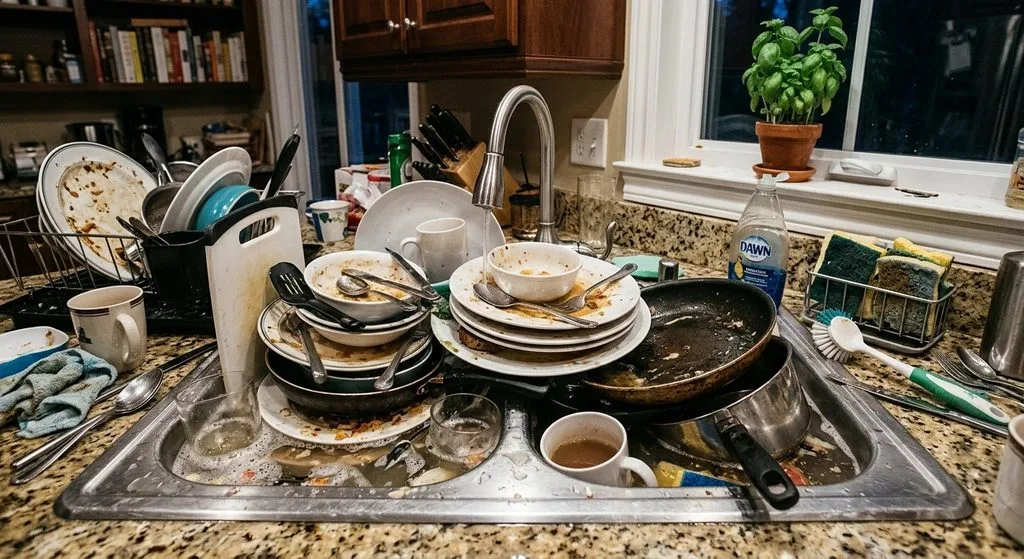
Start With One Simple Habit That Makes Dishwashing Easier
Keeping your sink clean becomes easier when you make dishwashing part of your everyday routine. Instead of waiting until the sink is full, take care of small tasks as they appear.
Try these easy habits:
- Wash small items while waiting for food to cook.
- Rinse plates immediately after eating.
- Scrape leftover food into the trash before washing dishes.
- Put clean, dry dishes away instead of leaving them in the dish rack.
- Spend five minutes clearing the sink before going to bed.
These habits may seem small, but they can save time and make your kitchen feel cleaner throughout the day.
How Cleaning While Cooking Can Save You Time Later?
Cooking and cleaning do not always have to be separate activities. In fact, combining them can help you finish both tasks more easily.
While waiting for water to boil or food to cook, use those extra minutes to wash a mixing bowl, rinse a knife, or clean a measuring spoon. You can also wipe the counter while waiting for your meal to finish cooking.
For example, if you are preparing pasta, wash the cutting board and utensils after chopping the vegetables. Once the pasta is cooking, clean the items you have already finished using.
By the time your meal is ready, many of the dishes will already be clean.
This approach is especially helpful when preparing meals that require several ingredients and cooking tools. Instead of leaving everything until the end, you gradually reduce the mess as you work.
The best part? After dinner, you can enjoy your meal without worrying about a huge cleanup waiting for you.
What Happens When You Leave Dirty Dishes Overnight?
Leaving dirty dishes overnight may seem harmless, but it can make your kitchen messier and your morning more stressful. Food can dry onto plates and pans, making them harder to clean. Leftover food may also create unpleasant smells.
To avoid this, spend a few minutes cleaning before bed. Wash the remaining dishes, remove food scraps, and wipe the sink. You do not need a deep clean every night. These simple habits help you wake up to a fresh, organized kitchen.
The Secret to a Cleaner Sink Is a Routine That Fits Your Life
A cleaning routine does not need to be complicated. In fact, the simpler it is, the easier it will be to follow.
Instead of waiting until the sink becomes full, choose a few regular times to manage your dishes.
You might rinse your breakfast dishes before leaving for work or school, clean cooking utensils while preparing lunch, and wash the remaining dishes after dinner.
If your schedule is busy, choose the times that work best for you. The goal is to create a routine that feels manageable rather than adding more pressure to your day.
You can also use a simple rule: never leave the kitchen without spending a few minutes clearing the sink.
Over time, these repeated actions become part of your daily habits. You no longer need to wait until the mess becomes noticeable because you already know when to take care of it.
A regular routine also makes it easier to notice when something needs attention, whether it is a full dish rack, a dirty sponge, or food scraps around the drain.
How Organizing Your Dishwashing Area Makes Everything Simpler?
You do not need a large kitchen or expensive organizers to create a tidy space. A few simple changes can help you keep everything within reach and prevent your sink area from becoming cluttered.
Here are some easy ways to organize your dishwashing area:
- Keep cleaning supplies nearby: Store dish soap, sponges, scrub brushes, and dishcloths close to the sink so you can find them whenever you need them.
- Use a dish rack: Give clean dishes a proper place to drain and dry. Empty the rack regularly to make room for the next batch.
- Make the most of counter space: If you have a small kitchen, avoid keeping unnecessary items around the sink. Use a compact organizer or store extra supplies in a nearby cupboard.
- Sort dirty dishes before washing: Group cups together, stack plates neatly, and keep cooking pots and pans in a separate area when possible.
- Keep your cleaning tools fresh: Rinse sponges after use, let them dry between uses, and wash dishcloths regularly to maintain a cleaner washing area.
An organized dishwashing area also gives you more room to wash dishes comfortably and helps prevent dirty items from spreading across the counter.
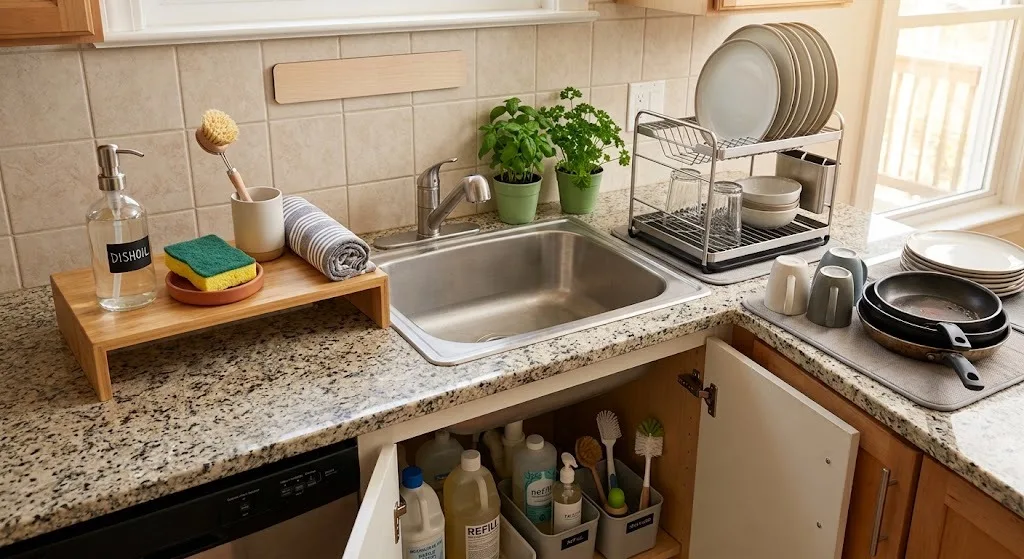
The result? A cleaner sink, a tidier kitchen, and a dishwashing routine that feels much less like a chore.
Why Removing Food Scraps Before Washing Makes a Big Difference?
Food scraps are one of the easiest things to overlook when cleaning the kitchen sink. Small pieces of rice, pasta, vegetables, and leftover sauces can collect around the drain and make the sink unpleasant.
Before washing your dishes, scrape leftover food into the trash or an appropriate food-waste container. You can also keep a small bowl nearby while preparing meals to collect vegetable peels and other scraps.
After washing the dishes, check the sink strainer and remove any trapped food. It is also important to avoid pouring cooking oil or grease down the drain. These substances can build up inside pipes and contribute to blockages. Taking a few seconds to remove food scraps helps keep your sink cleaner and reduces the risk of drainage problems.
If you notice that water is draining slowly or unpleasant smells continue despite regular cleaning, the drain may need additional attention. A clean drain area makes the entire sink easier to maintain and helps your kitchen feel fresher.
Can Using Fewer Dishes Really Make Your Kitchen Cleaner?
Using fewer dishes throughout the day can help prevent your kitchen sink from piling up. Try using one mixing bowl when possible, choosing one-pot meals, and planning your cooking to avoid unnecessary utensils.
Always wash dishes properly before reusing them, especially after contact with raw meat. These small changes can reduce your cleaning time, keep your kitchen organized, and make washing dishes feel much easier.
What If Everyone in Your House Leaves Dishes in the Sink?
Keeping the kitchen clean can become difficult when several people share the same space. One person may wash the dishes after breakfast, while everyone else adds more plates and cups throughout the day.
Before long, the sink becomes full again. The easiest solution is to make dishwashing a shared responsibility.
Encourage everyone to rinse their plates after eating and put their cups in the dishwasher or designated washing area. If you wash dishes by hand, household members can take turns cleaning up after meals.
You can also divide the work into small tasks. One person can wash the dishes while another clears the table or wipes the counter. When everyone contributes, no single person has to deal with the entire pile. This simple change can make the kitchen easier to manage and help prevent the same mess from returning every day.
The Five-Minute Trick for a Kitchen That Feels Fresh Again
Feeling too tired to clean your kitchen after a busy day? Try a five-minute kitchen reset! This quick routine helps you tidy up without spending too much time or energy.
Set a timer and focus on these simple tasks:
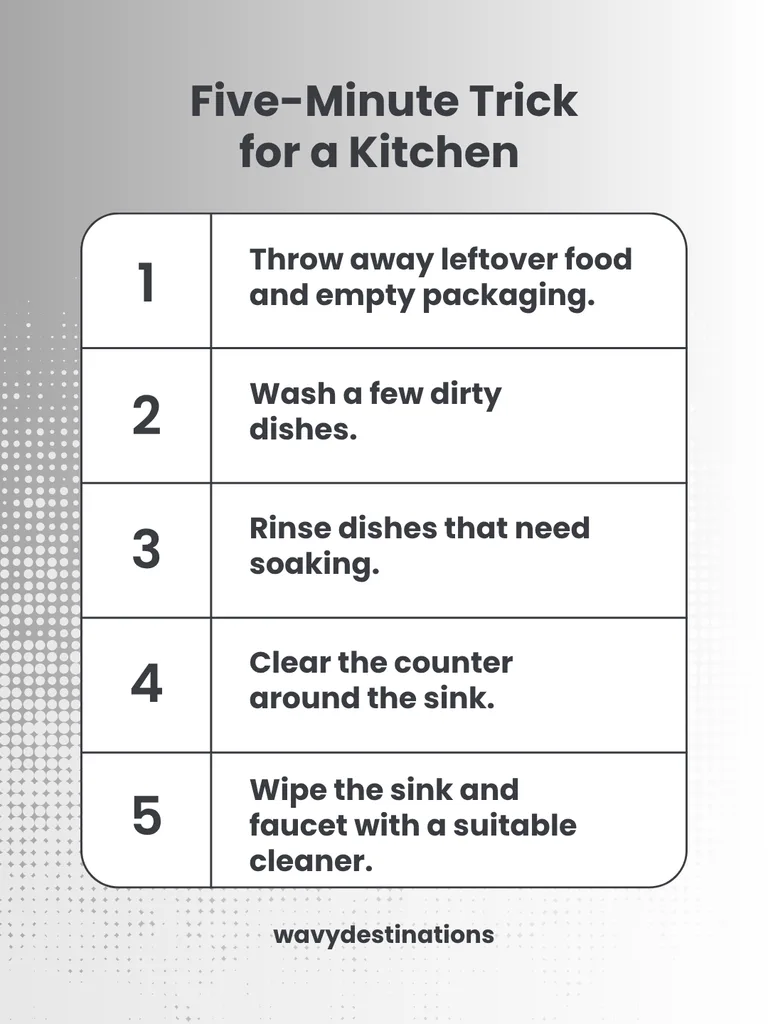
This simple habit keeps your kitchen looking fresh, prevents dishes from piling up, and makes cleaning feel less overwhelming. Sometimes, just five minutes is enough to make a noticeable difference!
How a Clean Sink Can Improve Your Daily Kitchen Routine
A clean kitchen sink offers more than just a neat appearance. It can make many everyday activities easier. When the sink is clear, you have more room to wash vegetables, fill cooking pots, and prepare ingredients. You can also clean dishes without moving piles of dirty plates out of the way.
A tidy sink area makes it easier to notice food scraps, water spills, and other messes before they become difficult to manage. It can also make cooking feel more enjoyable. Instead of worrying about the cleanup waiting after dinner, you can focus on preparing meals and spending time with your family.
Most importantly, a clean sink can help you feel more organized throughout the day.
You do not need a perfect kitchen to enjoy these benefits. Even a few simple improvements can make your daily routine smoother and less stressful.
Final Thoughts
Keeping your kitchen sink from piling up does not have to be difficult. Simple habits like rinsing dishes after meals, cleaning as you cook, and following a daily routine can make a big difference. Keep your dishwashing area organized, remove food scraps, and share cleaning tasks with your family. If you feel overwhelmed, start with a quick five-minute cleanup. Remember, you do not need to change everything at once. Small, consistent steps can help you enjoy a cleaner sink, a tidier kitchen, and a more stress-free daily routine.
A cleaner kitchen starts with small habits. Take care of one dish at a time, and you will be surprised by how much easier your daily routine can become.