
Costco Calamari Salad Recipe
I recently tried recreating the famous Costco Calamari Salad Recipe at home, and I was blown away by how fresh and vibrant it tasted compared to the store-bought version.
It has this perfect balance of tender squid and crunchy vegetables that makes it incredibly addictive.
I love how simple the dressing is to whisk together, yet it packs such a complex, savory punch. Making this in my own kitchen allowed me to adjust the seasoning just right, and honestly, I might never buy the pre-made tub again.

Ingredients
Here are the fresh ingredients you will need to bring this Japanese-inspired salad to life in your own kitchen.
- 2 tbsp sliced celery: Adds a necessary crunch and fresh herbal note that cuts through the savory dressing.
- 4 tbsp rice wine vinegar: This provides a mild, slightly sweet acidity that is much smoother than regular white vinegar.
- 2 tbsp sesame oil: Essential for that authentic nutty aroma and rich mouthfeel; do not skip this.
- 2 tsp grated ginger: Fresh ginger adds a spicy, warm kick that brightens up the seafood flavors instantly.
- 2 tbsp soy sauce: Provides the salty, umami base for the dressing; use a high-quality brand for best results.
- 2 tbsp vegetable oil: Helps to emulsify the dressing and coat the ingredients evenly without overpowering the taste.
- 2 tbsp sliced red onions: These offer a sharp, pungent bite and a beautiful pop of purple color.
- 1/2 lb cleaned and sliced squid rings: The star of the show; ensure they are very fresh or properly thawed for the best texture.
- 2 tbsp sliced green onions: Adds a mild onion flavor and vibrant green color for the final touch.
- 2 tbsp sesame seeds: Toasted seeds work best here to add texture and enhance the nutty flavor profile.
- 1/2 tbsp granulated sugar: Just a touch is needed to balance the saltiness of the soy sauce and acidity of the vinegar.
- 2 tbsp sliced bamboo shoots: These add a lovely, subtle sweetness and a unique, crisp texture.
- 2 tbsp sliced kikurage mushrooms: Also known as wood ear mushrooms, these add a fascinating jelly-like crunch.
Note: This recipe yields approximately 3 servings depending on how it is served.
Variations
This salad is quite versatile, so feel free to adapt it to your dietary needs or flavor preferences.
- Gluten-Free: Swap the regular soy sauce for Tamari or coconut liquid aminos to make this safe for gluten sensitivities.
- Spice It Up: Add a teaspoon of red chili flakes or a drizzle of chili oil if you prefer a salad with a bit of heat.
- Citrus Twist: Replace half of the rice wine vinegar with fresh lime juice or yuzu juice for a brighter, more citrus-forward dressing.
- Vegetarian Option: If you don’t eat seafood, this dressing works wonderfully with firm tofu cubes or blanched broccoli instead of squid.
Cooking Time
- Prep Time: 5 minutes
- Cooking Time: 0 minutes (marinating time extra)
- Total Time: 5 minutes
Equipment You Need
- Large Mixing Bowl: Needed to combine the dressing ingredients and toss the salad efficiently.
- Whisk: Essential for emulsifying the oil, vinegar, and soy sauce into a smooth marinade.
- Sharp Knife: crucial for thinly slicing the vegetables and cutting the squid rings evenly.
- Cutting Board: A stable surface for prepping all your fresh veggies and seafood.
- Airtight Container: Useful for marinating the salad in the fridge without absorbing other odors.
How to Make Costco Calamari Salad Recipe?
This recipe is incredibly straightforward, focusing mostly on preparation and marinating rather than active cooking.
Step 1: Create the Marinade Base
Start by grabbing your large mixing bowl. Combine the sliced celery, rice wine vinegar, sesame oil, grated ginger, soy sauce, and vegetable oil. Whisk these ingredients together vigorously. You want the oil and vinegar to emulsify slightly so the dressing coats everything evenly later. This base carries all the flavor, so give it a quick taste and adjust if you prefer it more tart or salty.
Step 2: Add the Squid
Once your marinade is ready, add the cleaned and sliced squid rings into the bowl. Toss them gently to ensure every ring is coated in the liquid. Allow this mixture to sit for about 30 minutes. This isn’t just about coating the squid; the acid in the vinegar helps to tenderize the seafood slightly, ensuring it isn’t chewy when you eat it.
Step 3: Incorporate Vegetables and Seasonings
After the initial marinating time, add the red onions, green onions, sesame seeds, sugar, bamboo shoots, and kikurage mushrooms to the bowl. Stir everything gently but thoroughly to combine. You want the vegetables to be distributed evenly throughout the squid so every bite has a mix of textures.
Step 4: Chill and Set
Cover the bowl with plastic wrap or transfer the salad to an airtight container. Place it in the refrigerator for at least one hour before serving. This step is crucial because it allows the flavors to meld together. The vegetables will absorb some of the dressing, becoming more flavorful, and the salad is infinitely better when served cold.
Step 5: Final Garnish
Just before you are ready to serve, give the salad one final toss to redistribute the dressing that may have settled at the bottom. Garnish with a fresh sprinkle of extra green onions and sesame seeds. This adds a fresh pop of color and extra crunch right at the end.
Additional Tips for Making this Recipe Better
I have made this a few times now, and I’ve learned a few tricks that really elevate the final dish.
- I always toast my sesame seeds in a dry pan for a minute before adding them. It releases their natural oils and makes the nutty flavor much more intense.
- Ensure your squid is completely dry before adding it to the dressing. If it’s wet, it will water down your marinade and the flavors won’t stick to the rings as well.
- I like to slice my red onions paper-thin. Thick chunks of raw onion can be overwhelming, but thin shavings melt into the salad perfectly.
- If you can’t find kikurage mushrooms, rehydrated shiitake mushrooms make a fantastic substitute with a meaty texture.
How to Serve Costco Calamari Salad Recipe?
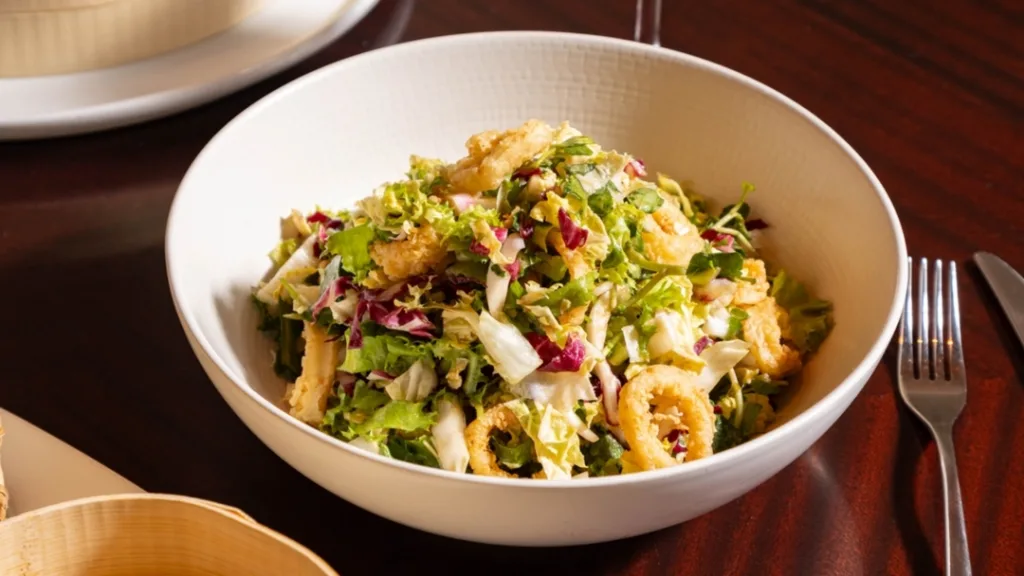
This salad is visually striking on its own, but presentation can make it even more appetizing. Serve it in small, individual ceramic bowls as an elegant appetizer. You can line the bowls with a fresh leaf of butter lettuce or shiso leaf to add a pop of bright green contrast against the salad.
For a main course, serve this salad over a bed of cold soba noodles or steamed sushi rice. The dressing from the salad acts as a sauce for the grains. Garnish with a wedge of lemon or lime on the side, allowing guests to add a fresh squeeze of citrus right before eating. A sprinkle of microgreens on top adds a gourmet touch.
Nutritional Information
Here is a quick look at the nutritional profile for this light and healthy salad.
- Calories: 95 kcal
- Protein: 8g
- Carbohydrates: 5g
- Fat: 5g
Make Ahead and Storage
This salad is actually better when made ahead, making it perfect for meal prep.
Storing in the Fridge
You can store the prepared salad in an airtight container in the refrigerator for up to 3 days. The longer it sits, the more pickled the vegetables will become, which can be delicious, but the green onions may lose some crunch.
Freezing Guidelines
While you technically can freeze it, I don’t recommend it. The fresh vegetables like celery and onions will lose their crisp texture and become soggy upon thawing. It is best enjoyed fresh.
Restoring Leftovers
If you have leftovers that have been in the fridge for a day or two, give them a good stir before serving. If it tastes a little flat, a fresh splash of rice vinegar or a pinch of salt can wake the flavors back up instantly.
Why You’ll Love This Recipe?
Here are just a few reasons why this salad is likely to become a regular in your rotation.
- Incredibly Fresh Taste: Unlike heavy mayonnaise-based salads, this vinaigrette style is light, zesty, and leaves you feeling energized.
- Packed with Texture: From the chewy squid to the crunch of bamboo shoots and crisp celery, every bite offers a satisfying mix of textures.
- Quick and No-Cook: It requires absolutely no heat, making it the perfect recipe for hot summer days when you don’t want to turn on the stove.
- Restaurant Quality at Home: It tastes exactly like the high-end appetizers you get at Japanese restaurants but costs a fraction of the price to make.
- Diet Friendly: It is naturally low in calories and carbohydrates, making it a guilt-free indulgence that fits into many diet plans.