
Compare Coffee Brewing Methods Like Pour-Over and French Press. Which One Is Easier To Make
If you love good coffee, you’ve probably heard of Compare Coffee Brewing Methods Like Pour-Over and French Press. Which One Is Easier To Make? Both make amazing cups. But which one is easier for everyday brewing?
This guide breaks it all down. You’ll learn how each method works, how they taste, and which one fits your lifestyle. Whether you’re a total beginner or switching up your routine, you’re in the right place.
Let’s get brewing.
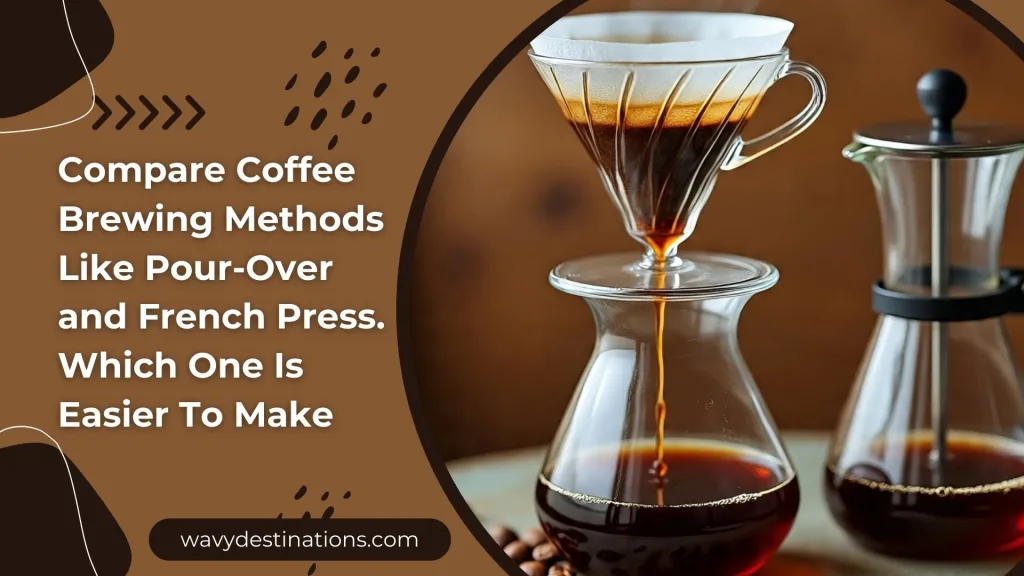
What Is French Press Coffee?
The French press is one of the oldest manual brewing methods. It was invented in Italy in the 1920s and has stayed popular ever since — and for good reason.
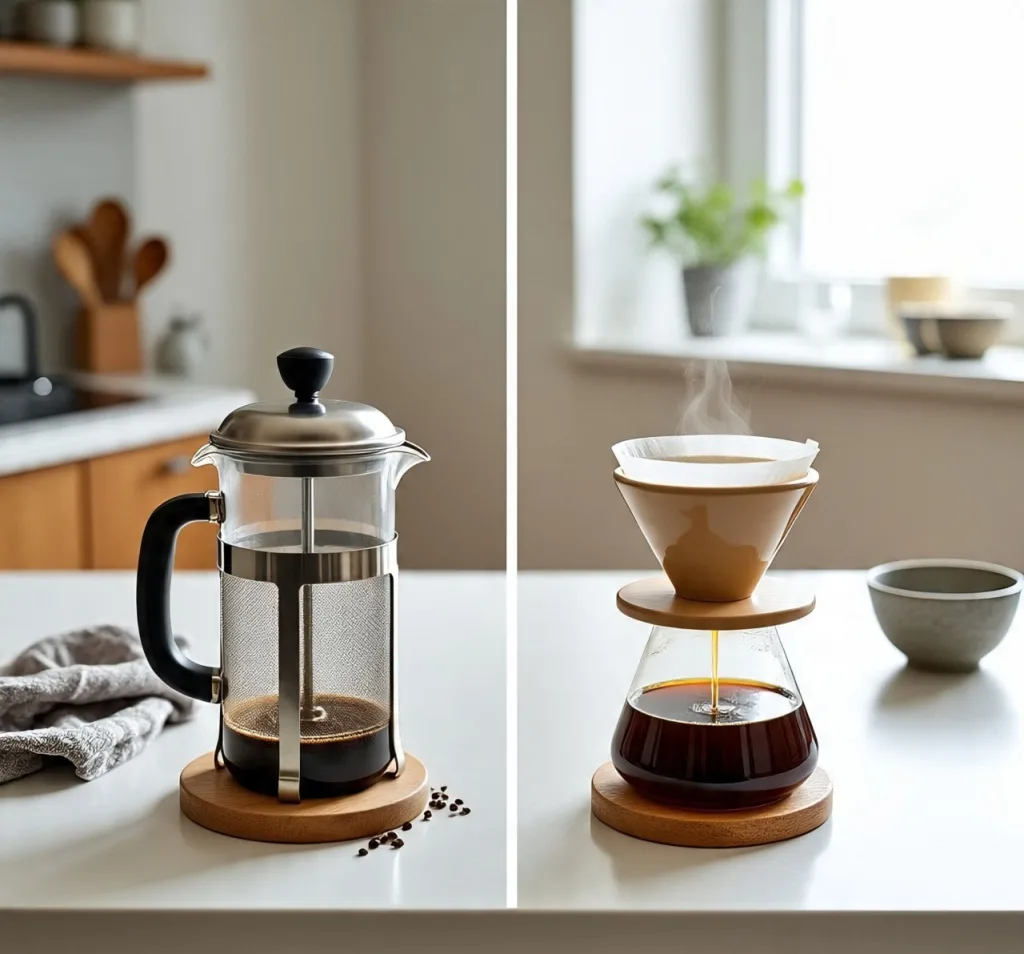
It works by steeping coarse coffee grounds directly in hot water, then pushing them down with a metal plunger. The result is a bold, rich, full-bodied cup.
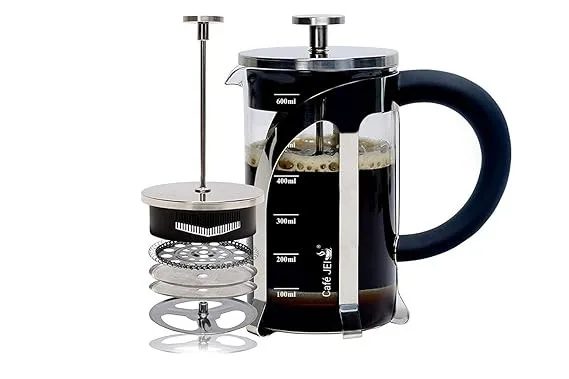
The French press has three main parts:
- Carafe: A glass (or stainless steel) cylinder that holds your coffee and water
- Plunger: A metal rod with a lid that you push down to separate the grounds
- Filter/Strainer: A fine metal mesh that keeps grounds out of your cup (mostly)
No paper filters. No electricity. Just you, hot water, and a few minutes of your time.
What Is Pour-Over Coffee?
Pour-over is exactly what it sounds like. You pour hot water over coffee grounds that sit in a filter above your cup or carafe. Gravity does the work — the water flows through the grounds and drips into your cup below.
Compare Coffee Brewing Methods Like Pour-Over and French Press. Which One Is Easier To Make? Popular pour-over devices include the Hario V60, Chemex, and Kalita Wave. Each has its own shape and style, but the idea is the same.
Pour-over gives you a cleaner, brighter, and more delicate cup. It’s the go-to method for people who love tasting subtle flavors in light or medium roasts.
Quick Comparison Table: Compare Coffee Brewing Methods Like Pour-Over and French Press. Which One Is Easier To Make
| Feature | French Press | Pour-Over |
| Flavor Profile | Bold, rich, heavy | Clean, bright, nuanced |
| Mouthfeel | Full-bodied, oily | Light to medium |
| Beginner-Friendly | Very easy | Some learning curve |
| Brew Time | 4–5 minutes | 3–4 minutes |
| Equipment Cost | $20–$50 | $20–$60+ |
| Cleanup | Requires rinsing | Toss the filter — done |
| Best Roast | Medium to dark | Light to medium |
| Paper Filter Needed | No | Yes |
| Grind Type | Coarse | Medium-fine |
Flavor & Taste: What’s the Difference?
This is where things get really interesting. Compare Coffee Brewing Methods Like Pour-Over and French Press. Which One Is Easier To Make
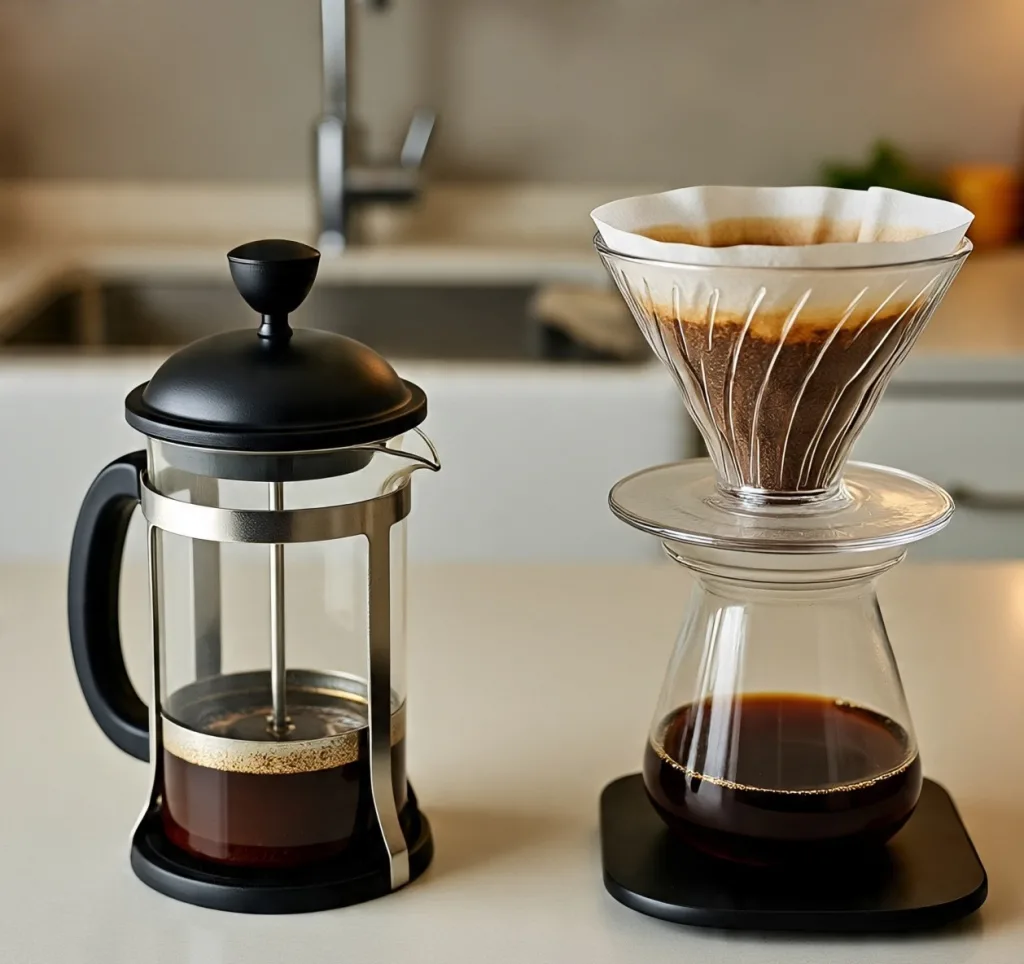
French Press Flavor: The metal mesh filter lets natural oils from the beans pass into your cup. This makes the coffee taste richer, bolder, and heavier. You’ll notice a thicker mouthfeel — almost velvety. Dark roasts really shine here. You may also notice a tiny bit of grit at the bottom of your cup, which is totally normal.
Pour-Over Flavor: The paper filter catches those oils and tiny particles. What’s left is a crisp, clean, and bright cup of coffee. It tastes lighter and more refined. You can really pick out individual flavor notes — like fruit, chocolate, or floral hints. This makes it perfect for specialty and single-origin beans.
Simple rule of thumb:
- Love bold and strong coffee? → French Press
- Love clean and complex flavors? → Pour-Over
Ease of Use: Which One Is Simpler?
For most beginners, French press is easier. Compare Coffee Brewing Methods Like Pour-Over and French Press. Which One Is Easier To Make
Here’s why:
- You don’t need perfect pouring technique
- The ratio is forgiving (roughly 1 tablespoon per cup)
- There’s no special kettle required
- You just add grounds, pour hot water, wait, and plunge
Pour-over takes a bit more practice. You need to pour slowly and steadily, often in a spiral or circular motion. A gooseneck kettle helps a lot. You also need to “bloom” the grounds and control your pour rate for a consistent result.
That said, once you get the hang of pour-over, many people find it almost meditative. It’s a process you actually enjoy — not just a task.
Bottom line: French press wins for convenience. Pour-over rewards patience and practice.
How to Brew French Press Coffee (Step-by-Step)?
Here’s how to make a great French press at home:
What you need:
- French press
- Coarsely ground coffee
- Hot water (around 93°C / 200°F)
- Timer
- Tablespoon or kitchen scale
Steps:
- Heat your water. Bring it to about 93°C. If no thermometer, boil and let it cool for 1 minute.
- Preheat your carafe. Pour a little hot water in, swirl it, then dump it out. This keeps your coffee hot longer.
- Measure your coffee. Use about 7–8 grams (one heaping tablespoon) per 6–7 oz of water.
- Add your grounds. Pour them into the empty, preheated carafe.
- Bloom the grounds. Pour just enough hot water to wet all the grounds. Wait 30 seconds. This releases trapped gases and improves flavor.
- Fill it up. Pour in the rest of the hot water slowly.
- Start your timer. Let it steep for 4 minutes.
- Plunge slowly. Press the plunger down gently and steadily.
- Pour and enjoy. Don’t let it sit — pour it out right away to stop the brewing.
Pro tip: Use a coarse grind, similar to the texture of coarse sea salt. Finer grinds make the coffee bitter and harder to plunge.
How to Brew Pour-Over Coffee (Step-by-Step)?
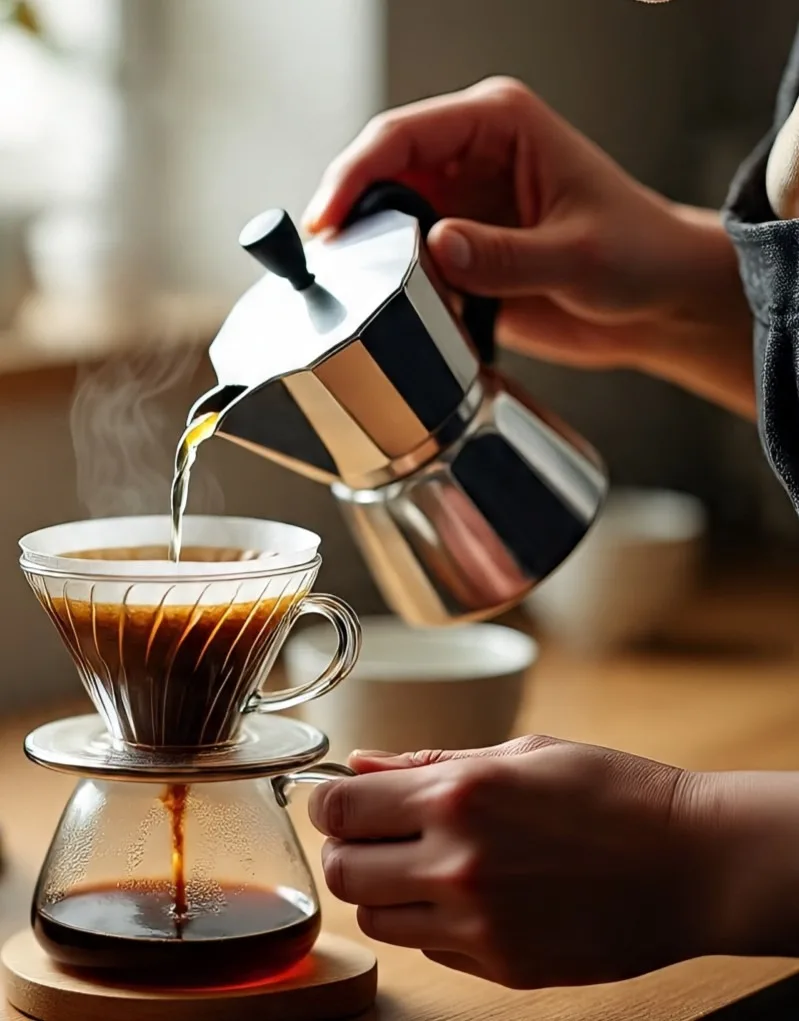
Making pour-over is a bit more hands-on, but it’s worth it.
What you need:
- Pour-over dripper (V60, Chemex, or Kalita)
- Paper filter
- Medium-fine ground coffee
- Hot water (93°C / 200°F)
- Gooseneck kettle (recommended)
- Timer and scale
Steps:
- Rinse your filter. Place it in the dripper and pour hot water through it. This removes any papery taste and warms the cup. Discard the rinse water.
- Add your coffee. Use a 1:16 ratio — for example, 20g of coffee for 320ml of water.
- Bloom first. Pour about twice the weight of water as coffee (e.g., 40ml for 20g coffee). Wait 30–45 seconds while the grounds bubble and expand.
- Start pouring slowly. Pour in a slow, steady spiral from the center outward. Don’t rush it.
- Continue in stages. Pour the rest of the water in 2–3 slow pours, letting the water drain a little between each.
- Total brew time: Aim for 2:30 to 3:30 minutes from first pour to last drip.
- Remove the filter and serve. Discard the filter and grounds. Your cup is ready.
Pro tip: Pouring too fast makes the coffee watery. Pouring too slowly can over-extract and make it bitter. Steady and consistent is the key.
Equipment You Need for Compare Coffee Brewing Methods Like Pour-Over and French Press. Which One Is Easier To Make
For French Press, you’ll need:
- French press (glass or stainless steel)
- Coarse coffee grinder (burr grinder recommended)
- Kettle (any type works)
- Timer
- Scale or tablespoon
For Pour-Over, you’ll need:
- Pour-over dripper (V60, Chemex, or Kalita)
- Paper filters (must match your dripper)
- Medium-fine coffee grinder
- Gooseneck kettle (for better control)
- Timer and kitchen scale
Cost summary:
- A decent French press costs $20–$50
- Entry-level pour-over kits start at $20 and go up fast with a gooseneck kettle ($40–$80)
French press is cheaper to get started with because you don’t need special equipment.
Grind Size: Why It Matters for Compare Coffee Brewing Methods Like Pour-Over and French Press. Which One Is Easier To Make
Getting grind size right is one of the most important things in coffee brewing. It directly affects taste.
| Method | Grind Size | Why |
| French Press | Coarse (like sea salt) | Prevents grit from passing through the mesh |
| Pour-Over (V60) | Medium-fine (like table salt) | Allows controlled water flow through paper filter |
| Pour-Over (Chemex) | Medium (slightly coarser than V60) | Thicker filter needs a slightly coarser grind |
Always use freshly ground beans when possible. Pre-ground coffee goes stale fast. A burr grinder gives you a more consistent grind than a blade grinder, and it makes a noticeable difference in taste.
Cleanup: Which Is Less of a Hassle?
Compare Coffee Brewing Methods Like Pour-Over and French Press. Which One Is Easier To Make
French Press cleanup:
- Unscrew the plunger and remove the filter
- Dump the wet grounds (they can block your drain — toss them in the trash or compost)
- Rinse all parts with hot water
- Let dry or wash with soap
The oily residue from French press brewing means you’ll need a good rinse each time.
Pour-Over cleanup:
- Remove the paper filter with the grounds inside
- Toss it in the bin or compost
- Rinse the dripper with water — done in seconds
Winner for easy cleanup: Pour-Over. Tossing a filter takes 5 seconds. Cleaning a French press takes a bit more effort.
Cost Comparison: Budget-Friendly vs. Premium
You don’t need to spend a lot to make great coffee at home. Here’s what to expect:
| Item | French Press | Pour-Over |
| Brewer | $20–$50 | $15–$60 |
| Grinder | $20–$100+ | $20–$100+ |
| Kettle | Any kettle works | Gooseneck kettle ($30–$80) |
| Filters | None needed | $5–$15 per pack |
| Total Starter Cost | ~$40–$80 | ~$60–$150+ |
French press is easier on the wallet to start. Over time, the cost of paper filters for pour-over can add up too — though it’s still not a huge expense.
Common Mistakes to Avoid
Even simple brewing methods can go wrong. Here are the most common errors and how to fix them: Compare Coffee Brewing Methods Like Pour-Over and French Press. Which One Is Easier To Make
French Press Mistakes:
- Using too fine a grind → Makes coffee bitter and gritty
- Letting it steep too long → Over-extracts and turns bitter
- Not plunging slowly → Stirs up grounds, increases grit in the cup
- Leaving coffee in the press after plunging → It keeps brewing and gets bitter fast
Pour-Over Mistakes:
- Skipping the bloom → Produces flat, under-extracted coffee
- Pouring too fast → Coffee drips through before it’s fully extracted (weak and sour)
- Not rinsing the filter → Paper taste ends up in your cup
- Using the wrong grind size → Off-balance flavor every time
Troubleshooting Your Brew: Compare Coffee Brewing Methods Like Pour-Over and French Press. Which One Is Easier To Make
Something taste off? Here’s a quick fix guide:
| Problem | French Press Fix | Pour-Over Fix |
| Tastes sour or weak | Grind finer or steep longer | Grind finer or pour slower |
| Tastes bitter | Grind coarser or steep less | Grind coarser or pour faster |
| Too much grit | Use coarser grind, let settle before pouring | N/A (filter handles this) |
| Tastes flat | Fresher beans, try blooming | Make sure to bloom properly |
| Too weak overall | Add more coffee | Add more coffee or adjust ratio |
Water temperature also matters a lot. Stay between 92–96°C (197–205°F) for both methods. Too hot burns the grounds. Too cool under-extracts them.
Which One Should You Choose?
Here’s a simple breakdown based on your priorities: Compare Coffee Brewing Methods Like Pour-Over and French Press. Which One Is Easier To Make
Choose French Press if you:
- Are new to manual brewing
- Want bold, rich, full-bodied coffee
- Don’t want to buy special equipment
- Prefer dark or medium roasts
- Don’t mind a little extra cleanup
Choose Pour-Over if you:
- Love clean, bright, and detailed flavors
- Enjoy the ritual of slow, mindful brewing
- Use specialty or single-origin light roasts
- Want super-easy cleanup (just toss the filter)
- Are okay spending a bit more on a gooseneck kettle
If you still can’t decide — try French press first. It’s more forgiving, cheaper to start, and still makes an excellent cup. You can always explore pour-over once you’re comfortable with manual brewing.
Frequently Asked Questions
Q: Can I use the same coffee beans for both methods?
Yes! But the grind size must change. Coarse for French press, medium-fine for pour-over.
Q: Is pour-over coffee stronger than French press?
Not necessarily stronger — but French press tastes bolder due to the oils in the cup. Pour-over tastes cleaner, not weaker.
Q: Do I need a scale to make good coffee?
You don’t have to, but it really helps. A scale gives consistent results every single time.
Q: Can I make cold brew with a French press?
Yes! Use coarsely ground coffee, cold water, and steep in the fridge for 12–24 hours before plunging.
Q: How often should I clean my French press?
After every use. Old oily residue builds up and makes your coffee taste stale.
Q: Is French press coffee bad for you?
The oils in unfiltered French press coffee do contain cafestol, which can raise LDL cholesterol slightly. If that’s a concern, pour-over (with a paper filter) is the healthier option.
Final Verdict
Both the French press and pour-over make genuinely great coffee. Neither is better than the other and they’re just different.
French press is your winner if you want simplicity, bold flavor, and low startup cost. You can be making great coffee your very first morning.
Pour-over is your winner if you want control, cleaner taste, and a more mindful brewing experience. The learning curve is real, but it’s not steep — and the results are incredibly rewarding.
The best method is the one you’ll actually use every day. Start with what feels right, learn your preferences, and enjoy the process. After all, great coffee should make your day better — not more complicated.