
Cakalang Pampis Recipe
I recently found myself craving something vibrant and spicy to wake up my palate, and this Manado-style shredded fish dish was the perfect answer.
The moment I started sautéing the aromatic spice paste, my kitchen filled with the incredible scents of lemongrass and lime leaves, reminding me of the bold flavors of Indonesian cuisine.
It was surprisingly therapeutic to shred the steamed fish, knowing it would soon soak up all those rich, fiery seasonings.
I can’t wait to share this Cakalang Pampis Recipe with you because it strikes such a beautiful balance between heat, citrus, and savory goodness.
Ingredients
Here are the fresh ingredients you’ll need to create this flavorful Indonesian dish.
- 600-700g Katsuo (Skipjack Tuna) Fillet: This firm, oily fish holds up well to shredding; you can also use regular tuna steaks or mackerel if skipjack isn’t available.
- 1 tbsp Lime Juice (for prep): Essential for removing any strong fishy odors and tenderizing the meat before steaming.
- ½ tsp Sea Salt: Helps season the fish during the initial steaming process.
- 10 Bird-eye Chiles: These provide the sharp, intense heat characteristic of Manado cuisine; adjust the amount if you prefer less spice.
- 15 Red Chiles: These add volume to the spice paste and a slightly milder, fruity heat compared to the bird-eye chiles.
- 5 Green Chiles: Adding these brings a fresh, grassy pepper flavor that complements the red chiles.
- 2 stalks Lemongrass: You’ll only need the white parts for the paste; they add a critical citrusy-floral aroma.
- 7 Shallots (or Pearl Onions): Shallots offer a milder, sweeter onion flavor that forms the savory base of the spice paste.
- 5 cloves Garlic: Fresh garlic adds the necessary punch and depth to the aromatic blend.
- 3 cm Ginger: Fresh ginger provides a warm, zesty kick that pairs perfectly with fish.
- 1 tsp Ground Turmeric: This gives the dish a beautiful golden hue and earthy undertone.
- 5 Kaffir Lime Leaves: Thinly sliced, these leaves offer an irreplaceable zesty fragrance that lifts the entire dish.
- 3 sprigs Spring Onion: Chopped thinly, these add a fresh crunch and oniony bite at the very end.
- 1 packet Stevia (or sugar substitute): A touch of sweetness helps balance the intense heat of the chilies.
- 2 tbsp Vegetable Oil: needed for sautéing the spice paste to release its flavors.
- Juice of 1 Lime/Lemon (finishing): A final squeeze of acid brightens the flavors right before serving.
Note: This recipe yields approximately 4 servings based on the quantity of fish used.
Variations
Feel free to customize this recipe to suit your dietary needs or pantry availability.
- Mild Version: If the heat is too much, remove the seeds from the chilies before blending, or substitute half the red chilies with red bell peppers.
- Fish Alternatives: While Cakalang uses skipjack tuna, this recipe works beautifully with canned tuna (drained well), salmon, or even shredded chicken breast.
- Herb Boost: Add a handful of Thai basil leaves (Kemangi) at the end of cooking for an extra layer of aromatic freshness.
- Sugar Swap: If you don’t use Stevia, you can use a teaspoon of coconut sugar or palm sugar for a more traditional Indonesian flavor profile.
Cooking Time
Here is a breakdown of the time needed to prepare this spicy delight.
- Prep Time: 20 minutes
- Cooking Time: 35 minutes
- Total Time: 55 minutes
Equipment you need
You will need a few standard kitchen tools to make this process smooth.
- Food Processor or Blender: Essential for grinding the chilies, shallots, garlic, and spices into a smooth paste.
- Steamer Basket: Used to gently cook the fish before shredding it.
- Large Frying Pan or Wok: Provides ample space for sautéing the spices and tossing the shredded fish.
- Mixing Bowls: Needed for marinating the raw fish and holding the shredded fish.
- Knife and Cutting Board: For slicing the lime leaves, lemongrass, and spring onions.
How to Make Cakalang Pampis Recipe?
Follow these steps to create a dry, spicy, and aromatic fish dish that bursts with flavor.
Preparing and Steaming the Fish
Start by washing your fish fillets thoroughly and patting them dry with paper towels to remove excess moisture. Rub the fillets all over with sea salt and the first tablespoon of lime juice, letting them sit for about 10 minutes to marinate lightly. Place the fish in a steamer basket and steam for roughly 25 minutes until the meat is opaque and flakes easily with a fork.

Shredding the Fish
Remove the fish from the steamer and transfer it to a bowl to cool down until it is safe to handle. Once cooled, use your fingers or two forks to shred the meat into small, bite-sized pieces, carefully feeling for and discarding any bones you might find. If there were any juices released during steaming, pour them into the bowl with the shredded fish to keep it moist.

Making the Spice Paste
Combine the bird-eye chiles, red chiles, green chiles, white parts of the lemongrass, shallots, garlic, ginger, and turmeric in a food processor. Pulse the ingredients until they form a coarse but uniform paste; if it’s too dry to blend, you can add a tiny splash of oil or water to help it along. This paste will provide the vibrant color and intense flavor base for the fish.
Cooking the Dish
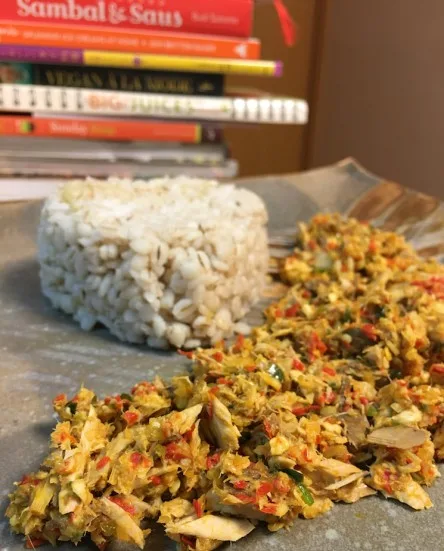
Heat the vegetable oil in a large frying pan over medium heat and sauté the spice paste until it becomes fragrant and the raw smell dissipates. Add the thinly sliced kaffir lime leaves and stir well before tossing in the shredded fish, ensuring every strand is coated in the yellow-orange spices. Sprinkle in salt and Stevia, then lower the heat and cook, stirring frequently, until the moisture evaporates and the fish becomes drier. Finish by mixing in the chopped spring onions and a final squeeze of lime juice before turning off the heat.
Additional Tips for Making this Recipe Better
After making this a few times, I’ve discovered a few secrets to getting the best texture and flavor.
- Don’t Over-blend: I prefer pulsing the spices rather than pureeing them completely; having small bits of chili and shallot adds a nice texture to the final dish.
- Dry it Out: I found that cooking the fish longer on low heat to really dry it out (almost like floss) concentrates the flavor and improves the shelf life significantly.
- Lime Leaf Hack: To get the most aroma without the tough texture, I remove the center vein of the kaffir lime leaves before slicing them hair-thin.
- Resting Time: I noticed the flavors taste even better the next day after the spices have had time to meld completely with the fish.
How to Serve Cakalang Pampis Recipe?
Serve Cakalang Pampis warm alongside a mound of steaming white jasmine rice for a classic pairing. It also makes an incredible filling for sandwiches, wraps, or stuffed inside warm buns (Panada). For a visually appealing presentation, garnish the top with extra slices of fresh red chili and a wedge of lime on the side.

Nutritional Information
Here is a quick overview of the nutrition for health-conscious cooks.
- Calories: Moderate calorie count, primarily from protein and healthy fats.
- Protein: Very high, making it excellent for muscle recovery and satiety.
- Carbohydrates: Low, especially if using Stevia instead of sugar.
- Fat: Contains healthy omega-3 fatty acids from the fish and moderate cooking oil.
Make Ahead and Storage
This dish stores beautifully, making it perfect for meal prep.
Storing Leftovers
Allow the fish to cool completely before transferring it to an airtight container. It can be stored in the refrigerator for up to 5 days, thanks to the low moisture content and spices acting as preservatives.
Freezing Instructions
You can freeze Cakalang Pampis for up to 2 months. Portion it into freezer-safe bags and squeeze out as much air as possible to prevent freezer burn.
Reheating Tips
To reheat, simply toss it in a dry pan over medium heat for a few minutes until hot. You can also microwave it, but pan-frying helps restore the dry, fluffy texture better.
Why You’ll Love This Recipe?
Here are a few reasons why this spicy fish dish deserves a spot in your recipe rotation.
- Flavor Explosion: The combination of lemongrass, lime leaves, and three types of chilies creates a complex, zesty, and spicy profile that is addictive.
- High Protein, Low Carb: It fits perfectly into keto, paleo, or general low-carb diets while being incredibly filling.
- Budget-Friendly: You can use affordable fish cuts or even canned tuna and still achieve gourmet-level results.
- Versatile Usage: It’s not just a main dish; use it as a topping for porridge, a filling for sushi rolls, or a spicy addition to fried rice.
- Meal Prep Friendly: Because it keeps well and tastes better over time, you can make a big batch on Sunday and enjoy it all week.


