Photo-Friendly Portugal: Cities, Beaches & Wine Country You Shouldn’t Skip
Portugal is kind to cameras. Salt air turns buildings soft at the edges, cliffs throw shadows like stage lights, and river cities glow twice as bright thanks to their own reflections. If your idea of a good trip is a full memory card and sand in your shoes, this country meets you more than halfway.
For route baselines and timing benchmarks, tours to Portugal can serve as a neutral reference; the suggestions below lean photo-first, with simple moves you can actually do.
Lisbon: tile, light, and height
Lisbon is a show-off at golden hour. The city’s seven hills act like built-in tripods, and the Tagus works as a giant reflector.
Where to frame it
- Miradouro da Senhora do Monte for first light over terracotta roofs. Go early, bring a light jacket, and let the city wake into your frame.
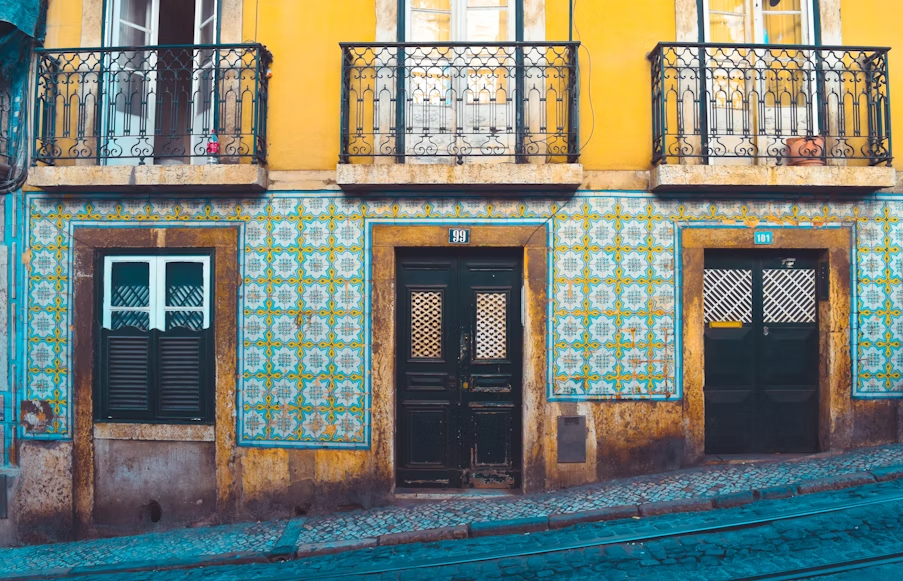
- Alfama backstreets for color and texture. Shoot tiles tight, then step back for laundry lines and staircases that zigzag.
- Praça do Comércio and the riverfront for silhouettes at sunset. Street musicians add motion you can pan for a dreamy blur.
- The 28 tram for a slow shutter experiment. Press your lens to the window, drag the shutter to catch light streaks, and hold your breath at corners.
Tips that save the shot
Lisbon’s calçada stones get slick. Wear grippy soles, use a wrist strap, and keep microfiber cloths for sea spray and pastry sugar. Don’t fight the wind on hilltops; use it. Flowing hair, a scarf in motion, flags snapping against the sky: all gift you a sense of place.
Porto: blue-and-white stories, river mirrors
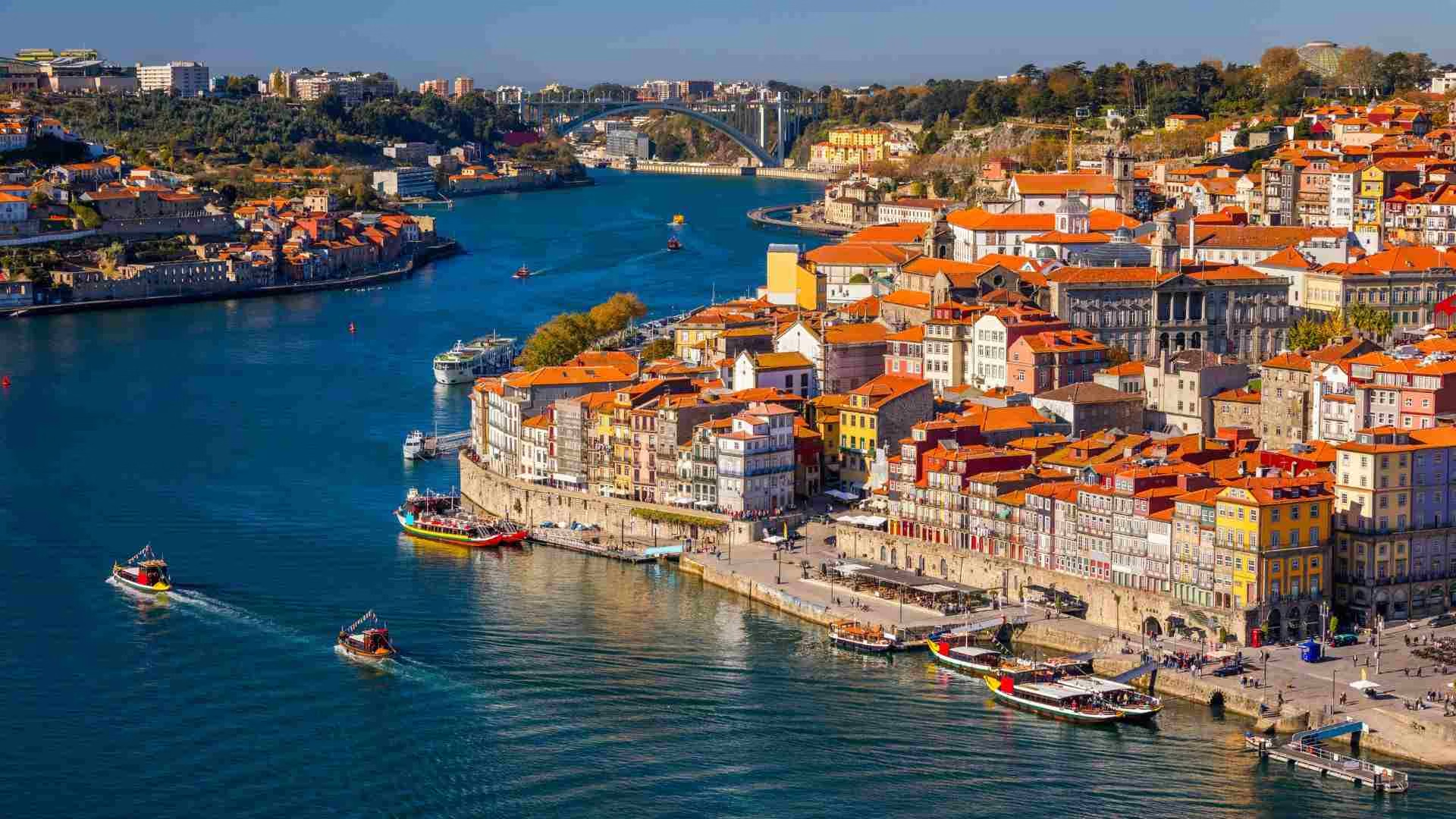
Porto hums in blues. Tiles, river, twilight. It’s a city that rewards patience and a page of notes you never open because the light keeps changing.
Where to frame it
- São Bento station for tile narratives. Aim high, wait for a clean gap in foot traffic, and let one person anchor the scale.
- Dom Luís I Bridge for symmetry. Upper deck at dusk gives you river fire and city sparkle; lower deck closer to water is best for long exposures of boat trails.
- Ribeira facades reflected in the Douro just after the streetlights click on. A 35 mm lens captures enough context without losing intimacy.
Field note
On my last visit, I crossed the bridge too early, then turned around when the lamps blinked alive. That two-minute delay made the river a mirror. Take small pauses. Porto rewards the second look.
Douro Valley: where the rows draw themselves
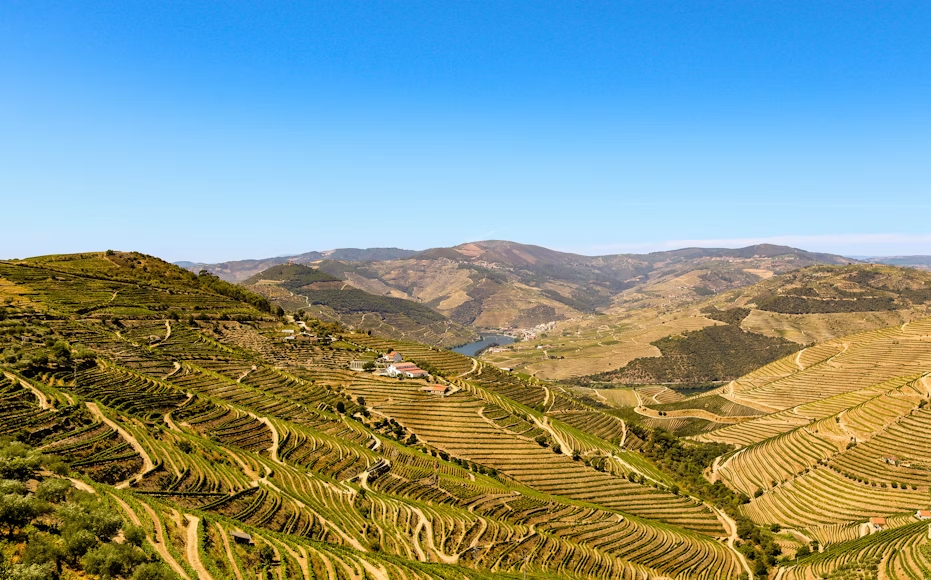
Wine country here is all lines and curves. Terraced vines tumble into the river, and trains carve along the water like a pencil stroke.
Where to frame it
- Peso da Régua to Pinhão by train for window frames that behave. Clean glass, slow turns, and river light that plays nice with polarizers.
- Overlook pullouts above Pinhão for golden-hour terraces. Shoot across slopes for layered ridgelines; a short tele compresses patterns beautifully.
- Quinta terraces at lunch. Ask permission, buy a tasting, and keep tripods out of the rows. The best shots often come between sips.
Practical note
Midday can be harsh. If you arrive in sharp light, go macro: vine leaves, bottle still lifes, stone walls, and shadow geometry. Come back out for the wide shots when the valley exhales into evening.
The Algarve: cliffs, coves, and clean horizons
The south coast is sculpted for postcards, but it reads better if you move with the tide and the sun. Bring sandals you can rinse, and watch your steps; beauty here comes with edges.
Where to frame it
- Ponta da Piedade for layered cliffs and teal water. Sunrise kisses the rock faces; sunset backlights sea arches with drama.
- Praia do Camilo for stairway compositions. Use the descending rails as leading lines and wait for a swimmer to add scale.
- Cape St. Vincent for the world’s-edge feel. Wind can be fierce; stance wide, tripod low, and jacket hood up to cut buffeting.
Make it smooth
Long exposures at coves turn messy surf into calm silk. ND filter, two-second timer, elbows tucked against the cliff. Safety beats the shot every time; waves here surprise the confident and the distracted.
Coimbra and Aveiro: human scale, candy stripes
Between the big hitters, these two give you softer frames and more breathing room.
Coimbra sits on a hill of stone and song. Photograph students in capes on stairways with a shallow depth of field; the fabric movement and old walls do the rest. At blue hour, the river shot from the lower promenade turns campus lights into dotted ribbons.
Aveiro is canals and gentle pastels; Costa Nova nearby stacks beach houses in red, green, and blue stripes. Shoot fronts straight-on for graphic, flat-lay energy, then angle for side-shadows if the sun’s low. Morning is calmer; afternoons bring families and bikes that animate your scene.
Madeira or the Azores if you’ve got extra days
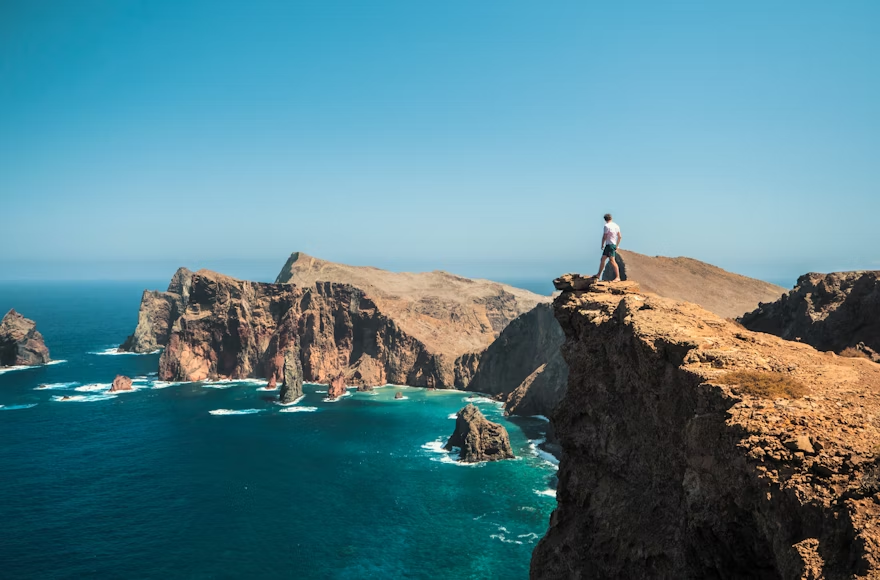
If your lens wants green on green, islands deliver. Madeira hands you levada walks where mist threads through laurel like movie fog. The Azores hand you crater lakes and hydrangeas that look Photoshopped until you squint. Conditions change fast. Pack a rain shell, silica packets for your bag, and a towel that doesn’t mind lava rock.
People, markets, and the ethics that keep it human
Portugal is generous, and its markets are wonderfully photographable, but that doesn’t make every frame fair game. Ask before you take tight portraits, tip buskers you feature, and share a smile even when words fumble. If someone waves you off, lower the camera and buy a tangerine. You will still get the shot you came for, and you’ll feel better about the one you didn’t.
In cafés, candid is easier outside at sidewalk tables. Shoot wide and include hands, cups, and tiled floors for context. Inside, mind reflections; those perfect pastry counters love to throw your own face back at you.
Gear that earns its space
- Two lenses, tops. A 24 to 70 handles cities; a small tele like 70 to 200 sings in the Douro. Prime lovers can do 35 for the streets and 85 for portraits and compressed cliffs.
- Filters that matter. A polarizer for tile glare and river reflections; a 6-stop ND for water smoothing; clear UV just for scratch insurance on hikes.
- Tripod, but travel light. Carbon, compact, and low profile. Many overlooks are breezy; hang your bag for ballast.
- Phone as B-cam. Night modes in Lisbon and Porto are excellent; try a handheld pano from a miradouro when your tripod feels like overkill.
- Backup plan. Dual-slot cards if you have them; otherwise, cloud sync nightly on hotel Wi-Fi and a tiny SSD in your day pack.
Simple itineraries that follow the light
Four days, cities and river
Lisbon 2 nights for tiles and tram blur; train north to Porto 2 nights for dusk on the bridge and a Douro day if weather cooperates. Keep mornings free for hilltop views and evenings for river work.
Six days, add coast
Lisbon 2, Algarve 2 for cliffs and sunsets, Porto 2 for blue hour and boat trails. Watch the wind forecast and shuffle the Algarve days to match calmer seas.
Eight days, weave in wine
Lisbon 2, Douro base 2, Porto 2, Aveiro or Costa Nova 1, wild card 1. Turn the Douro segment into a slow afternoon with one terrace and a night train back if you want river lights from the window.
The last frame you take home
Portugal’s trick is simple: it makes ordinary moments look edited. A tiled stair with a shadow like lace. A bridge that turns every evening into a ceremony. A cove where the ocean writes your shutter speed for you. Pack light, chase the edges of day, and leave a little room at the side of your frame so the country can step into it.