Greek Bougatsa Recipe
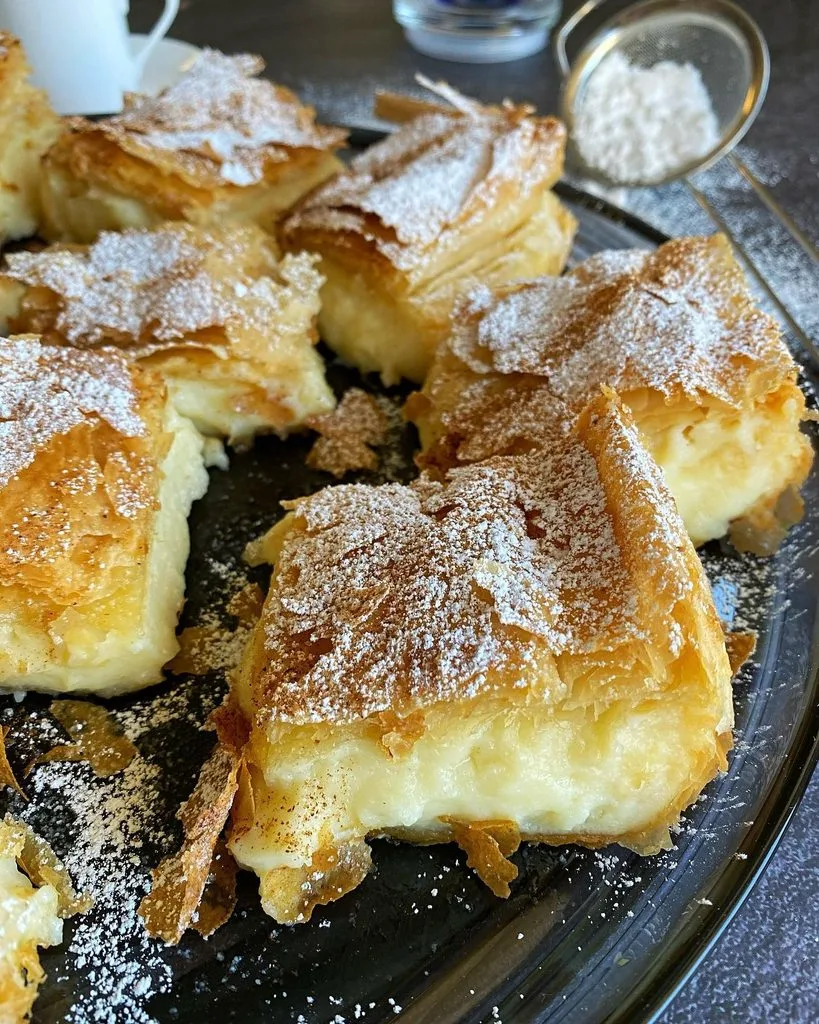
I made this authentic Greek Bougatsa over the weekend, and my home smelled like a traditional bakery in Thessaloniki. The paper-thin, crispy phyllo crust wraps around a velvety semolina custard that literally melts in your mouth. I was honestly surprised by how manageable folding the individual pastry parcels turned out to be in my own kitchen.
Dusted with plenty of icing sugar and warm ground cinnamon, every bite offers an irresistible crunch followed by rich, creamy goodness. Trust me, once you try a piece of this warm custard pie, you will be making it for every special breakfast!
Ingredients
Gathering these traditional ingredients creates the iconic contrast between flaky pastry and smooth, thick semolina custard.
- 1/4 cup melted unsalted butter – mixed into the custard base for extra richness and a silky mouthfeel.
- 1/2 cup granulated sugar – sweetens the semolina custard base without overpowering it.
- 1 liter milk (regular or lactose-free) – forms the liquid base for cooking the velvety custard filling.
- 1/2 cup fine ground durum wheat semolina – thickens the milk into a firm, creamy filling with a classic texture.
- 3 large eggs – beaten into the warm milk to give the custard structure and a rich golden color.
- 1/4 teaspoon powdered vanilla – infuses the custard with a delicate, fragrant floral note.
- 1 lb phyllo (filo) dough – thaws to room temperature to form ultra-crispy, paper-thin pastry layers.
- 1/3 cup melted butter (for assembly) – brushed generously between phyllo sheets so they shatter into golden flakes.
- Ground cinnamon (for dusting) – brings a warm, aromatic spice finish right before serving.
- 1/2 cup icing sugar (for dusting) – coats the top layer in a sweet, snow-like bakery dusting.
Note: makes approximately 6 to 8 individual custard-filled pastry packets.
Variations
Try these simple ingredient options to adapt this classic Greek pastry to your preferences or dietary needs.
- Citrus-Infused Custard: Add a 2-inch strip of fresh lemon or orange peel to the milk while heating, then discard it before adding eggs.
- Whole Tray Bake: Instead of individual folded packets, layer half the buttered phyllo in a 9×13 baking dish, pour all the custard in, and cover with remaining sheets.
- Dairy-Free Alternative: Substitute the butter with melted plant-based butter and use full-fat oat milk or unsweetened almond milk for the custard base.
Cooking Time
Keep track of your active preparation, cooking, and assembly times with this clear breakdown.
- Prep Time: 25 minutes
- Cooking Time: 35 minutes
- Total Time: 1 hour (plus cooling time)
Equipment You Need
Having these essential tools ready ensures assembling delicate phyllo pastry goes smoothly and efficiently.
- Large Heavy Pot: allows you to cook and whisk the milk and semolina custard without scorching the bottom.
- Pastry Brush: essential for evenly coating delicate phyllo sheets with melted butter without tearing them.
- Kitchen Shears or Sharp Knife: cuts large phyllo sheets cleanly into uniform 8×13-inch rectangular pieces.
- Large Parchment-Lined Baking Sheet: keeps the buttered pastry packets from sticking while baking to golden perfection.
- Fine-Mesh Sieve: dusts the icing sugar and cinnamon evenly over the hot baked pastries.
How to Make Greek Bougatsa Recipe?
Following the step by step instruction to make greek bougatsa recipe:
Cooking the Semolina Custard Base
Preheat your oven to 350°F (175°C) and line a large baking sheet with parchment paper. In a large pot over medium-high heat, combine the 1/4 cup melted butter, sugar, milk, fine semolina, and powdered vanilla, cooking for about 5 minutes while stirring regularly. In a small bowl, beat the eggs with a fork, then slowly pour them into the pot while continuously stirring. Keep cooking and whisking for about 10 minutes until the mixture thickens into a pudding consistency, then set aside.
Preparing and Layering the Phyllo
Unwrap your thawed phyllo sheets and cut the stack in half into rectangular pieces measuring approximately 8×13 inches. Keep the unused phyllo covered with a slightly damp towel so it does not dry out. Lay three sheets of phyllo on top of each other, brushing melted butter generously between each layer, keeping the shorter edge facing toward you.
Folding and Baking the Packets
Place 1/3 cup of cooled custard in the bottom center of the buttered phyllo stack, leaving a 1.5-inch border at the bottom. Fold the bottom edge over the custard, fold in both sides to enclose the filling completely, flip the pocket over, fold the top strip over and under the parcel, and brush with butter. Carefully transfer the packets to your baking sheet using a spatula and bake on the middle rack for 20 minutes until deep golden brown.
Finishing and Dusting
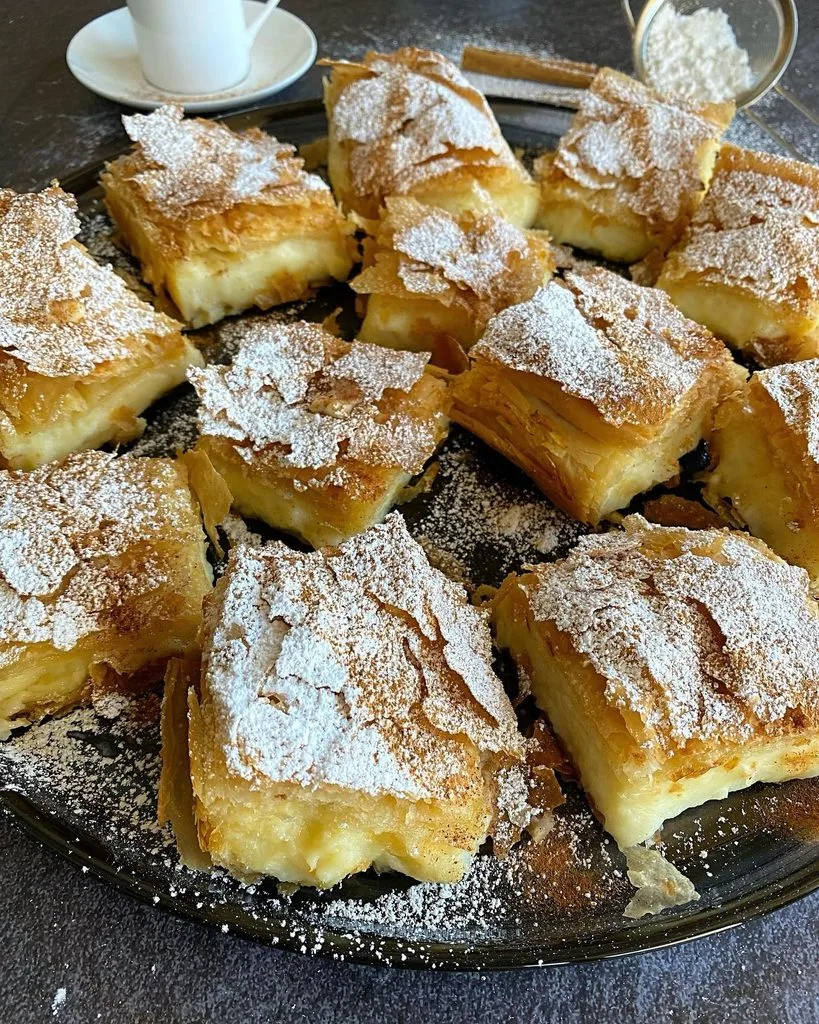
Remove the baked Bougatsa packets from the oven and allow them to cool slightly on a wire rack. Place a fine-mesh strainer over the warm pastries and dust heavily with powdered icing sugar followed by a generous sprinkle of ground cinnamon before slicing.
Additional Tips for Making this Recipe Better
Here are my favorite personal insights gained while making this recipe to help you achieve bakery-quality results every time.
- I always keep a clean, damp kitchen towel draped over my pile of phyllo sheets so they do not dry out and crack while I assemble the packets.
- I find that letting the semolina custard cool down for 10 minutes before folding it into the phyllo prevents the heat from ripping the thin dough sheets.
- For me, whisking the milk and semolina constantly on medium heat is the secret to getting a completely smooth custard free of lumps.
- I like to cut the warm Bougatsa packets into bite-sized squares right after dusting so the crispy layers shatter beautifully.
How to Serve Greek Bougatsa Recipe?
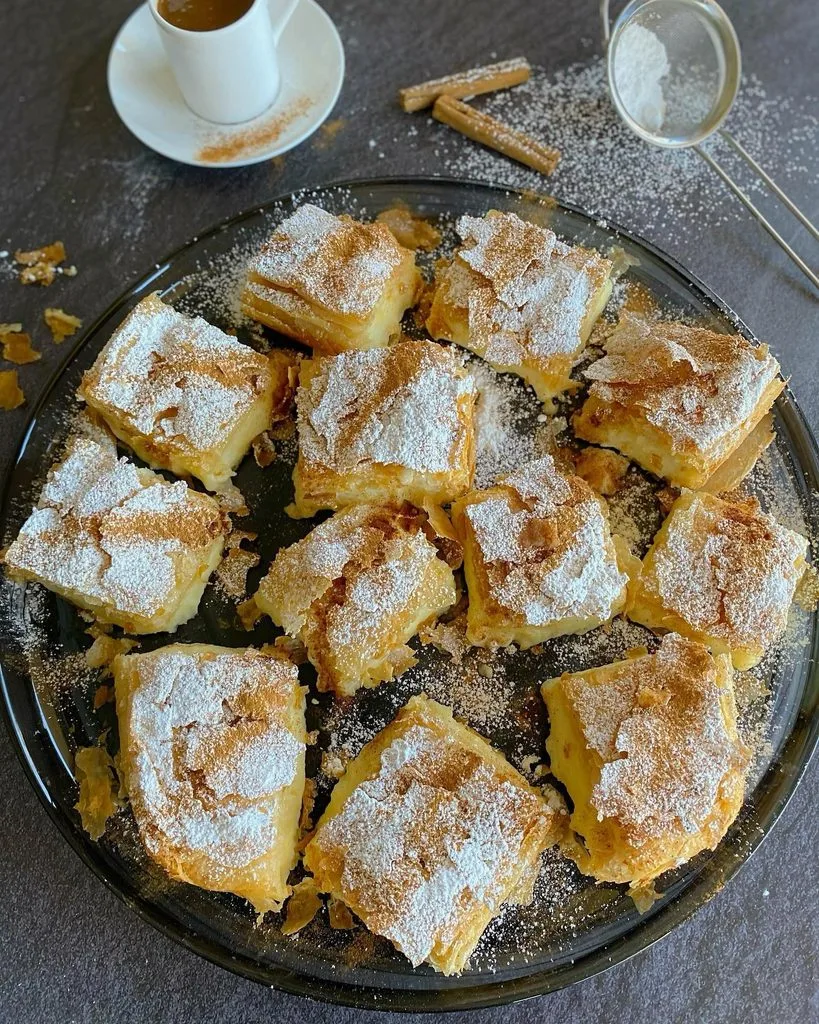
Present this traditional breakfast pie in authentic Greek café style with these simple serving ideas. Transfer the warm, dusted Bougatsa onto a rustic wooden board or serving platter. Cut the rectangular packets diagonally or into bite-sized squares using a sharp chef’s knife, letting the steam escape. Serve immediately alongside a strong cup of Greek coffee, hot espresso, or fresh orange juice.
Nutritional Information
Here is a quick breakdown of key estimated nutritional values per serving (based on 6 packets):
- Calories: 390 kcal
- Protein: 9 g
- Carbohydrates: 54 g
- Fat: 16 g
Make Ahead and Storage
Follow these straightforward guidelines to store, reheat, and enjoy your Greek custard pastries.
Room Temperature Storage
Baked Bougatsa is best enjoyed fresh on the day it is made, but it can sit at room temperature for up to 6 hours before cooling.
Refrigerator Guidelines
Store leftover Bougatsa packets in an airtight container in the refrigerator for up to 3 days. Reheat in a preheated 350°F oven or toaster oven for 8–10 minutes to restore the crispy, flaky texture of the phyllo dough.
Freezing Instructions
You can assemble the raw buttered phyllo packets and freeze them on a baking sheet until solid, then transfer to a freezer bag for up to 2 months. Bake directly from frozen at 350°F, adding 5 to 7 extra minutes to the baking time.
Why You’ll Love This Recipe?
This famous Greek street food delivers authentic café luxury right to your home table with surprising ease.
Here are a few reasons why this classic Bougatsa recipe is guaranteed to become a favorite:
- Ultimate Texture Contrast: Combines paper-thin, buttery phyllo pastry that shatters with every bite and a rich, smooth semolina custard center.
- Perfect Breakfast or Dessert: Enjoy it warm in the morning alongside coffee or serve it as an elegant sweet treat after dinner.
- Easier Than it Looks: Using ready-made phyllo dough and simple folded packet techniques makes this high-end pastry simple for home bakers.
- Iconic Mediterranean Flavors: The combination of warm cinnamon, sweet icing sugar, and vanilla-infused semolina captures pure Greek culinary tradition.