Panada Recipe
I recently took a culinary trip to Sardinia right from my own kitchen, and let me tell you, the result was spectacular.
Making this Panada Recipe was such a rewarding experience, from kneading the semolina dough to smelling the savory lamb and potatoes baking inside the crust.
It felt like I was crafting a little edible treasure chest, sealing all those incredible flavors inside a golden shell.
If you are looking for a weekend project that feeds the soul as much as the stomach, you have to try this. Trust me, breaking open that warm, crispy crust to reveal the tender filling is a moment of pure joy.
Ingredients
To make this authentic Sardinian dish, you will need a mix of pantry staples for the dough and fresh, high-quality ingredients for the filling.
- 6 ¼ cups remilled durum wheat semolina – This specific flour is crucial for achieving the right texture and durability of the dough so it can hold the heavy filling.
- 5 tablespoons lard – Lard provides an incredible flakiness and traditional flavor, but you can swap this for butter or oil if you prefer.
- 1.8 teaspoons fine salt – Essential for seasoning the dough so the crust tastes just as good as the filling.
- 1.6 cups lukewarm water – The temperature is key here; it helps the lard incorporate smoothly and makes kneading much easier.
- 2.5 lbs lamb meat – I recommend using leg or shoulder cuts cut into bite-sized chunks for the most tender results.
- 2.2 lbs potatoes – Choose a waxy variety like Yukon Gold that will hold its shape during the long baking process.
- 2.1 oz sun-dried tomatoes in oil – These add a concentrated burst of umami that deeply flavors the meat juices.
- 3 cloves garlic – Fresh garlic is non-negotiable here for that aromatic punch that permeates the entire pie.
- 0.7 tablespoons parsley – Fresh flat-leaf parsley adds brightness to balance the rich meat and potatoes.
- Extra virgin olive oil to taste – You will drizzle this inside to keep everything moist and luscious.
- Fine salt to taste – Be generous but mindful, as the sun-dried tomatoes already add some saltiness.
- Black pepper to taste – Freshly cracked black pepper adds a nice warmth to the filling.
Note: This recipe makes enough for 6 servings.
Variations
While the traditional lamb and potato version is incredible, this recipe is quite adaptable to different tastes and dietary needs.
- Vegetarian Delight: Skip the lamb and lard. Use olive oil for the dough and fill the pastry with a mix of artichokes, fava beans, peas, and potatoes for a hearty plant-based version.
- Seafood Twist: In some coastal towns, eel is used instead of lamb. You can try firm white fish or even a mix of seafood, seasoning with garlic and parsley but skipping the cheese if you add any.
- Pork or Chicken: If lamb isn’t your favorite, cubed pork shoulder or chicken thighs work beautifully. Just ensure you use dark meat so it stays juicy during the long bake.
- Cheese Lover’s Edition: Some variations include cubes of Pecorino Sardo cheese mixed into the filling for an extra savory, melty element.
Cooking Time
This recipe is a labor of love, perfect for a slow Sunday afternoon.
- Prep Time: 45 minutes
- Cooking Time: 1 hour 30 minutes
- Total Time: 2 hours 15 minutes (plus 30 minutes resting time)
Equipment You Need
You don’t need a lot of high-tech gadgets, just some basic kitchen tools.
- Large Mixing Bowl: For combining the flour, lard, and water to start your dough.
- Clean Work Surface: A large counter space or wooden board is essential for kneading and rolling out the pastry.
- Rolling Pin: To roll the dough out into even, thin circles for the base and lid.
- 10-inch Baking Pan: Ideally a round cake pan or deep-dish pizza pan with sides to support the structure.
- Sharp Knife: For cubing the meat and potatoes into uniform pieces.
- Plastic Wrap: To cover the dough while it rests so it stays moist and pliable.
How to Make Panada Recipe?
Creating a Panada involves making a sturdy dough and layering fresh ingredients inside it. It’s like building a savory pie where the crust acts as a cooking vessel, steaming the filling to perfection in its own juices. The process is straightforward, but it requires a bit of patience during the kneading and assembly stages.
Prepare the Semolina Dough
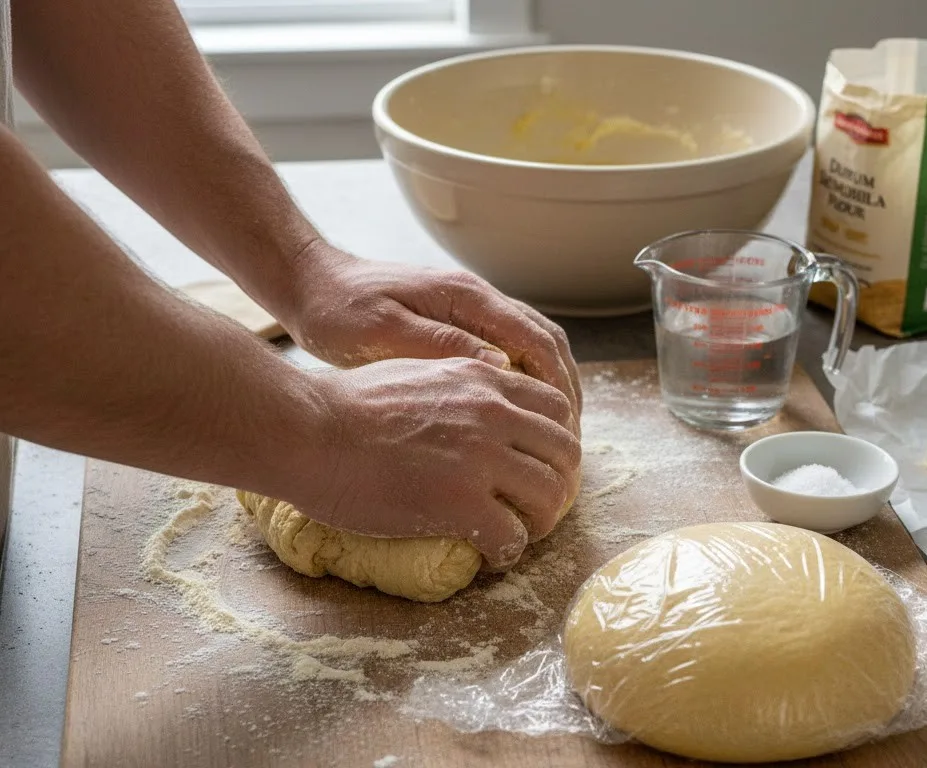
Start by dissolving the salt into the lukewarm water in a cup or small bowl. In a large mixing bowl, place your semolina flour and add the lard (or olive oil). Begin mixing by hand while slowly pouring in the salted water. Once the ingredients start to come together into a shaggy mass, transfer it to a clean work surface. You need to knead this vigorously for about 15 minutes. Use the heel of your hand to stretch and fold the dough until it becomes smooth, elastic, and free of cracks. Wrap it tightly in plastic wrap and let it rest in a cool spot for 30 minutes to relax the gluten.
Prepare the Filling Ingredients
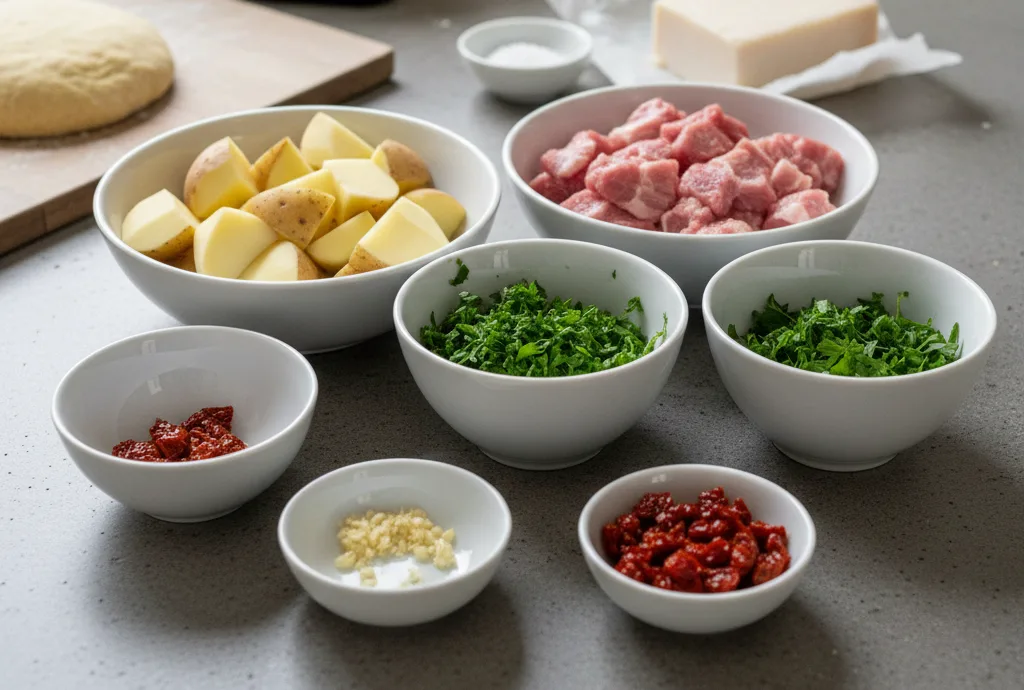
While the dough is resting, get your filling ready. Peel the potatoes and chop them into medium-sized chunks. Do the same with the lamb, cutting it into small, bite-sized pieces so it cooks evenly. Finely chop the garlic, parsley, and sun-dried tomatoes. Having everything prepped and ready to go (mise en place) makes the assembly process much smoother and cleaner.
Assemble the Base
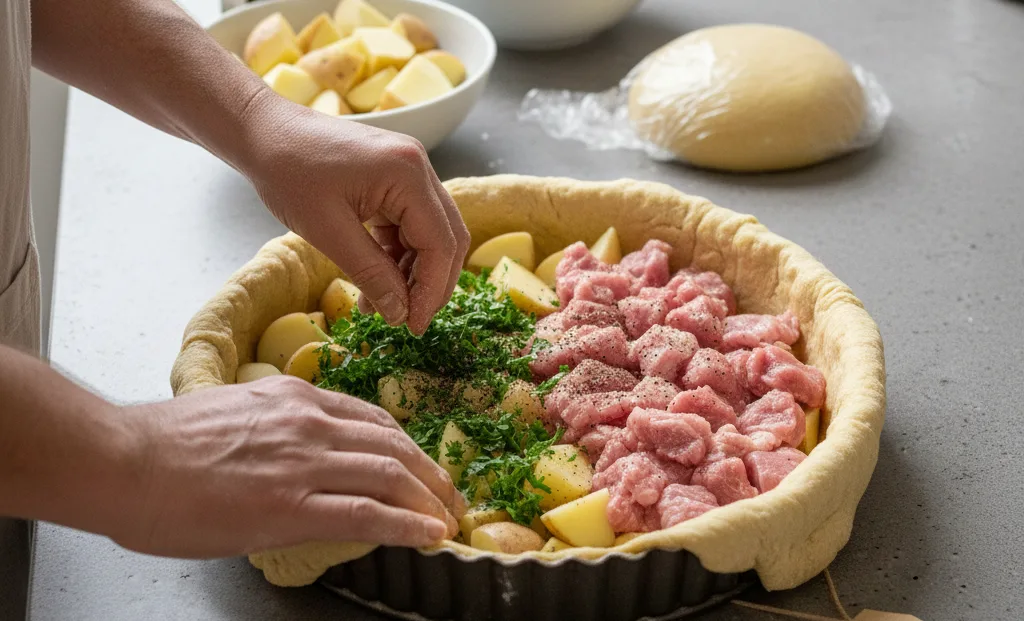
Divide the dough into two pieces: one piece should be about two-thirds of the dough (for the base) and the other one-third (for the lid). Keep the smaller piece covered. Roll out the larger ball into a circle roughly 0.4 inches thick and significantly wider than your pan (about 4 inches larger in diameter). Lay this sheet into your baking pan, pressing it gently against the bottom and up the sides, letting the excess hang over the edge. Now, layer your ingredients: start with a sprinkle of parsley, garlic, and tomatoes, drizzle with oil, then add a layer of potatoes and lamb. Season with salt and pepper. Repeat these layers until all ingredients are used, finishing with herbs and a final drizzle of oil.
Seal and Bake
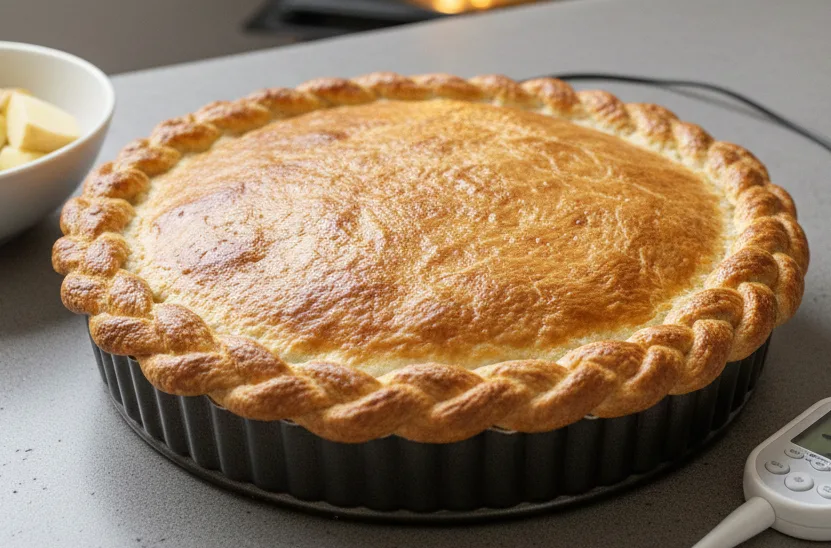
Roll out the remaining smaller ball of dough into a circle about 8 inches wide to act as the lid. Place this circle directly on top of the filling inside the pan. Now, take the excess dough hanging over the edges and fold it inward over the lid. Pinch the edges of the base and the lid together firmly to seal the pie completely. You can pinch the dough between your thumb and forefinger to create a decorative braided rope effect around the rim. Bake in a preheated oven at 392°F for 30 minutes, then lower the heat to 356°F and bake for another hour. You’ll know it’s done when you can gently shake the pan and hear the juices simmering inside.
Additional Tips for Making this Recipe Better
I learned a few things while making this that really helped the final result.
- Don’t rush the kneading process; if the dough isn’t smooth enough, it might crack during baking and let the delicious juices escape.
- I found that cutting the potatoes slightly smaller than the meat ensures they are perfectly tender right when the meat is done.
- Be generous with the olive oil inside the filling; since the dough absorbs some moisture, the oil keeps the meat succulent.
- If you notice the top of the pastry browning too quickly in the oven, simply cover it loosely with a sheet of aluminum foil for the last 30 minutes.
- Let the Panada rest for at least 15 to 20 minutes after taking it out of the oven to allow the juices to settle before you slice it.
How to Serve Panada Recipe?
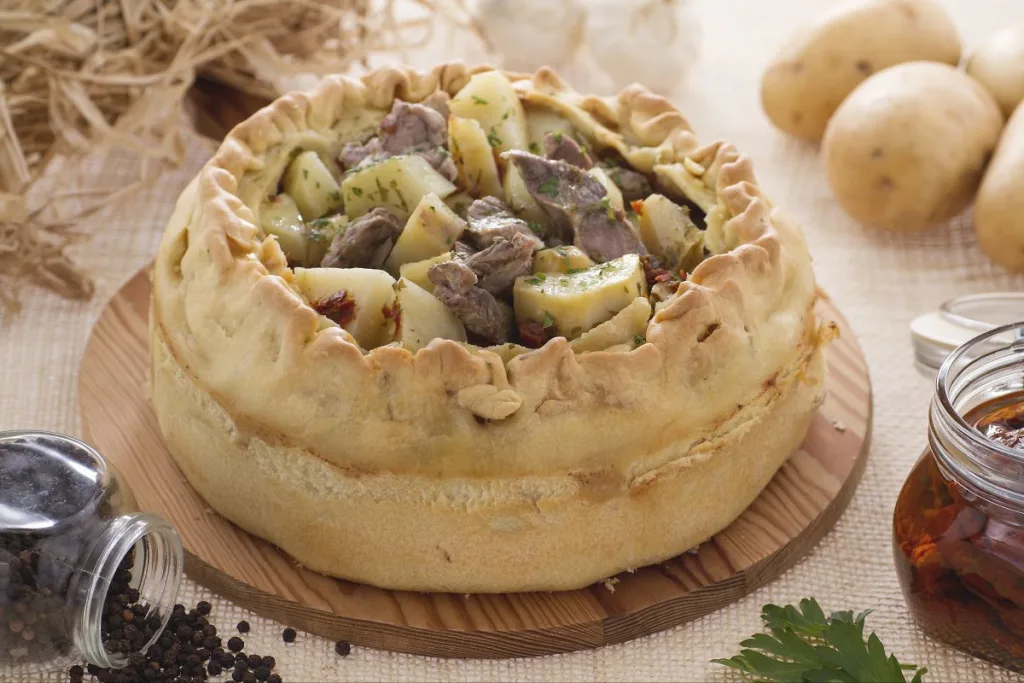
This dish is a showstopper, so bring the whole pie to the table for a dramatic presentation. Use a sharp serrated knife to cut the top “lid” off first, revealing the steaming, aromatic filling inside, or slice it into wedges like a cake. It pairs beautifully with a fresh, acidic salad—like arugula with lemon vinaigrette—to cut through the richness of the dough and meat. A glass of robust red wine, specifically a Cannonau from Sardinia, is the traditional and perfect accompaniment.
Nutritional Information
Here is a general idea of the nutrition per serving, keeping in mind this is a hearty, rich meal.
- Calories: Approximately 1100 kcal
- Protein: 52.8g
- Carbohydrates: 124.6g
- Fat: 43.4g
Make Ahead and Storage
This dish stores surprisingly well, making it a great option for meal prep or leftovers.
Storage: Wrap any leftover wedges tightly in plastic wrap or store them in an airtight container in the refrigerator. They will stay fresh for up to 3 days.
Freezing: You can freeze the Panada either baked or unbaked. If freezing raw, wrap the pan entirely in plastic and foil. If baked, wrap individual slices. It lasts for up to 3 months.
Reheating: To restore the crust’s crispiness, reheat slices in a 350°F oven for about 15-20 minutes. Avoid the microwave, as it will make the beautiful semolina crust chewy and soggy.
Why You’ll Love This Recipe?
There are so many reasons this Sardinian classic deserves a spot in your recipe rotation.
- A Complete Meal in One: It contains your carbs, protein, and veggies all in one delicious package, meaning fewer dishes to wash later.
- Incredible Flavor Depth: The technique of steaming the ingredients inside the crust intensifies the flavors, making the potatoes taste meaty and the lamb incredibly savory.
- Fun to Make: Working with the semolina dough is very satisfying, and crimping the edges is a fun, artistic touch that makes you feel like a pro baker.
- Crowd-Pleaser: It’s a visually impressive dish that feels festive and special, perfect for Sunday dinners or holiday gatherings.
- Versatile Fillings: Once you master the dough, you can get creative and stuff it with whatever seasonal ingredients you have on hand.