
Costco Pizza Sauce Recipe
I finally cracked the code on that distinct, zesty flavor we all crave from the food court, and I couldn’t wait to share it with you. Making this sauce in my own kitchen brought back so many memories of family shopping trips ending with a hot slice of pepperoni pizza.
It turns out the secret lies in balancing the sweetness of the tomatoes with just the right amount of savory herbs and garlic. You are going to be amazed at how simple pantry staples can transform into something that tastes this authentic and delicious.

Ingredients Section
Here is everything you will need to recreate that classic flavor profile right in your own kitchen.
- 1 can (28 oz) crushed tomatoes. Use San Marzano tomatoes if you can find them because they have fewer seeds, lower acidity, and a naturally sweeter flesh that makes a huge difference in the final texture of your sauce.
- 2 tablespoons tomato paste. This concentrated paste adds a deep, rich umami flavor and helps thicken the sauce so it doesn’t make your pizza dough soggy during baking.
- 2 tablespoons olive oil. I always reach for a high-quality extra virgin olive oil because it acts as a flavor carrier for the garlic and herbs, adding a silky mouthfeel to the finished sauce.
- 3 cloves garlic, minced. Fresh garlic is non-negotiable here for that punchy, aromatic kick; avoid the jarred stuff as it often has a metallic taste that can ruin the sauce’s freshness.
- 1 teaspoon onion powder. This provides a subtle, savory background note that rounds out the sharp bite of the fresh garlic without adding the texture of chopped onions.
- 1 teaspoon dried oregano. This is the quintessential pizza herb that gives the sauce its earthiness; rubbing it between your palms before adding it helps release its essential oils.
- 1 teaspoon dried basil. Dried basil works better than fresh here for long simmering, offering a sweet, peppery mint flavor that mimics the classic Italian-American pizzeria style.
- 1 teaspoon sugar. Just a small amount is necessary to cut through the natural acidity of the canned tomatoes, mimicking that slightly sweet profile famous in Costco’s sauce.
- 1/2 teaspoon salt. Salt is essential for waking up all the other flavors, but be sure to taste as you go since different brands of canned tomatoes have varying sodium levels.
- 1/4 teaspoon crushed red pepper flakes. This ingredient is entirely optional, but adding it gives a very subtle background heat that cuts through the richness of the cheese.
- 1/4 teaspoon black pepper. Freshly cracked black pepper adds a mild, woody heat that lingers nicely on the palate and complements the sweetness of the tomatoes.
- 1 teaspoon balsamic vinegar. This is my secret weapon for adding a complex, aged depth and a touch of tanginess that makes the sauce taste like it simmered all day.
Note: This recipe makes approximately 3 cups of sauce, which is enough for about 4 large pizzas.
Variations
You can easily tweak this foundational recipe to suit different dietary needs or flavor preferences without losing that classic pizza soul.
Spicy Arrabbiata Style
If you prefer a sauce with a serious kick, increase the red pepper flakes to a full teaspoon and add a pinch of cayenne pepper. You can also sauté a chopped fresh chili pepper along with the garlic for a fresh, vegetal heat that pairs beautifully with sausage toppings.
Robust Roasted Garlic
For garlic lovers, swap the fresh minced garlic for a whole head of roasted garlic. Squeeze the soft, caramelized cloves out of their skins and mash them into a paste before stirring them into the sauce. This creates a mellower, sweeter, and deeply nutty garlic flavor profile.
Garden Vegetable Boost
To sneak in some extra nutrition, finely grate a carrot and a zucchini and sauté them with the garlic until they are very soft. The vegetables will melt into the sauce as it simmers, adding natural sweetness and fiber that is virtually undetectable to picky eaters.
Sugar-Free Option
If you are watching your sugar intake, simply omit the white sugar. To balance the acidity without refined sweeteners, you can grate half a small onion into the sauce or add a pinch of baking soda, which neutralizes the acid chemically rather than masking it with sweetness.
Creamy Vodka Infusion
Turn this into a pink sauce by stirring in a quarter cup of heavy cream and a splash of vodka during the last five minutes of simmering. This variation is incredibly rich and works wonderfully for dipping breadsticks or as a base for a white cheese pizza.
Cooking Time
- Prep Time: 10 minutes
- Cooking Time: 25 minutes
- Total Time: 35 minutes
Equipment You Need
- Medium saucepan to simmer the ingredients evenly without burning.
- Wooden spoon or heat-resistant spatula for stirring and scraping the bottom of the pot.
- Measuring cups and spoons to ensure your flavor balance is consistent every time.
- Sharp knife for mincing the garlic cloves finely.
- Cutting board to protect your countertops while prepping garlic.
- Immersion blender (optional) if you prefer a completely smooth, restaurant-style consistency.
- Glass jars with tight-fitting lids for storing your finished sauce safely.
How to Make Costco Pizza Sauce Recipe
Follow these simple steps to achieve the perfect consistency and flavor for your next pizza night.
Sauté the Aromatics
Start by placing your medium saucepan over medium heat and adding the olive oil. Once the oil is shimmering but not smoking, toss in your minced garlic. Stir this constantly for about one minute until it smells fragrant and turns a light golden color, being careful not to let it brown or burn.
Incorporate the Tomato Base
Pour the entire can of crushed tomatoes into the saucepan with the garlic oil. Immediately add the tomato paste and stir everything vigorously until the paste dissolves into the crushed tomatoes. Let this mixture cook for roughly three minutes to help the raw tomato flavor mellow out slightly.
Season the Mixture
Now sprinkle in the onion powder, dried oregano, dried basil, sugar, salt, black pepper, and red pepper flakes. Stir the sauce gently to ensure all those dried herbs and spices are evenly distributed throughout the liquid. This ensures every spoonful of sauce will have a balanced flavor profile.
Simmer to Thicken
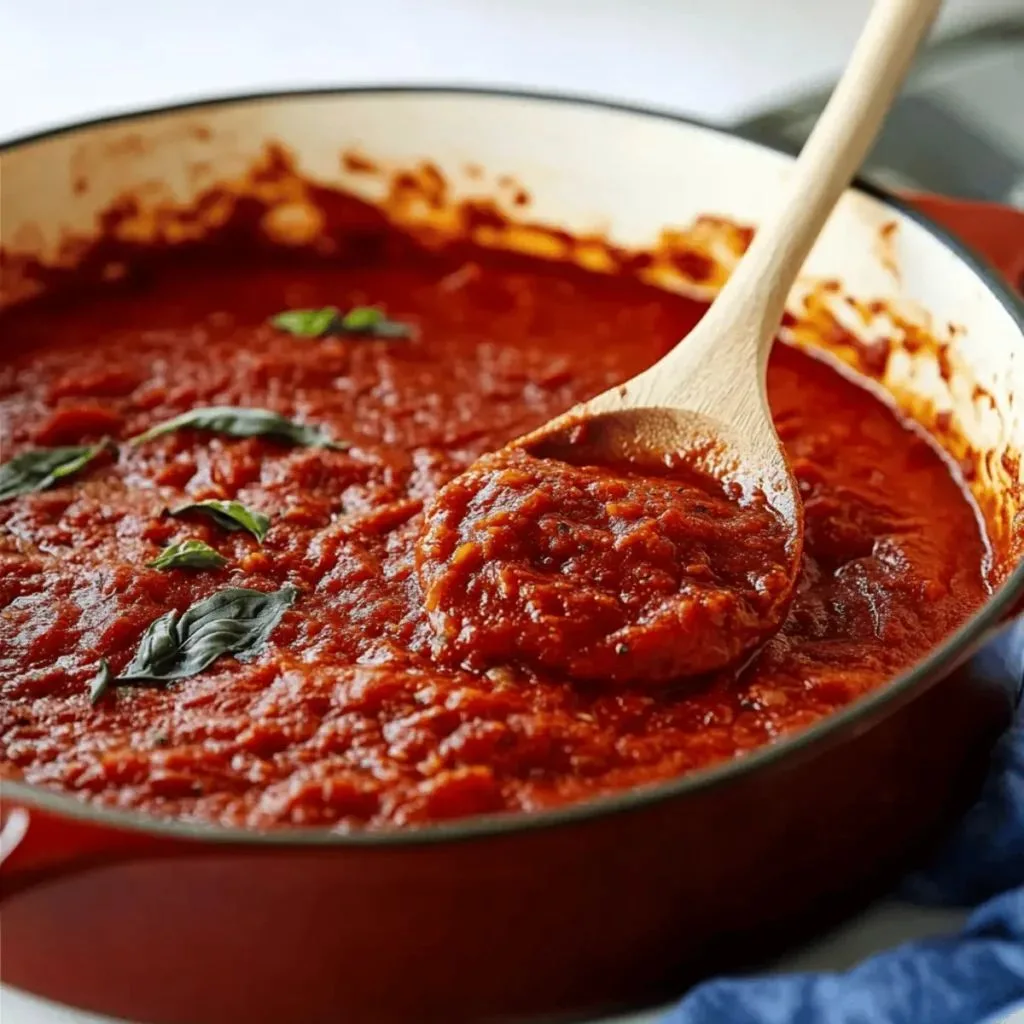
Lower the heat to a gentle simmer and leave the pot uncovered. Let the sauce bubble softly for 20 to 25 minutes, stirring it every few minutes to prevent sticking. This reduction process concentrates the flavors and thickens the texture so it spreads perfectly on dough.
Final Adjustments
After the sauce has thickened, remove the pot from the heat and stir in the balsamic vinegar. Taste a small spoonful (careful, it’s hot!) and see if it needs a pinch more salt or sugar. This final adjustment is crucial because the acidity of tomatoes can vary from can to can.
Cool or Blend
If you want a super smooth sauce, use an immersion blender to puree it for a few seconds right in the pot. Otherwise, let the sauce cool down completely at room temperature before using it. Putting hot sauce on raw pizza dough can make the crust gummy, so patience is key here.
Additional Tips for Making this Recipe Better
I have learned a few tricks over the years that elevate this sauce from good to absolutely unforgettable.
- I always recommend buying whole peeled tomatoes and crushing them by hand or with a blender rather than buying pre-crushed tomatoes. Whole tomatoes are often higher quality and haven’t been processed as much, resulting in a fresher, brighter tomato taste in your final sauce.
- I find that letting the sauce sit in the fridge overnight before using it makes a massive difference. Just like a good stew or chili, the flavors of the dried herbs need time to hydrate fully and meld with the tomatoes, so making this a day ahead is a huge win.
- If your sauce tastes a little too acidic or “tinny” from the can, I swirl in a tiny pat of butter right at the end of cooking. This old Italian grandmother trick rounds out the sharp edges of the acid and gives the sauce a glossy, luxurious finish that feels very professional.
- I strictly avoid using fresh herbs like basil or parsley during the long simmering process because they tend to turn black and lose their flavor. If you want that fresh herb taste, I sprinkle chopped fresh basil on top of the sauce only after I’ve spread it on the pizza dough.
How to Serve Costco Pizza Sauce Recipe
There are so many ways to enjoy this versatile red sauce beyond just spreading it on a crust.
Obviously, the primary use is as a base for your homemade pizzas. Spread a thin, even layer across your stretched dough, leaving about an inch of space around the rim for the crust to puff up. If you load it up too heavily, the pizza won’t bake crisply. Top generously with mozzarella and provolone to mimic that Costco cheese blend.
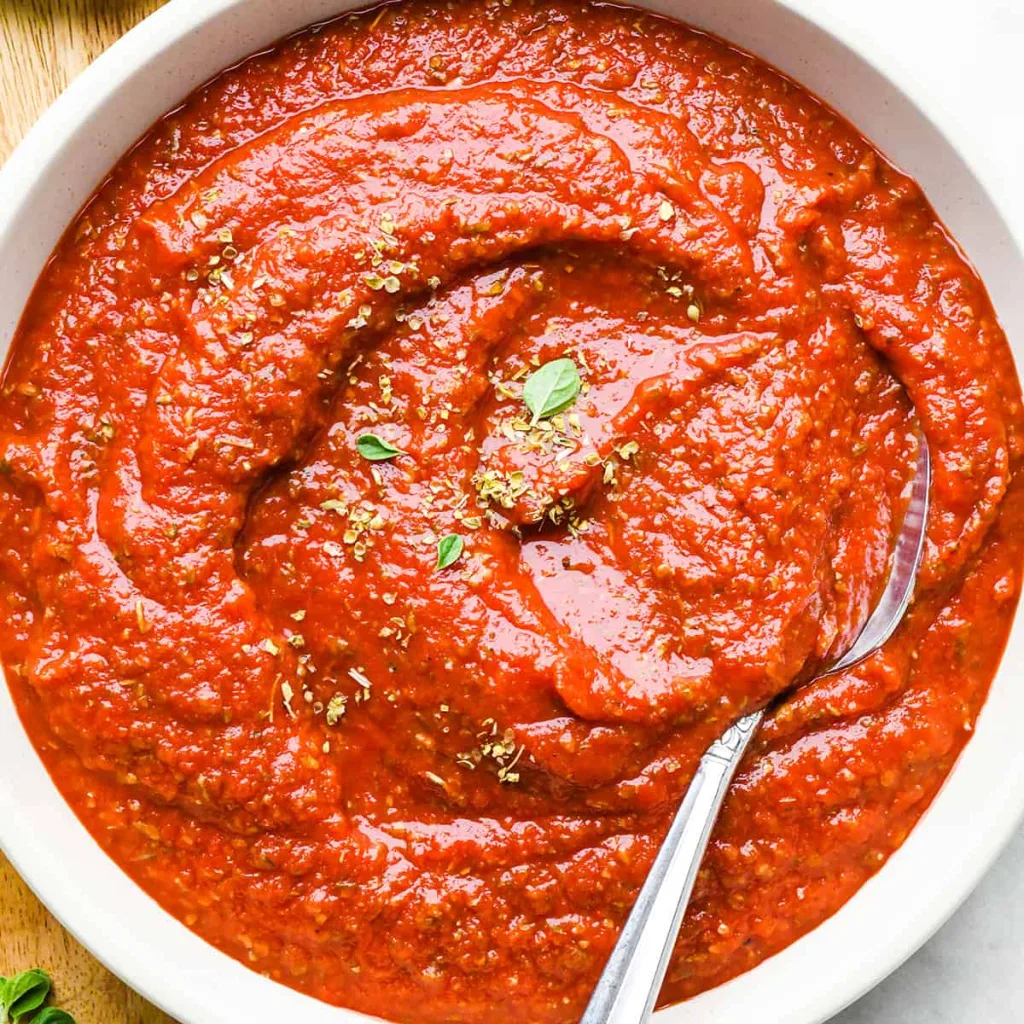
This sauce also makes a phenomenal dipping condiment. Pour it warm into a small bowl and serve it alongside garlic knots, cheesy breadsticks, or fried mozzarella sticks. You can garnish the dipping bowl with a sprinkle of parmesan cheese and a drizzle of olive oil to make it look fancy for guests. It also works as a robust marina for meatball subs or chicken parmesan sandwiches.
Nutritional Information
Here is a quick overview of the nutrition profile for a standard serving of this sauce.
- Calories: Approximately 45 kcal per 1/4 cup serving.
- Protein: roughly 1 gram, primarily from the tomatoes.
- Carbohydrates: Around 7 grams, coming from natural tomato sugars and the added sugar.
- Fat: About 2 grams, mostly healthy monounsaturated fats from the olive oil.
Make Ahead and Storage
Knowing how to store your sauce correctly ensures you always have a quick dinner option ready to go.
Refrigerating
Once the sauce has cooled completely to room temperature, transfer it into a clean, airtight glass jar or plastic container. It will stay fresh in the refrigerator for up to one week. In fact, I often find the flavor improves significantly on day two or three as the herbs marinate.
Freezing
This sauce freezes exceptionally well, so I recommend making a double batch. Pour cooled sauce into freezer-safe bags, lay them flat to freeze for space-saving, or use souper cubes for individual portions. It will maintain its quality in the freezer for up to three months without losing flavor.
Reheating
When you are ready to use frozen sauce, let it thaw in the fridge overnight. Reheat it gently in a saucepan over low heat, stirring occasionally until warmed through. If the sauce separated slightly during freezing, just whisk it vigorously while heating to bring the emulsion back together.
Why You’ll Love This Recipe
There are countless reasons why this recipe has become a permanent staple in my cooking rotation.
- Incredible Flavor Balance
You get that perfect harmony of tangy, sweet, and savory that store-bought jars just can’t replicate. The combination of balsamic vinegar and tomato paste creates a depth of flavor that tastes like it simmered for hours, even though it takes less than 30 minutes. - Total Control of Ingredients
By making it at home, you eliminate the high fructose corn syrup and preservatives found in many commercial sauces. You can control the salt levels and choose organic tomatoes, making this a much healthier option for you and your family. - Versatility in the Kitchen
While it is designed for pizza, this sauce is a chameleon that works in pasta dishes, casseroles, and as a dip. Having a jar of this in the fridge means you are halfway to a delicious meal, whether it’s spaghetti night or a meatball sub lunch. - Budget-Friendly Batch Cooking
Canned tomatoes and dried herbs are incredibly affordable pantry staples. This recipe produces a large volume of high-quality sauce for a fraction of the price of premium jarred sauces, saving you money while delivering a superior taste experience. - Kid-Approved Taste
The slight sweetness and smooth texture make this sauce a hit with children who might usually be picky about chunky vegetables. It is mild enough for sensitive palates but flavorful enough for adults, making it the perfect family dinner solution.