Costco Raspberry Chipotle Sauce Recipe
I absolutely fell in love with that famous roasted raspberry chipotle sauce from Costco, but when it disappeared from the shelves seasonally, I knew I had to recreate it myself. There is something magical about the combination of sweet, tart berries and the smoky, slow burn of chipotle peppers that transforms simple dishes into gourmet meals.
After testing a few batches in my own kitchen, I found that making it fresh offers a brightness that the bottled stuff just can’t match. This version is incredibly easy to whip up, and I love having a jar in the fridge ready for impromptu appetizers or grilled dinners.

Ingredients Section
Here is everything you will need to recreate this smoky and sweet masterpiece in your own kitchen. I recommend sticking to fresh ingredients where possible for the best texture and flavor profile.
- 2 tablespoons olive oil – This provides a fat base to sauté the peppers and carry the flavor compounds.
- 2 large jalapeño peppers – Seeded and diced finely to add fresh heat without overwhelming the fruitiness.
- 2 cloves garlic – Minced fresh, never from a jar, because the pungent kick of fresh garlic balances the sugar.
- 4 teaspoons adobo sauce – This is the liquid found in a can of chipotle peppers, providing that signature smoky depth.
- 2 containers (6 ounce) fresh raspberries – Fresh berries break down beautifully and offer a better tartness than frozen ones.
- 1/2 cup apple cider vinegar – The acid cuts through the sugar and preserves the sauce, giving it a tangy finish.
- 1/2 teaspoon salt – Essential for marrying the sweet and spicy flavors together so it doesn’t taste like jam.
- 1/4 cup brown sugar – Adds a molasses-like richness that complements the smoky adobo sauce perfectly.
- 1/2 cup white sugar – Provides clean sweetness to help the sauce thicken into a glazable consistency.
Note: This recipe yields approximately 8 servings depending on how much you reduce the liquid.
Variations
If you want to tweak the flavor profile or have dietary restrictions, this sauce is surprisingly adaptable. Here are a few ways you can customize it to suit your needs.
Using Frozen Berries or Jam
If fresh raspberries are out of season or too expensive, you can substitute them with frozen unsweetened raspberries. You may need to simmer the sauce slightly longer to evaporate the excess water content found in frozen fruit. Alternatively, for a super-fast version, you can use a high-quality seedless raspberry jam. If you choose jam, drastically reduce the added white and brown sugar, or omit them entirely, to prevent the sauce from becoming cloyingly sweet.
Adjusting the Heat Level
The beauty of making this at home is controlling the spice. If you prefer a milder sauce, be meticulous about removing every seed and white membrane from the jalapeños before dicing them. For those who love a serious kick, leave some seeds in or add a diced chipotle pepper from the can along with the adobo sauce. You can even add a pinch of cayenne pepper if you want the heat to hit the back of your throat immediately.
Sugar Substitutes
To reduce the sugar content, you can swap the white and brown sugar for a monk fruit sweetener or erythritol blend. Keep in mind that sugar helps the sauce thicken and glaze, so sugar-free versions might be slightly looser in texture. You could also use honey or maple syrup for a more natural sweetness, though this will slightly alter the final flavor profile, adding more floral or woody notes.
Cooking Time
- Prep Time: 10 minutes
- Cook Time: 30 minutes
- Total Time: 1 hour (includes cooling time)
Equipment You Need
- Medium Skillet or Saucepan: You need a wide surface area to help the liquid reduce efficiently while simmering.
- Wooden Spoon: Essential for stirring the sticky, sugary mixture without scraping your pan or conducting heat.
- Chef’s Knife: Needed for finely dicing the jalapeños and mincing the garlic cloves safely.
- Cutting Board: A sturdy surface to prep your vegetables; plastic is preferred for peppers to avoid lingering oils.
- Heatproof Jar or Container: Necessary for storing the finished sauce once it has cooled down completely.
How to Make Costco Raspberry Chipotle Sauce Recipe
Creating this sauce is a straightforward process of layering flavors, starting with aromatics and ending with a slow simmer to thicken the fruit. It requires very little active effort, just some patience while the stove does the work.
Sauté the Peppers
Start by placing your skillet over medium heat and warming the olive oil until it shimmers but doesn’t smoke. Toss in your diced jalapeños and stir them occasionally as they sizzle in the pan. Cook them for about five minutes until they soften and the bright green color dulls slightly.
Add Aromatics and Smoke
Once the peppers are tender, stir in the minced garlic and the adobo sauce to build the flavor base. Let this mixture cook for just a minute or until the garlic becomes fragrant and the adobo warms through. This step blooms the spices and ensures the garlic loses its raw, biting edge.
Breakdown the Berries
Add the fresh raspberries directly into the hot skillet with the pepper mixture and stir gently to combine. Allow the berries to cook for about three minutes until they start to soften, release their juices, and break apart. You want them to turn into a chunky, liquid mash before adding the rest of the ingredients.
Add Sweetness and Acid
Pour in the apple cider vinegar, salt, brown sugar, and white sugar, stirring vigorously to dissolve the granules. Ensure that the sugars are fully integrated into the liquid so they don’t burn on the bottom of the pan. The mixture will look quite liquid at this stage, but don’t worry, it will tighten up.
Simmer and Reduce
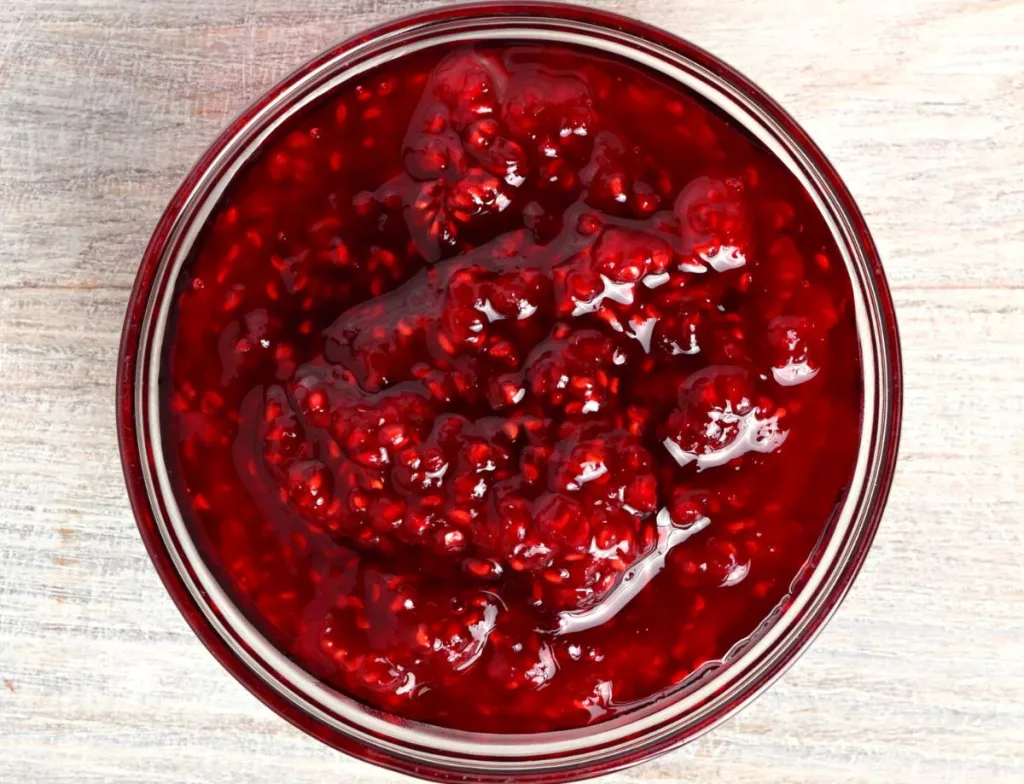
Lower the heat to a gentle simmer and let the sauce bubble away uncovered for about 15 minutes. You are looking for the mixture to reduce by roughly half and achieve a syrupy consistency. It should coat the back of your spoon nicely, indicating that the sugars have caramelized slightly.
Cool and Set
Remove the skillet from the heat and carefully transfer the hot sauce into a heatproof bowl or jar. Let it sit on the counter to cool down to room temperature for at least 20 minutes before using. The sauce will continue to thicken significantly as it cools, achieving that perfect jam-like texture.
Additional Tips for Making this Recipe Better
- I have found that wearing gloves while cutting jalapeños is an absolute lifesaver to prevent burning your skin or eyes later.
- Personally, I like to press the final sauce through a fine-mesh sieve if I am serving it as a fancy glaze, just to remove the raspberry seeds for a smoother finish.
- If I feel the sauce is too thick after cooling, I just whisk in a teaspoon of warm water or extra vinegar to loosen it back up.
- For a deeper, more complex flavor, I sometimes roast the jalapeños in the oven or air fryer before dicing them, which adds a nice char.
- I recommend tasting the raspberries before you start; if they are super sour, you might need a tiny bit more sugar, and if they are very sweet, you can cut back.
How to Serve Costco Raspberry Chipotle Sauce Recipe
This sauce is incredibly versatile and can transition easily from a casual party appetizer to a glaze for a main course. The classic way to serve it—and arguably the most popular—is poured over a block of softened cream cheese with a side of wheat thins or artisan crackers. The cool, creamy cheese cuts through the spicy, tangy sauce perfectly.
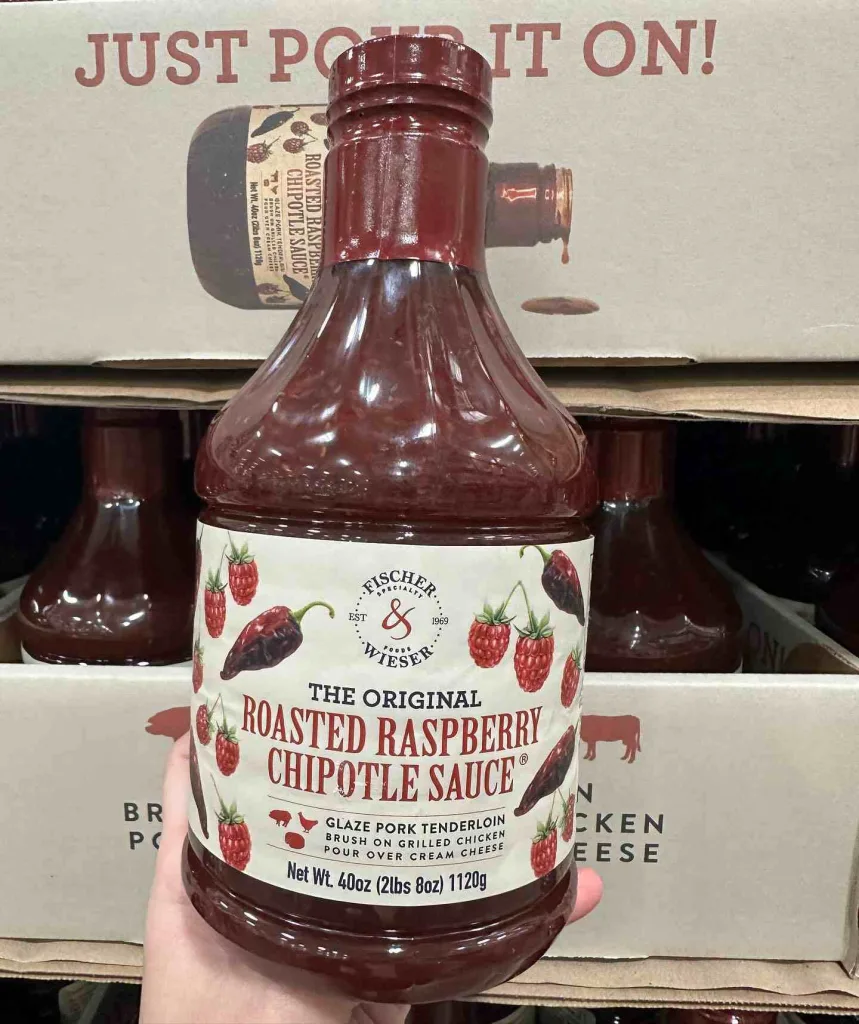
For dinner, this makes a phenomenal glaze for proteins. Brush it onto grilled pork tenderloin or chicken breasts during the last few minutes of cooking. The sugars will caramelize under the heat, creating a sticky, delicious crust. It also works wonders on cedar-plank salmon, adding a fruitiness that complements the fatty fish.
Don’t overlook its potential as a sandwich spread. I love using it in place of cranberry sauce on a turkey melt or a leftover Thanksgiving sandwich. You can even mix a dollop into mayonnaise to create a raspberry-chipotle aioli for dipping sweet potato fries or onion rings.
Nutritional Information
Here is a quick look at the nutritional breakdown per serving, keeping in mind that the sugar content is what gives this sauce its signature texture and taste.
- Calories: 129 kcal
- Protein: 1g
- Carbohydrates: 25g
- Fat: 4g
Make Ahead and Storage
Refrigerating the Sauce
This sauce stores beautifully in the refrigerator, thanks to the sugar and vinegar which act as natural preservatives. Keep it in an airtight glass jar or container, and it will stay fresh and delicious for up to two weeks.
Freezing for Later
You can freeze this sauce if you made a large batch, just be sure to leave some headspace in the jar for expansion. It will last in the freezer for about 3 to 6 months; just thaw it in the fridge overnight before you plan to use it.
Reheating the Sauce
When you take it out of the fridge, the sauce may be quite thick and gelled, almost like a firm jam. Gently warm it in the microwave for 15-20 seconds or let it sit at room temperature to restore its dipping consistency.
Why You’ll Love This Recipe
This recipe is a keeper because it balances flavors in a way that feels gourmet but takes zero culinary skill to execute.
- It is incredibly easy to prepare.
You literally just chop a few peppers, dump everything into a pan, and let it simmer until it looks good. It requires minimal effort for a high-reward flavor payoff. - You control the ingredients.
Unlike the store-bought version, there are no high-fructose corn syrups or artificial red dyes in this jar. You get that vibrant red color naturally from the fresh fruit. - It is versatile for any meal.
Whether you need a quick appetizer for guests or a way to rescue boring chicken breasts on a Tuesday night, this sauce does double duty. It works for breakfast on toast or dinner on the grill. - The flavor profile is addictive.
The combination of sweet raspberries, tangy vinegar, and smoky heat hits every taste bud. It satisfies savory, sweet, and spicy cravings all in one single bite. - It makes a fantastic DIY gift.
Because it holds up well and looks beautiful in a mason jar, I love making big batches during the holidays to give as gifts. It feels personal and tastes better than anything in a gift basket.